
Last updated November 25, 2026
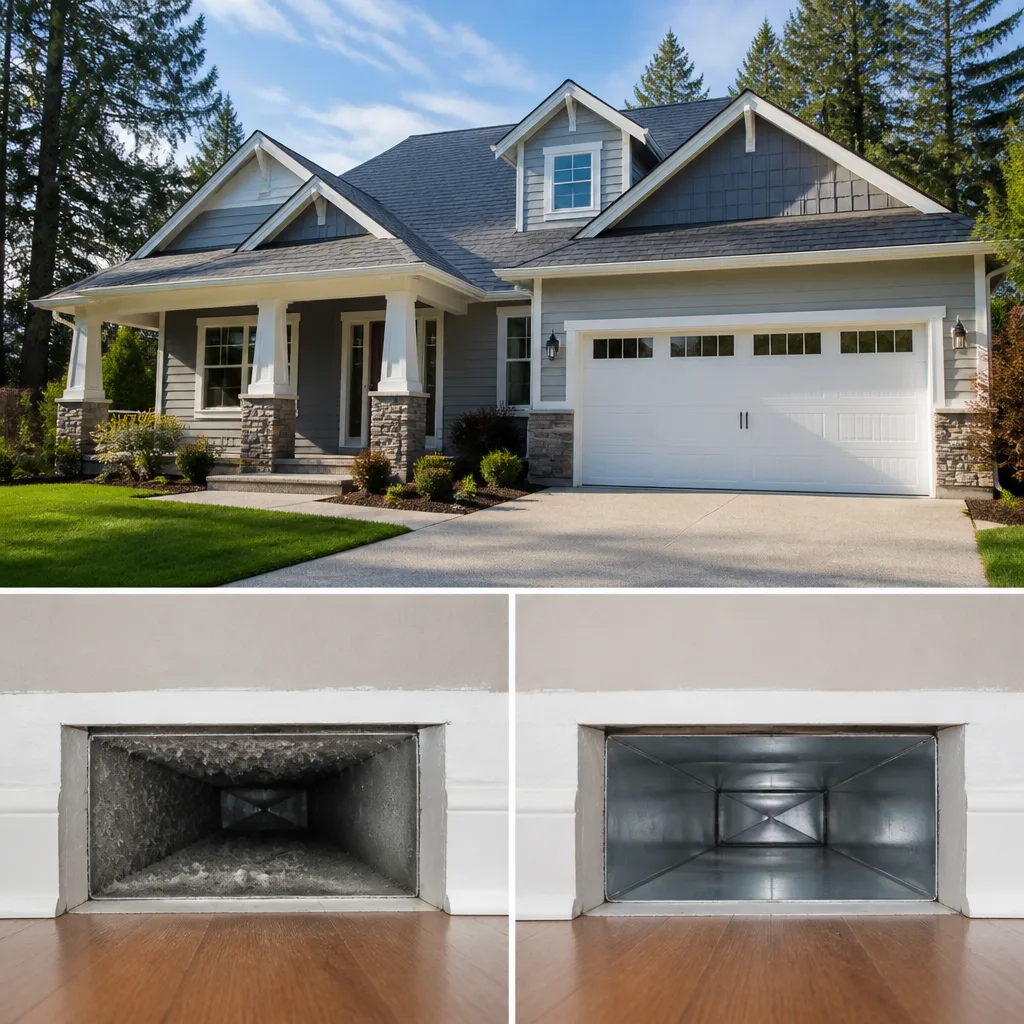 Whole-home duct cleaning
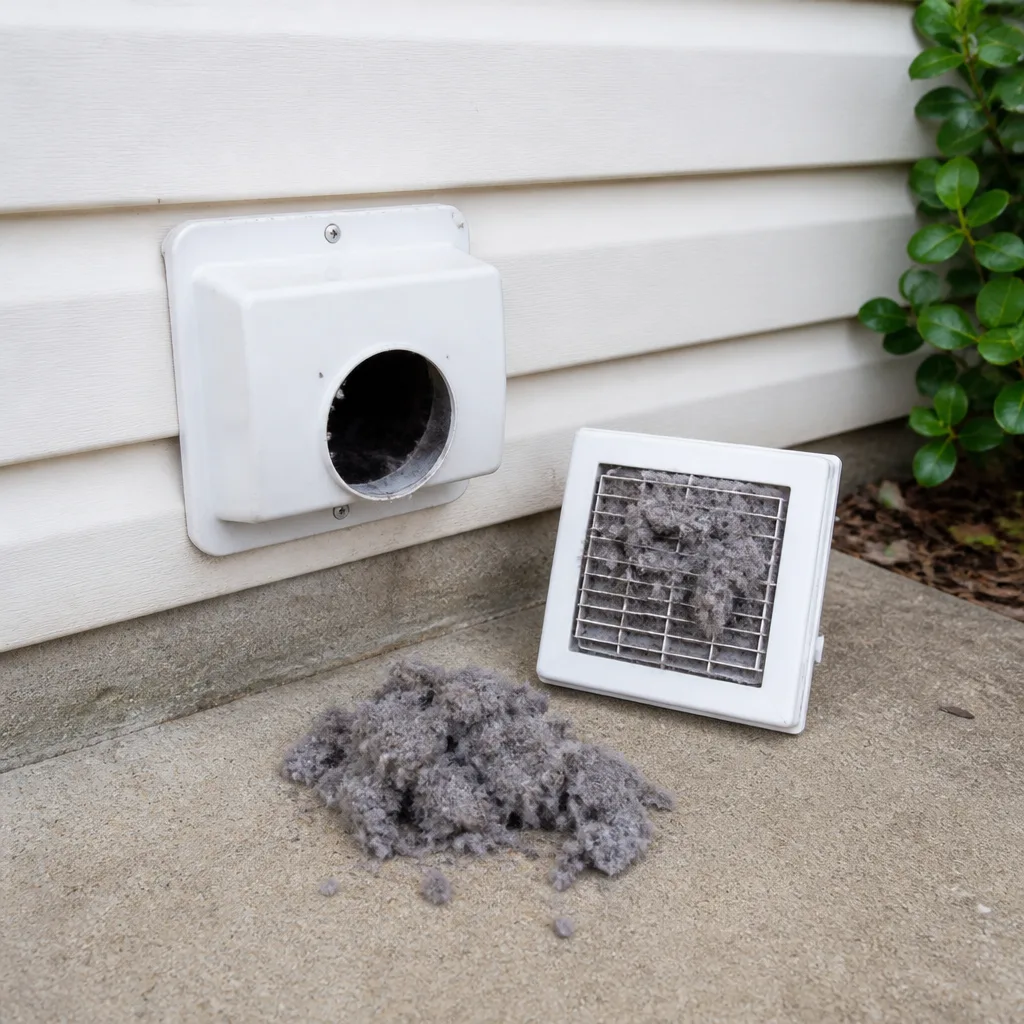 Dryer vent cleaning
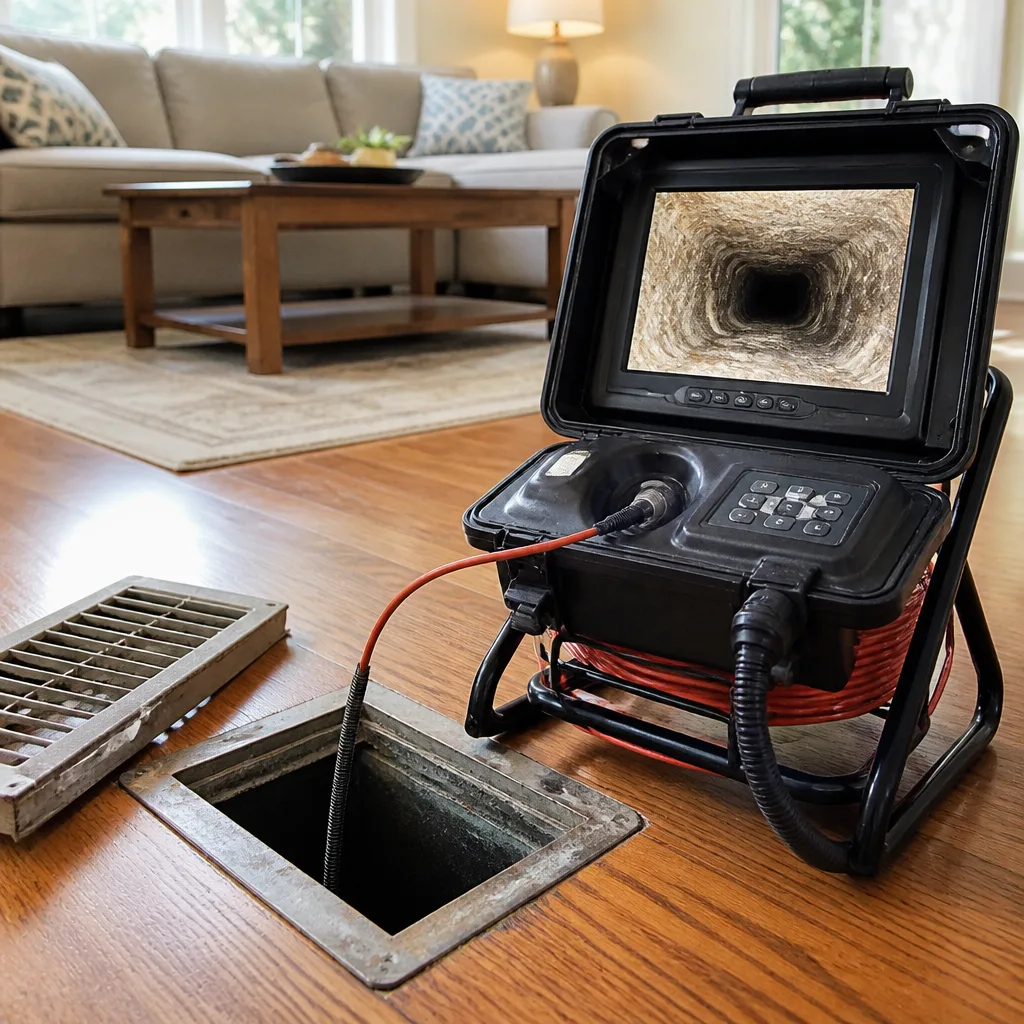 Camera inspection
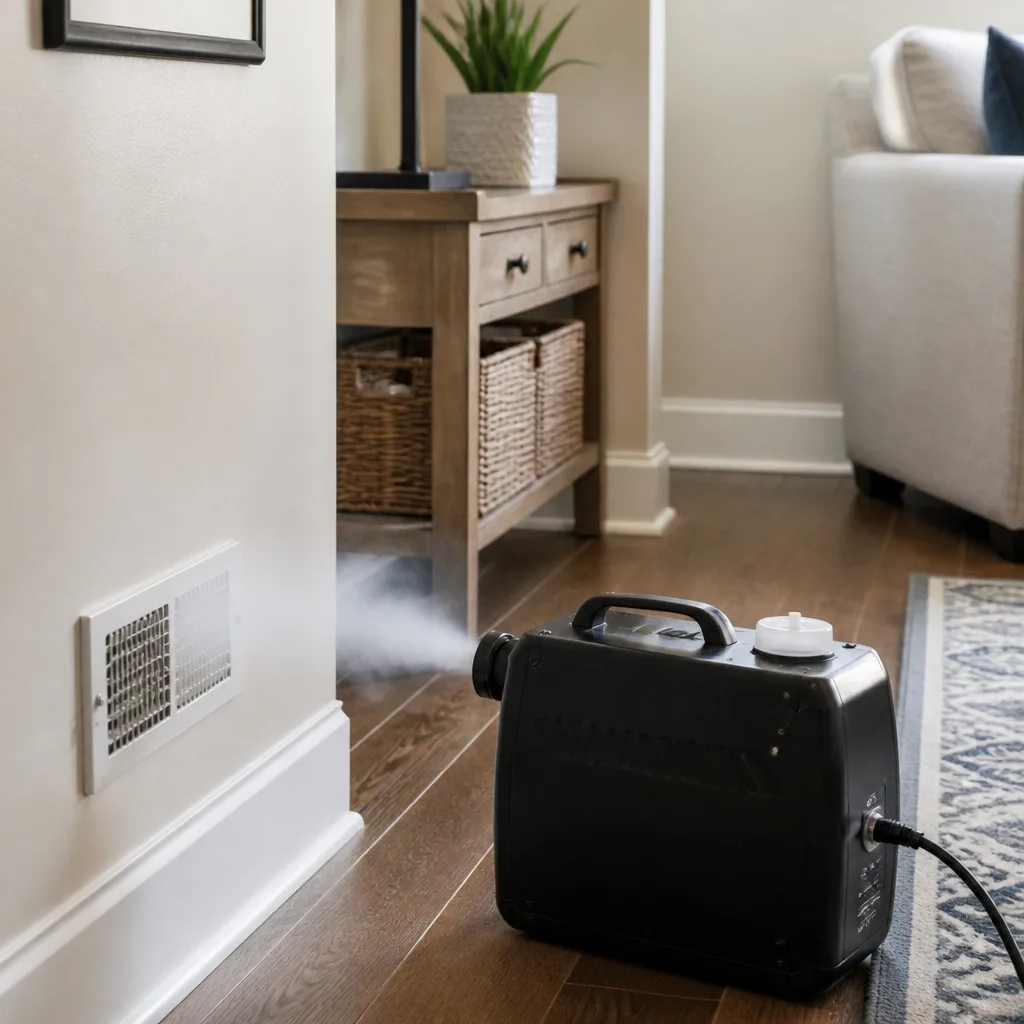 Sanitizing & deodorizing
Whole-system duct and dryer vent check with before-and-after photos - you see exactly what came out of your vents
That "$99 whole-house special" is a bait ad - the real number appears once they are in your hallway, or the "clean" is a shop-vac at the register. We photograph the inside of your ducts before and after instead.
Air Duct Cleaning Permits, Codes & Inspections in Fullerton, CA: What You Need to Know
Here’s the part that catches homeowners off guard: the cleaning itself usually needs no permit at all. But the small repairs that happen during a cleaning appointment can. If a technician replaces a length of flex duct, seals a plenum, or moves a register while your system is open, that work may fall under a City of Fullerton mechanical permit. Most people never realize it happened until an inspector, a buyer’s agent, or an insurance adjuster asks a question years later. This guide draws the line between routine maintenance and alteration, explains how California code and Title 24 energy rules apply, and shows you what to get in writing before you authorize any work beyond cleaning.
Quick Answer
Air duct cleaning by itself does not require a permit in Fullerton, because removing debris is maintenance, not construction. However, work that alters the duct system, such as replacing duct runs, sealing a plenum, resizing or relocating registers, or connecting new components, can require a mechanical permit under the California Mechanical Code and falls under City of Fullerton building department review. Duct sealing tied to energy compliance can also trigger HERS verification. The safe rule: if the work changes the system rather than just cleaning it, ask who is pulling the permit before anyone starts.
Styles & brands we work with
- Whole-home duct cleaning
- Dryer vent cleaning
- Camera inspection
- Sanitizing & deodorizing
Table of Contents
- Where the permit line actually sits in Fullerton
- What California Mechanical Code Chapter 6 says about ducts
- Cleaning vs. alteration: which scopes need a permit
- How Title 24 energy compliance meets duct sealing
- Why unpermitted duct work follows the house
- What to get in writing before you authorize work
- What a duct-related inspection actually checks
- How to choose a duct contractor in Fullerton
Where the Permit Line Actually Sits in Fullerton
The confusion starts because “air duct cleaning” is a single phrase covering two very different kinds of work. One is maintenance. The other is construction. Fullerton’s building department cares about the second, not the first.
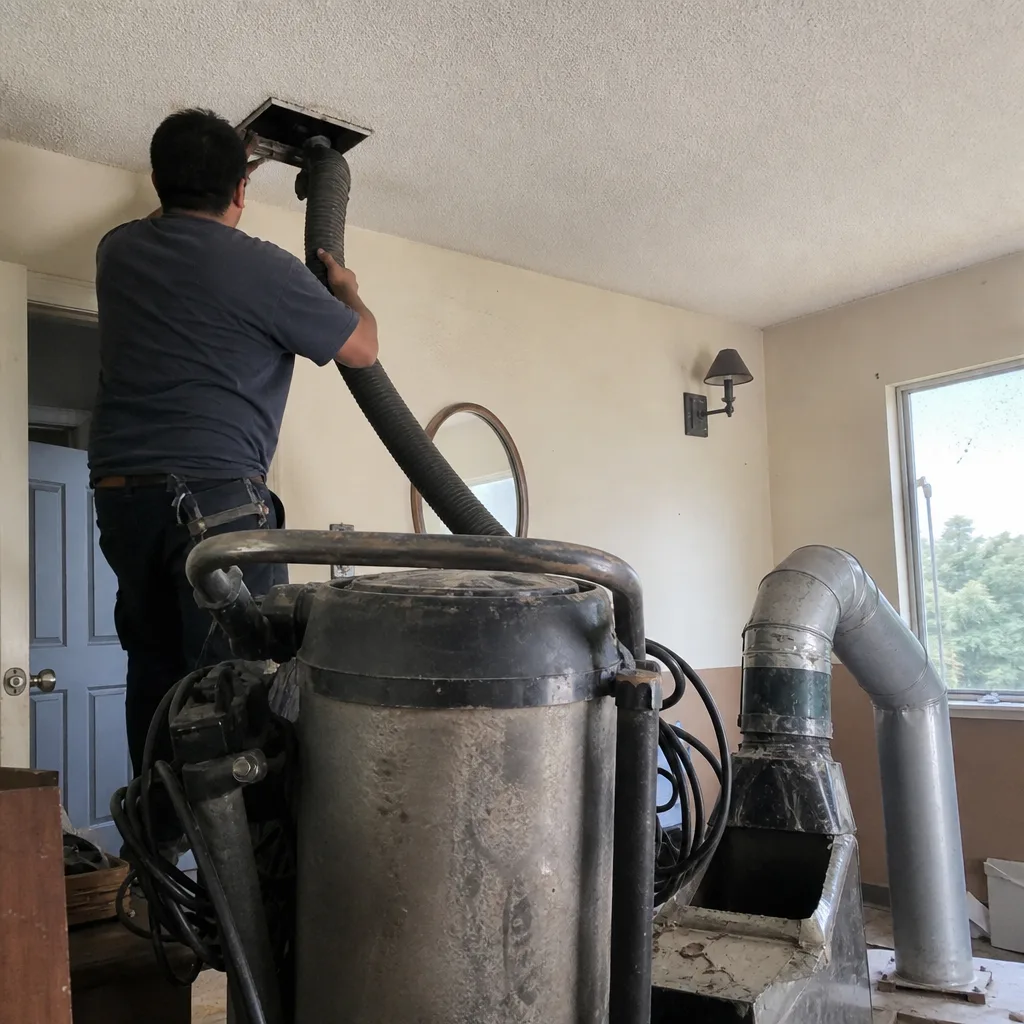
Cleaning is maintenance. Running a rotary brush through the trunk line, pulling debris out with negative air, sanitizing the interior of the system, and replacing a filter are all activities that leave the duct system as built. No permit is involved. This is routine upkeep on a component that’s already installed and approved. When we perform air duct cleaning, those are the things happening, and they’re covered under ordinary maintenance rules.
Alteration is different. The moment you cut into a duct to add a run, remove a length of flex and replace it with a rigid section, seal a plenum in a way that changes how the system was assembled, or add a new register, you’re modifying a permitted assembly. That’s when City of Fullerton plan review and mechanical permitting can come in. The trigger is nearly always the physical change to the system, not the cleaning visit that happened on the same day.
There’s a second wrinkle in Fullerton specifically. A lot of the housing stock is old enough that the ducts were either installed under codes that no longer exist or added later by someone who never pulled a permit. If a contractor opens your system and finds a jerry-rigged section, the fix may be alteration work whether or not anyone planned it that way. That’s the moment to slow down and have a conversation about permits, not to let it slide because “it was just a cleaning.”
What California Mechanical Code Chapter 6 Says About Ducts
The California Mechanical Code, adopted from the Uniform Mechanical Code, devotes Chapter 6 to duct systems and their construction. It governs materials, sizing, support, sealing, and installation requirements. This is the chapter anyone touching a duct needs to be working to, whether they realize it or not.
Chapter 6 covers the physical properties of ductwork: what materials are permitted, how ducts must be supported, how joints and seams must be sealed, and how the system must be sized for the space it serves. It also addresses the connection points, the plenum assemblies, and the way supply and return networks are put together. When a duct system is built or rebuilt, Chapter 6 is the standard those components are measured against.
Here’s what that means in practice. If a technician is only cleaning, Chapter 6 isn’t the governing standard for the work being performed. If a technician is removing a section, adding a section, or replacing a component with a different material or configuration, the replacement now has to meet Chapter 6. And in Fullerton, meeting Chapter 6 during a modification is generally the kind of work that gets reviewed and permitted by the building department. That’s the crossover. Cleaning doesn’t touch Chapter 6. Alteration lives inside it.
The practical takeaway for a homeowner is this: ask a specific question before any work that isn’t strictly cleaning.
“Is this repair or replacement covered under Chapter 6, and are you pulling a permit for it?”
That single question separates routine maintenance from a permitted job, and it forces a straight answer.
Cleaning vs. Alteration: Which Scopes Need a Permit
This is where it helps to see it laid out. The following is a general guide based on how California code and typical municipal practice treat these scopes. It isn’t a substitute for a call to the Fullerton building department about your specific home, but it tells you what questions to ask.
Scopes that are generally maintenance, no permit:
- Rotary-brush cleaning of the interior of existing ducts
- Negative-air debris extraction throughout the system
- Applying sanitizing products inside the ducts after mechanical cleaning
- Replacing a standard air filter
- Cleaning a dirty register or grille cover without modifying the opening
- Visually inspecting and documenting the interior of the system
Scopes that are generally alteration, and often require a permit:
- Replacing a section of flexible duct with another flex section or with rigid duct
- Sealing a plenum or trunk line in a way that changes the assembly
- Cutting in a new supply or return register
- Resizing an existing register opening
- Adding, removing, or rerouting a duct run
- Connecting a new component to the duct system, such as a UV unit, dehumidifier, or added filtration cabinet that requires cutting into the duct
- Rebuilding a collapsed or separated duct assembly
The important pattern is that maintenance leaves the system how it was found. Alteration changes it. When we run a HVAC cleaning and discover a section that’s torn, disconnected, or collapsed, that’s exactly the scenario where the conversation needs to shift from cleaning to repair, and from repair to permits. A homeowner who knows to expect that conversation is much harder to take advantage of.
How Title 24 Energy Compliance Meets Duct Sealing
Duct sealing is one of the places where two regulatory worlds overlap. From the maintenance side, sealing gaps in leaky ducts is straightforward: it reduces energy waste and it reduces the pathway for contamination to re-enter the system after a cleaning. It’s also a core part of what Fullerton Air Duct Cleaning Pros does as a full-system service, because a cleaning that leaves leaks behind is a cleaning that has to be redone in a few years.
From the energy-code side, California’s Title 24 standards set requirements for duct sealing in certain situations, especially when ductwork is significantly altered, when it runs through unconditioned space, or when it’s part of a system replacement or major remodel. When the sealing is done as part of permitted work covered by Title 24, the compliance documentation doesn’t stop at the contractor’s own sealant. In many cases a HERS rater has to verify the duct leakage reduction on-site. This is the different piece of the puzzle most homeowners have never heard of.
That matters because it changes the staffing of the job. A cleaning appointment that turns into “and we’ll seal everything while we’re in there” is not automatically a sealing job that satisfies Title 24, because there’s no rater and no permitted scope on file. When sealing is the reason the ducts are being touched, ask whether Title 24 applies to your situation, whether a HERS rater is needed, and who is scheduling that verification. In Fullerton, where duct systems in older homes often run through unconditioned attic space, this question comes up more than people expect.
Why Unpermitted Duct Work Follows the House in Fullerton
A permit isn’t just a piece of paper that confirms a contractor paid a filing fee. It’s the record that says the work was inspected and approved. When duct work that should have been permitted goes in without one, three things tend to happen.
Insurance questions. If a claim names the HVAC system, or if an adjuster is looking at the scope of a loss that might involve an unpermitted modification, the lack of a permit can complicate the claim. That’s not a promise that a claim will be denied, and it depends heavily on the situation. The point is that a homeowner who can show a permit and inspection record is in a much simpler position to explain what happened on their property.
Sale and resale. Real estate transactions in Fullerton routinely trigger disclosure and inspection conversations about permitted work. A buyer’s inspector who spots a duct modification with no permit record raises a flag, and that flag can delay closing or shift negotiating power. The problem isn’t that the modification was necessarily unsafe. It’s that neither party can prove it was done right.
Warranty conflicts. HVAC equipment warranties often include language about installation and modification performed to industry standards and applicable codes. An unpermitted, undocumented duct modification gives a manufacturer a place to push back if a related failure claim comes in. Documented, inspected work closes that door.
The pattern is consistent: unpermitted work isn’t catastrophic in most cases, but it creates friction at exactly the moments when friction costs you money or leverage. A homeowner who asks about permitting ahead of time never has to deal with it later.
What to Get in Writing Before You Authorize Work
The single most effective protection against an awkward unpermitted modification is a clear written scope before anyone picks up a tool. This applies to cleaning days where a repair might come up, and to any planned repair job. Here’s the checklist any duct contractor should be able to satisfy before you sign.
- A written scope that separates cleaning from repair. It should say plainly which items are maintenance and which items are alteration, and it should list the specific alteration work by name if any is proposed.
- A statement of who pulls the permit. If alteration work is on the scope, the written agreement should name who is responsible for pulling the City of Fullerton mechanical permit and paying for it. Never leave this as “we’ll handle it.” Get the name on the document.
- A price for the permitted work separated from the cleaning price. This is where honest quoting shows itself. One flat price per system for the cleaning, and a separate written estimate for the alteration work.
- A note on Title 24 and HERS verification if sealing is part of the scope. Ask directly whether the proposed sealing is being done under a permitted scope and whether a third-party rater will verify it.
- Before-and-after photos of your own system. Documentation of what was done is your own record, and it’s also useful if you ever need to explain the work to an inspector, adjuster, or buyer.
- A line that confirms no work will proceed beyond the cleaning scope without a new written authorization. This is the one that protects you from a mid-job surprise.
If a contractor can’t produce these, that’s the answer. It doesn’t mean they’re doing anything wrong, but it does mean the paperwork side hasn’t been planned for, and you’re the one who carries the risk if something goes sideways. Our technicians have up to 11 years of experience and have seen exactly how these conversations go when they aren’t had up front.
What a Duct-Related Inspection Actually Checks
If duct alteration work has been permitted in Fullerton, the inspection isn’t a general check on how clean your ducts are. It’s a specific verification that the work was done to the standard that was permitted. The specifics vary by scope, but the categories of what’s checked are consistent.
- Materials and configuration match the permitted plans. If the plans called for rigid duct, the inspector looks for rigid duct, not a flex substitute.
- Support and clearances. Ducts need to be supported at the intervals the code specifies, and they need the correct clearances from other assemblies.
- Joints, seams, and connections. The seal quality on connections is verified, not just assumed.
- Register locations and sizes. New or modified registers need to match what was approved.
- Leakage verification when it’s part of the scope. If Title 24 leakage requirements apply, that’s done by a HERS rater, and the documentation flows back to the permit file.
The inspection process is usually quick once the work is done correctly, and an experienced contractor prices the job knowing the inspection is part of it. When a homeowner asks a contractor “what does the inspector look at,” a professional should be able to describe all of this without hesitating.
How to Choose a Duct Contractor in Fullerton
There’s a wide gap between a contractor who cleans and a contractor who understands the regulatory line. Given how often cleaning and alteration get blurred together, choosing well matters more than most homeowners realize.
Look at the equipment, first. Professional-grade equipment is a proxy for whether the company takes the work seriously. Rotary-brush systems that agitate duct walls mechanically, negative-air vacuum systems that capture debris rather than distribute it, and containment and air scrubbing equipment used during the service all point to a company that has invested in the process. When we perform dryer vent cleaning or any duct work, we’re using the same professional platforms commercial contractors rely on, not consumer-grade equipment passed off as industrial.
Ask about repair capability. If a contractor only cleans, they have no incentive to find leaks because they can’t fix them. A company that can repair and seal ductwork is one where the finding of a leak leads to a fix rather than a shrug.
Ask about the regulatory line. Any contractor who touches ducts in Fullerton should be able to explain the difference between cleaning and alteration, and should know when a permit is likely required. If they can’t, that’s your signal.
Ask about air quality products beyond cleaning. Filtration upgrades, filtration cabinets, and connected air quality products are part of the picture in many homes. A contractor who can speak to those and to the permitting involved in installing them is a step ahead of one who only cleans.
We use Rotobrush rotary-brush systems and Nikro negative-air equipment, run Abatement Technologies containment during service, and work with Honeywell and Aprilaire products for filtration and long-term air quality. But the biggest differentiator isn’t the equipment list. It’s that a company set up for the full picture can spot a permitting problem before it becomes a permitting problem.
Common Mistakes to Avoid
- Assuming the whole appointment is just cleaning. If a technician starts describing a repair, replacement, or new register, the job has crossed into alteration. Ask about permits before they proceed.
- Letting the cleaning crew quietly pull a permit at the end. You want to know about permit needs at the estimate stage, not when the work is finished and the paperwork is being assembled after the fact.
- Trusting a verbal “we’ll handle it” on permits. Who’s pulling the permit and who’s paying for it should be in the written scope. Fullerton’s building department process requires a named responsible party, so it should be on the paper.
- Overlooking Title 24 when sealing is part of the plan. If sealing is being done as permitted work, ask about HERS verification. Don’t assume the sealant alone closes the compliance file.
- Accepting a scope that says “repair ducts as needed” without specifics. That language gives a contractor permission to do alteration work without a named scope, which means you won’t know what needs a permit until it’s already in the system.
- Skipping photos. Before-and-after photos of your own ducts are your record. If the work ever needs to be explained to a future buyer’s inspector or an adjuster, those photos do the work for you.
- Assuming low price means low risk. A quote that doesn’t separate cleaning from alteration and doesn’t name the permit responsibility is a quote that leaves every risk on your side. The price was never the whole number.
See the difference
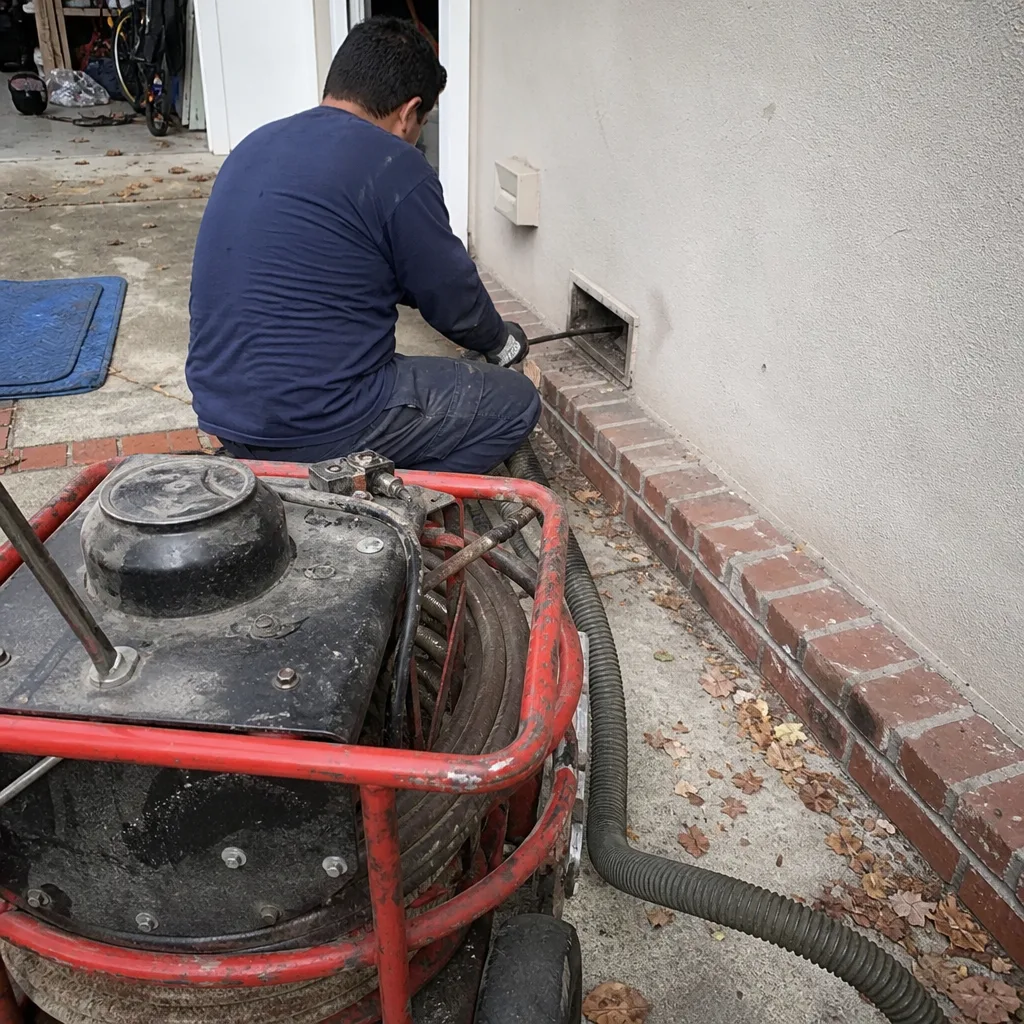 Before
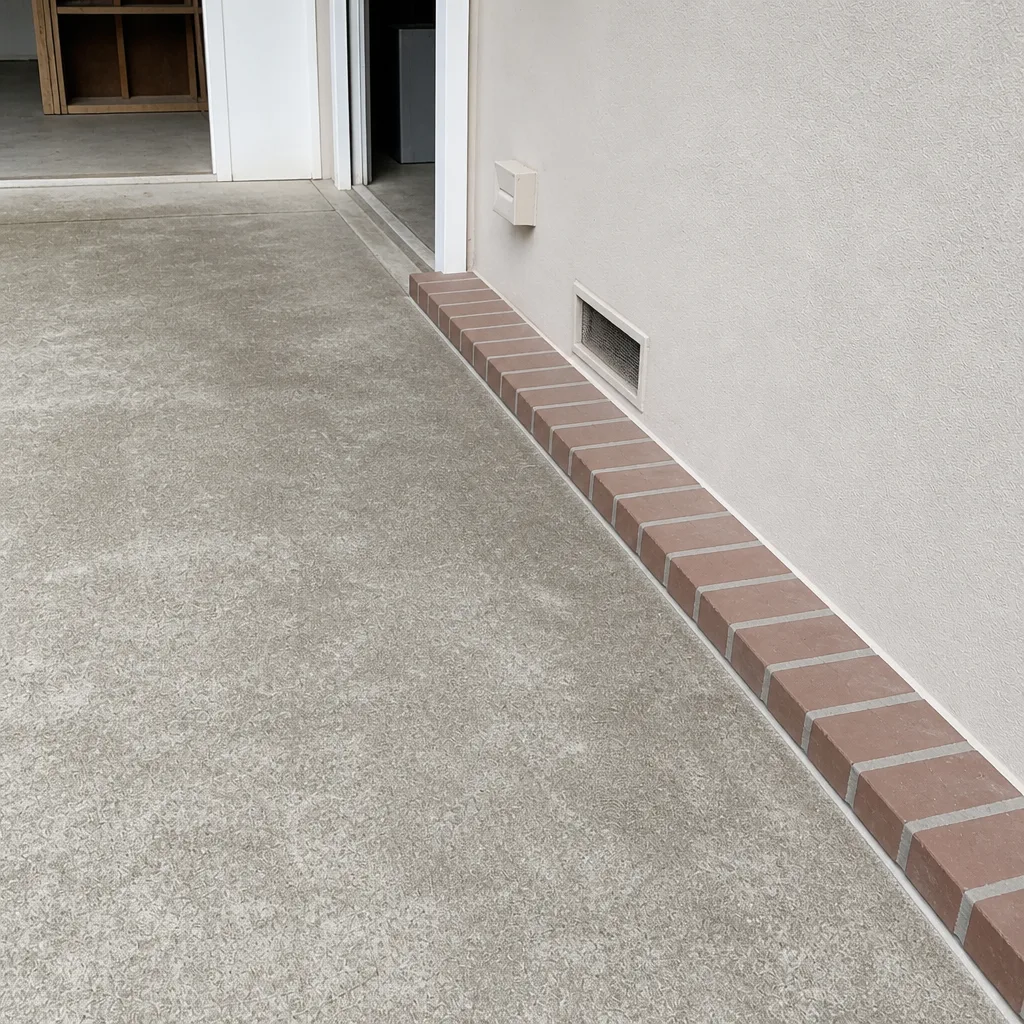 After
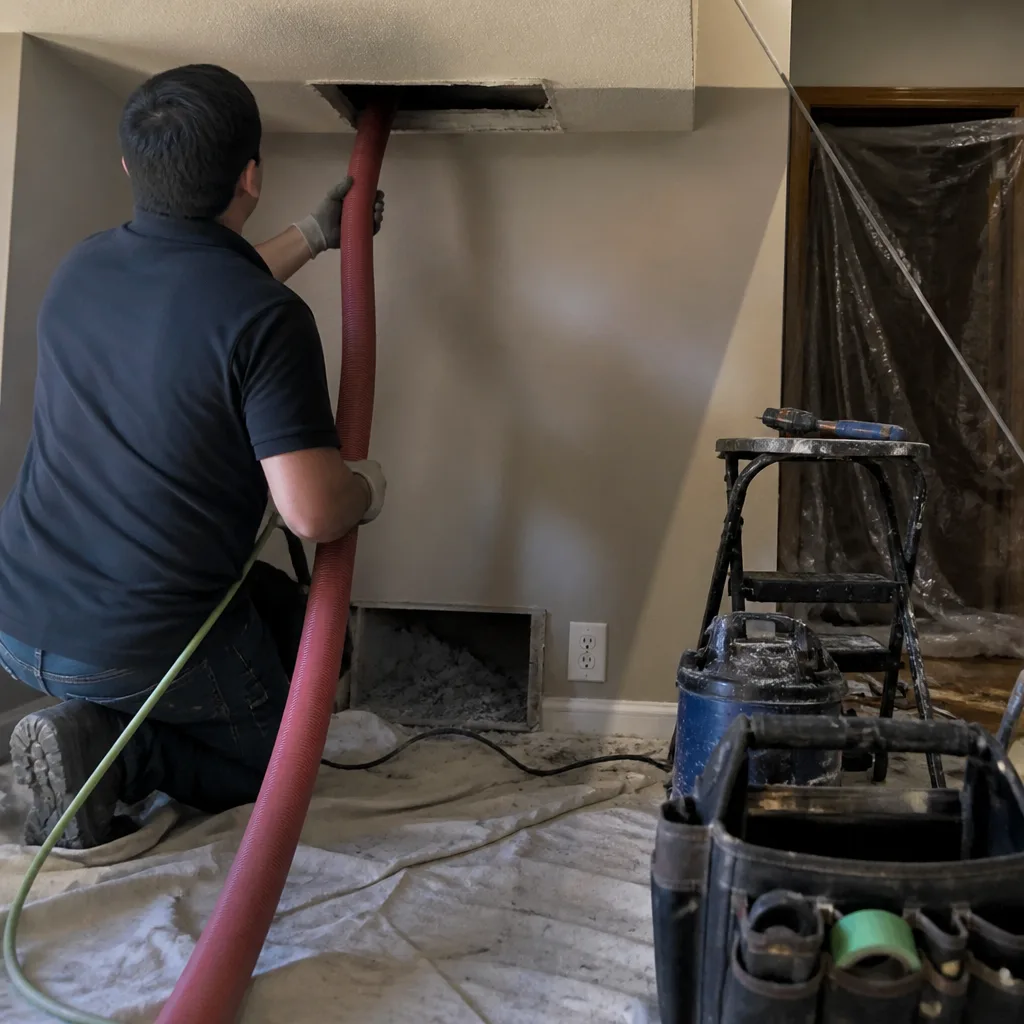 Before
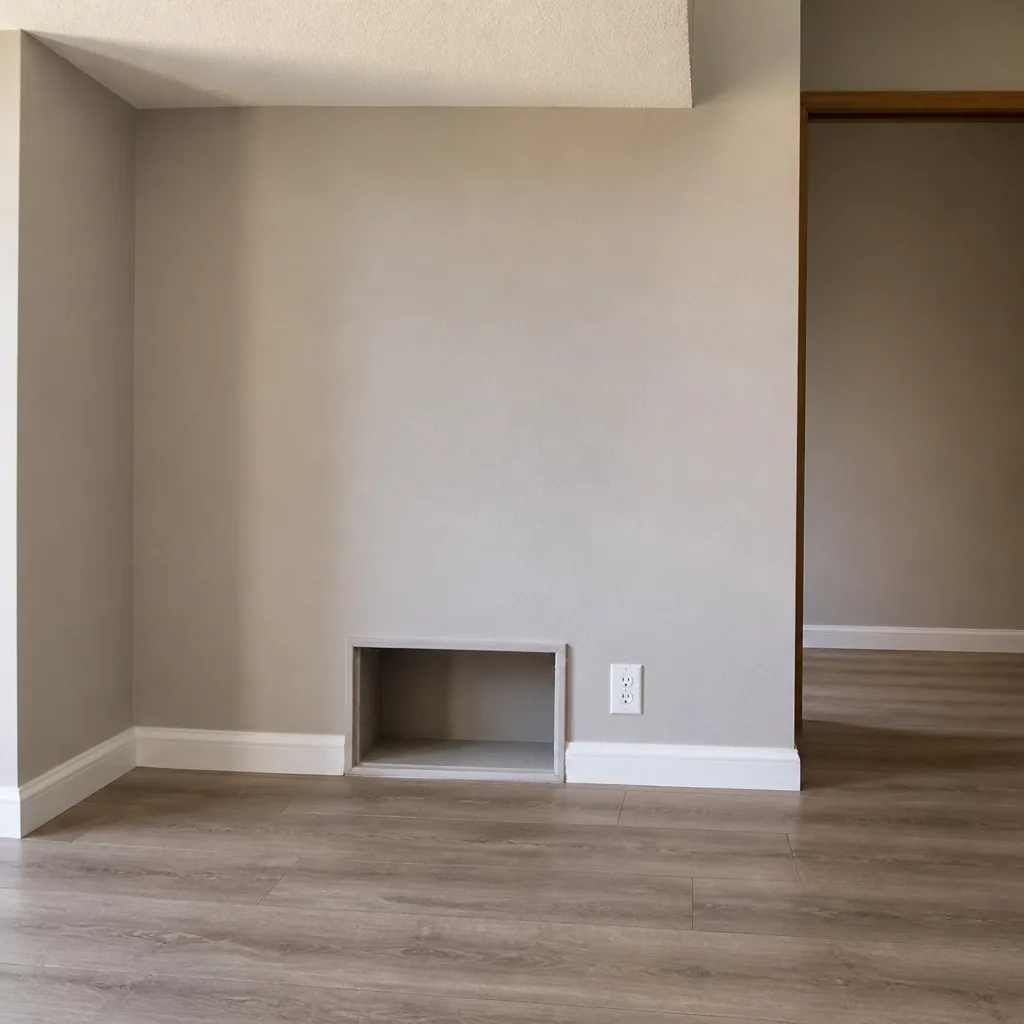 After
 Before
 After
When to Call a Professional
There are specific moments when the safest move is a professional inspection rather than a self-assessment. If you’re seeing increased dust after a renovation, a persistent musty smell when the system runs, or a jump in energy bills with no other explanation, those are signs the ducts are worth a look. If you’re buying or selling a home in Fullerton and the inspection report flags duct modifications without a permit record, that’s the moment to get a professional scope on paper before closing. And if a previous contractor sealed or replaced ductwork and you can’t find a permit, an inspection can tell you what’s actually there now.
Fullerton Air Duct Cleaning Pros offers free estimates in Fullerton – call (844) 493-3461. We answer 24/7. Fast dispatch from 7am to 7pm, Sunday through Friday. Estimates are free, the price is set per job by the written estimate, and we’ll tell you in writing which items are cleaning and which cross into alteration.
Frequently Asked Questions
No. Air duct cleaning is maintenance, not alteration, and cleaning debris and sanitizing the inside of existing ducts does not require a City of Fullerton mechanical permit. Permit questions come up when the scope of the visit shifts into repair, replacement, or modification of the duct system.
It crosses when the system itself is changed. Replacing a flex duct section, cutting in a new register, moving or resizing an existing register, sealing a plenum in a way that changes the assembly, or rerouting a run are alteration, and California Mechanical Code Chapter 6 applies to those changes. Cleaning the inside of ducts without modifying them is maintenance. Call (844) 493-3461 for a free estimate if you’re not sure which category your situation falls into.
It can. When duct sealing is performed as part of permitted work covered by Title 24, a HERS rater often has to verify the leakage reduction on-site before the file closes. Not every sealing job is covered by Title 24 – it depends on the scope – so this should be clarified in the written estimate before work begins. Call (844) 493-3461 to talk through your project.
They can complicate a claim. If a claim touches the HVAC system and an adjuster sees an unpermitted modification, the missing permit record makes it harder to prove when and how the work was done. It’s not a guaranteed denial, but it’s a problem you can avoid entirely by asking about permitting before alteration work is done.
Ask three questions in writing: which items on the scope are alteration rather than maintenance, who is pulling the City of Fullerton mechanical permit, and whether a HERS rater is needed for any duct sealing. Ask for before-and-after photos as part of the deliverable. If a contractor can’t answer those clearly, get another estimate.
Yes, frequently. Inspectors flag duct modifications that don’t match a permit record, and that flag usually leads to more questions during the transaction. Fullerton has plenty of older homes with duct systems that were modified without permits over the years, so it’s a common issue. A documented inspection and a clean scope protect you on both ends of the sale. Call (844) 493-3461 for a free estimate on an inspection.
The Bottom Line
Air duct cleaning itself doesn’t need a permit in Fullerton, but the work that happens during or after a cleaning often does. Routine cleaning is maintenance and stays outside Chapter 6. Replacing duct sections, sealing plenums, adding or moving registers, and connecting new components are alteration, and that work falls under California Mechanical Code Chapter 6 and the City of Fullerton’s permitting process. Duct sealing tied to Title 24 can require third-party HERS verification. Unpermitted modifications follow the house into insurance claims and real estate transactions. The protection in all cases is the same: get the scope in writing, name who pulls the permit, and ask the question before anyone starts. That’s the line that keeps a cleaning appointment a cleaning appointment.
Written by the team at Fullerton Air Duct Cleaning Pros.