
Last updated November 25, 2026
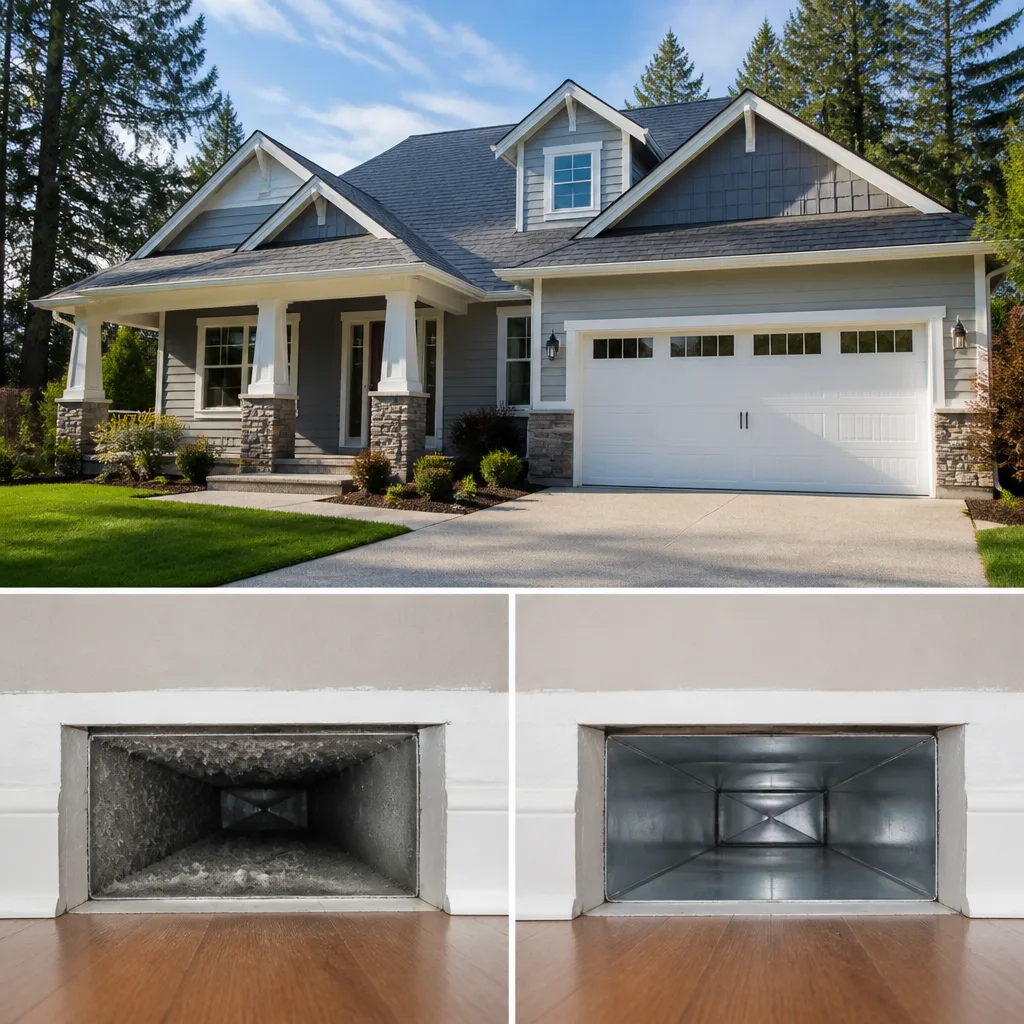 Whole-home duct cleaning
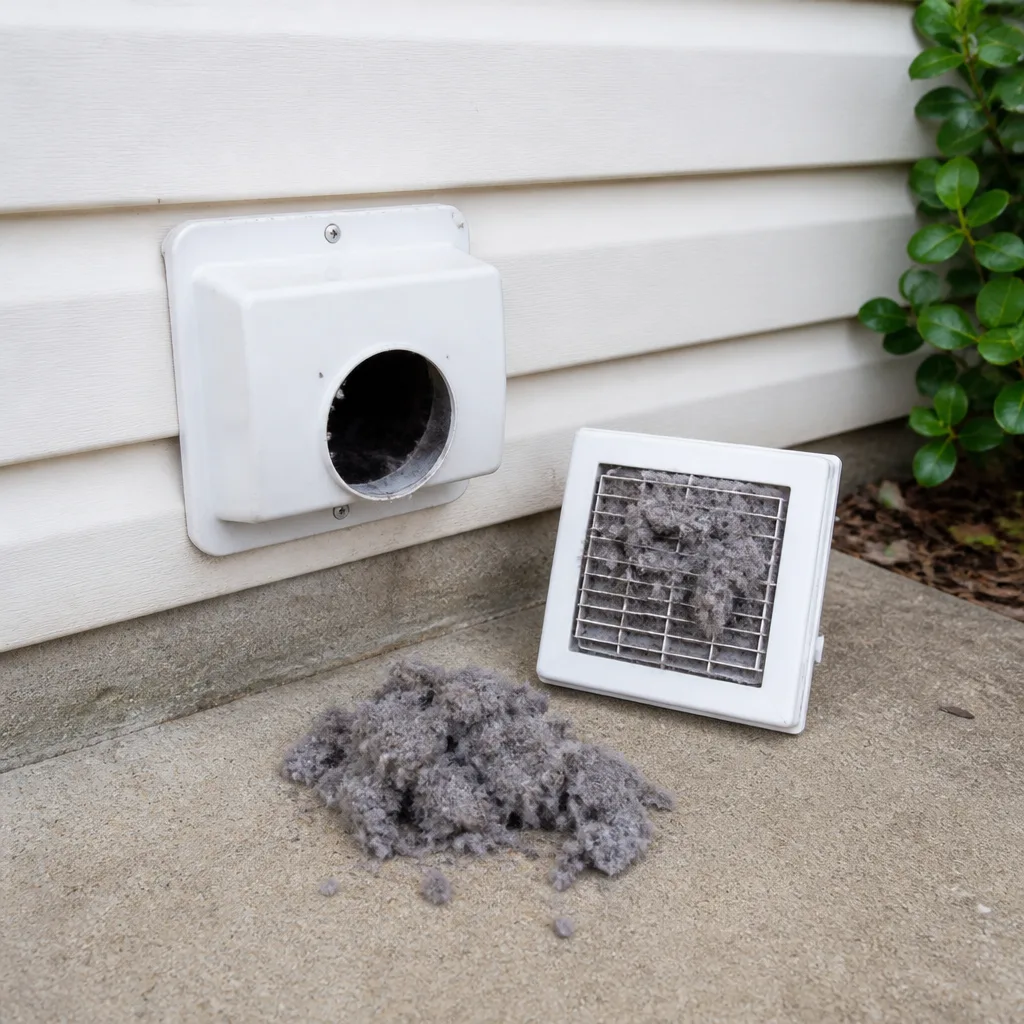 Dryer vent cleaning
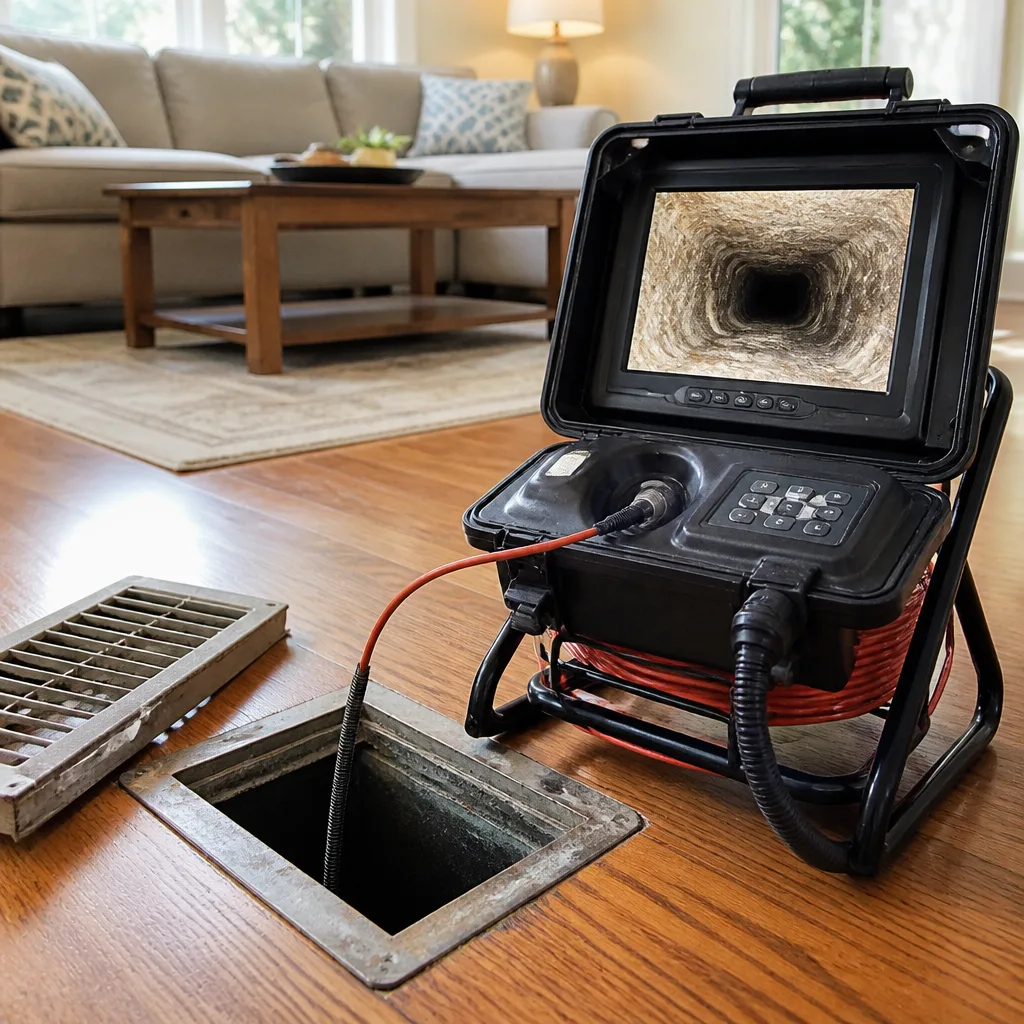 Camera inspection
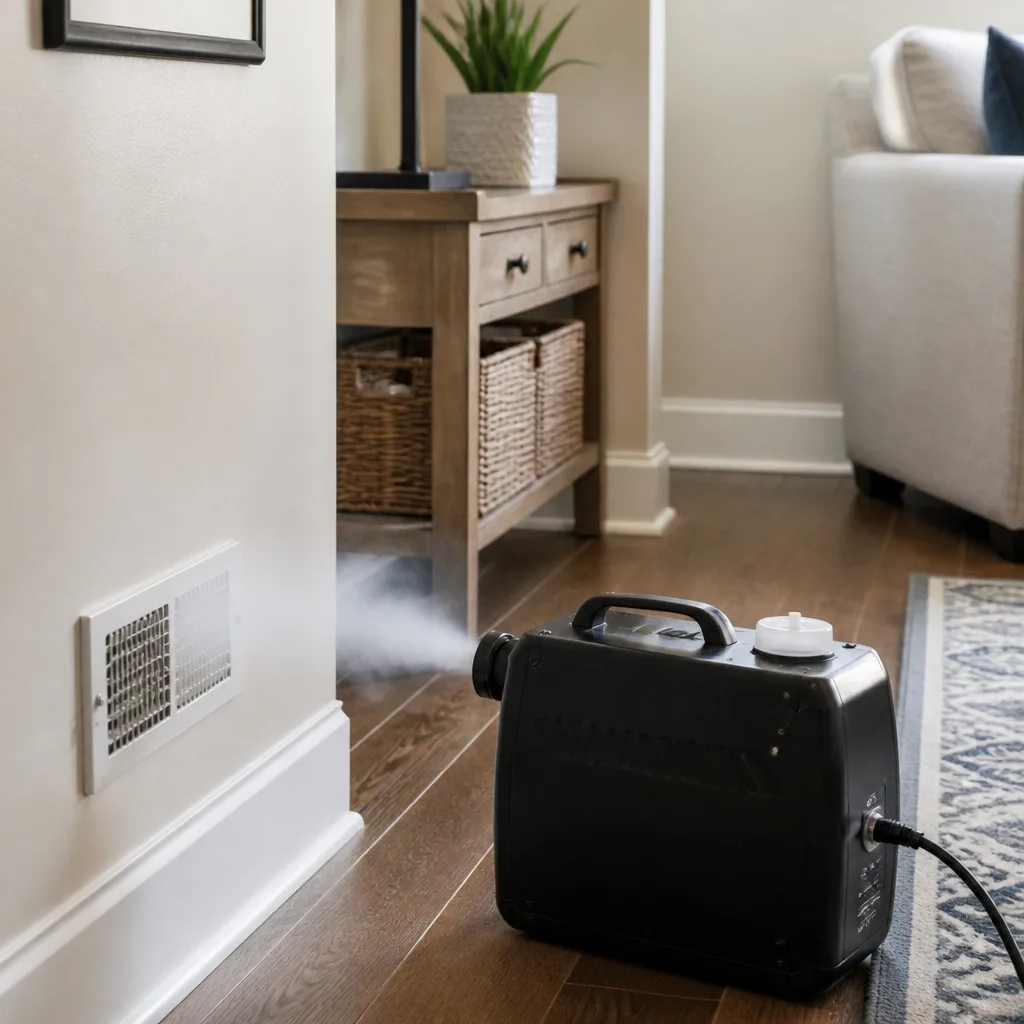 Sanitizing & deodorizing
Whole-system duct and dryer vent check with before-and-after photos - you see exactly what came out of your vents
That "$99 whole-house special" is a bait ad - the real number appears once they are in your hallway, or the "clean" is a shop-vac at the register. We photograph the inside of your ducts before and after instead.
The Complete Guide to Air Duct Cleaning in Fullerton
Most homeowners assume the loud vacuum in the driveway means the job is getting done. Here’s the part that rarely gets explained: a standard shop-vac pulls a fraction of the negative pressure a truck-mounted or professional negative-air unit generates, and that gap is the difference between actually removing decades of buildup and simply stirring it into your living room. In Fullerton, where wildfire smoke seasons and Santa Ana wind events push fine particulate deep into return systems, that distinction matters more than it does in most of the country. This guide walks through what professional duct cleaning really involves, how to tell equipment classes apart, what a full-system scope covers, and how to verify the work was done.
Quick Answer
Professional air duct cleaning in Fullerton uses high-negative-pressure vacuum equipment paired with mechanical agitation to physically remove contaminants from duct walls, then captures those dislodged particles so they never re-enter your home. A legitimate full-system service covers supply and return ducts, boots, plenums, the coil compartment, and return air cavities, not just the visible trunk lines. Equipment class, not price, is the single best predictor of whether the cleaning actually worked.
Styles & brands we work with
- Whole-home duct cleaning
- Dryer vent cleaning
- Camera inspection
- Sanitizing & deodorizing
Table of Contents
- Why Fullerton Ducts Get Loaded Differently
- The Equipment Difference: CFM and Negative Pressure
- What a Full-System Scope Actually Includes
- How to Verify the Cleaning Was Completed
- Slab Foundations and Older Fullerton Neighborhoods
- The Clean, Seal, Test Process Arc
- How Often Ducts Really Need Cleaning
- What Duct Cleaning Costs in Fullerton
Why Fullerton Ducts Get Loaded Differently Than Other Regions
Fullerton sits in a basin where smoke from regional wildfires settles during fire season and where Santa Ana winds drive dry, particulate-heavy air through the region in the fall and winter. Those two patterns mean local duct systems collect a very specific profile of contamination: fine ash and soot particles small enough to bypass standard consumer filters and coat duct walls, mixed with the ordinary dust, pet dander, and construction debris every house accumulates.
Because winters here are mild and the HVAC system often runs year-round for both heating and cooling, ducts never really get a dormant season. That constant airflow pushes fine particulate deeper into the system than it would travel in a climate with months of system downtime. By the time a homeowner notices musty odors or reduced airflow, the buildup has usually been accumulating for years.
Wildfire smoke adds another layer. Soot particles in the 0.1 to 1 micron range behave almost like a gas, settling on duct walls and coil surfaces rather than getting caught at the return grille. A vacuum that generates weak negative pressure at the duct wall cannot lift that residue. Mechanical agitation paired with strong vacuum does, which is why we rely on rotary-brush systems and negative-air equipment rather than a single pass with a shop-vac.
Air conditioning in Fullerton also runs a wet-dry cycle that encourages biological growth in the coil compartment and plenum. That damp environment, combined with smoke-season particulate, is why the musty smell many residents notice correlates with the coil area more often than with the ducts themselves – a detail a proper full-system inspection catches quickly. Our HVAC cleaning service addresses the coil and plenum as part of the same visit.
The Equipment Difference: CFM and Negative Pressure
The single most useful filter for choosing a duct cleaning provider is the equipment on the truck. Airflow is measured in cubic feet per minute (CFM), and the negative pressure a vacuum establishes at the duct wall determines whether dislodged contaminants get captured or redistributed. A standard shop-vac generates roughly one-tenth the negative pressure of a professional-grade negative-air unit. That is not a marketing gap – it is a whole order of magnitude.
Professional-grade negative-air equipment moves air volumes that keep the duct system under continuous negative pressure during cleaning, so debris loosened by mechanical agitation never has a chance to escape into the living space. This is the same equipment class commercial HVAC contractors use on large commercial builds. When you see a lightweight consumer vacuum wheeled into a Fullerton driveway, that is the first thing worth questioning.
Three equipment distinctions separate a professional job from a cosmetic one:
- Negative pressure source: Nikro negative-air systems and comparable professional platforms pull the whole system into negative pressure, capturing rather than loosening buildup.
- Mechanical agitation: Rotobrush rotary-brush systems physically break contaminants off duct walls. Vacuum alone will not lift caked-on residues in round metal or flex duct.
- Containment: Abatement Technologies air scrubbing and containment equipment runs during service, capturing dislodged particulate at the source so the home stays clean while the work happens.
You don’t need to memorize model numbers to hire well. Ask what negative-pressure equipment the provider uses, what agitation method they use on duct walls, and whether they run containment air scrubbing during the job. A provider operating professional-grade platforms answers in seconds. A provider running a shop-vac and a HEPA head changes the subject.
What a Full-System Scope Actually Includes
Full-system duct cleaning covers every component air passes through on its way from return to supply, not only the straight runs you can see. Many low-bid estimates price out trunk-line cleaning only, then leave the dirtiest parts of the system untouched. Here’s what a complete scope includes.
- Return air cavities: The panned joists or stud bays behind return grilles often collect the heaviest debris. These are frequently skipped entirely by low-scope bids.
- Supply and return trunk lines: The main runs, agitated and vacuumed from both ends where access allows.
- Branch runs and flex duct: Each individual run requires access and mechanical brush treatment.
- Boots and register boxes: The transition fittings behind each supply grille, where dust and debris settle against the duct wall.
- Plenum: The main supply plenum above the furnace or air handler, usually the most contaminated section in a residential system.
- Coil compartment: The evaporator coil and its housing, where biological growth collects and where soot settles from smoke events.
- Blower compartment: The blower wheel and housing, which silently redistribute particulate with every cycle if left fouled.
Anything less than this is a partial cleaning. If an estimate stops at “we’ll vacuum the ducts” without naming boots, plenums, or coil compartment, ask what specifically gets cleaned and what specifically gets left alone. In our experience, the gaps in a low-bid scope are always the same gaps, and they’re the ones that matter most for air quality.
Duct repair and sealing is the natural companion to a full-system cleaning. Cleaning removes buildup, then sealing closes the gaps and disconnected joints that let new contaminants enter and conditioned air escape. That combination is what we mean when we say the job is done properly – the same platforms commercial contractors trust, applied to your home, followed by closure of the paths contamination uses to get back in.
How to Verify the Cleaning Was Completed
Verification is where most consumer skepticism gets earned. A provider who has genuinely cleaned the system can show you what they found and what they removed. Two protocols drive that verification: post-service airflow comparison and visual inspection.
- Before-and-after airflow measurement: Register airflow velocity measured before and after cleaning shows the change in system performance. A rushed vacuum job with weak negative pressure produces almost no measurable difference.
- Photo documentation: Photos of the plenum, boots, and coil compartment before and after, showing the actual interior of the system.
- Before-and-after airflow comparison at multiple registers: Not just one grille, but across the home, since partial cleaning shows up clearly as uneven improvement.
- Debris volume check: The collected debris seen at the vacuum source tells you exactly how much was lifted out of the system.
Our rule is simple: we show you what we found and what we removed. If a provider finishes the job without offering either photos or airflow data, that’s a red flag worth acting on before you pay the invoice.
Slab Foundations and Older Fullerton Neighborhoods
Older Fullerton neighborhoods – the bungalows and mid-century homes closer to downtown, around the historic districts, and throughout the older residential grid – carry a different duct-contamination profile than more recent construction. Many were built on slab foundations, meaning the duct system runs under the slab or in shallow chases rather than in a full basement or crawl space.
That design has two practical consequences for duct maintenance. First, slab-embedded ducts retain moisture differently than ducts in raised-floor construction because the surrounding soil stays cool year-round, encouraging condensation on duct exteriors and, where the duct barrier is compromised, biological growth on interior surfaces. Second, duct repair and sealing becomes more critical because slab layouts often have longer runs and more joints – each joint is a potential leak, and in a slab system those leaks can pull in soil gases, dust, and moisture that raised-floor homes rarely see.
Raised-floor homes have their own issues, usually involving pest intrusion and disconnected runs where flex duct has sagged or separated. But the slab profile is worth understanding in Fullerton specifically, because post-renovation and post-wildfire debris in those systems tends to concentrate in the return cavities and plenum rather than the branches.
If your home was built before the 1980s and runs on a slab, a cleaning visit is also the right time to check duct integrity. Sealing leaks and reconnecting runs during the same visit prevents the new buildup that would otherwise return within a couple of seasons.
The Clean, Seal, Test Process Arc
A proper duct cleaning in Fullerton runs through three distinct phases, and understanding them lets you evaluate any provider’s process before they arrive.
- Inspect and document: A full-system visual inspection identifies contamination profile, disconnected runs, and areas of likely leakage. Photos capture the starting condition.
- Establish negative pressure and containment: Professional negative-air equipment pulls the entire system under vacuum, and Abatement Technologies air scrubbing runs during service to capture dislodged particulate at the source.
- Agitate with rotary brushes: Rotobrush rotary-brush systems break contaminants off duct walls, boots, and plenum surfaces. Manual agitation is not a substitute.
- Clean the coil and blower compartments: The evaporator coil, blower wheel, and plenum are cleaned as separate components, since buildup in each behaves differently.
- Seal and repair: Gaps, disconnected joints, and compromised duct barrier sections are sealed to prevent recontamination and improve system efficiency.
- Sanitize: Guardsman-grade sanitizing products are applied after mechanical cleaning for microbial control, not as a substitute for it.
- Test and document: Post-service airflow comparison and photo documentation show what changed. Filtration upgrades with Honeywell or Aprilaire products address long-term air quality, closing the loop after the cleaning visit.
That arc – clean it, seal it, test it – is why we treat the visit as a diagnostic process rather than a one-task job. A system audit surfaces what your HVAC has been circulating, and the equipment class used on-site determines whether the audit translates into actual results.
How Often Do Ducts Really Need Cleaning in Fullerton?
There’s no universal interval – it depends on your system, your home, and the local particulate load. In practice, homes in Fullerton often benefit from a duct cleaning every three to five years, with a full-system inspection in between. Homes that have recently undergone renovation, had a fire or smoke event nearby, or housed pets benefit from more frequent attention.
Signs that point toward cleaning sooner rather than later:
- Musty or stale odors that persist after filter changes
- Visible dust streaks around registers and return grilles
- Reduced airflow or uneven temperature between rooms
- Recent renovation, drywall work, or flooring replacement
- Pets in the home, especially in slab-foundation homes with return cavities
- Any wildfire smoke season with heavy regional smoke infiltration
- Recent HVAC replacement or major repair that exposed the system
The dryer vent deserves its own interval – generally cleaned once a year regardless of duct history. Lint buildup in a dryer vent creates a real fire risk, and dryer vent cleaning uses a different set of tools than duct cleaning, even though the two visits pair naturally.
What Does Air Duct Cleaning Cost in Fullerton?
Prices vary by system size, contamination level, and whether repair or sealing is included. Here are the ranges we typically see:
| Service type | Typical estimated range |
| Basic air duct cleaning (whole system) | $350 – $600 |
| Full-system cleaning with coil and plenum | $550 – $900 |
| Dryer vent cleaning | $100 – $200 |
| Duct repair and sealing (partial) | $400 – $1,200 |
| Air quality sanitizing (standalone) | $200 – $450 |
Those ranges reflect the Fullerton market and the equipment class required to actually remove buildup rather than redistribute it. A one-flat-price-per-system quote agreed before work starts, with before-and-after photos of your own ducts, is the standard to hold any provider to. A written estimate sets the final price, and any figure below the true floor of the range is worth questioning – the equipment needed to do this properly costs real money to operate.
Common Mistakes to Avoid
- Hiring on price alone. A quote well below the market floor almost always reflects consumer-grade equipment, partial scope, or both. Ask what negative-pressure equipment and agitation method will be on-site before comparing numbers.
- Skimping on plenum and coil cleaning. Trunk-line cleaning without the plenum and coil compartment leaves the dirtiest sections untouched, and the musty smell returns within weeks. Insist on a full-system scope in writing.
- Skipping the verification step. If a provider won’t document airflow before and after, or show you photos of the interior of your system, you have no way to know what was actually done. The visible photo record is a reasonable minimum.
- Ignoring return air cavities in older Fullerton homes. Slab-foundation homes with panned return cavities accumulate the heaviest debris there, and low-bid scopes frequently skip them entirely.
- Treating sanitizing as a substitute for mechanical cleaning. Sanitizing is a finishing step. Applying sanitizer without first physically removing the buildup leaves a damp surface that fouls up again quickly.
- Skipping duct sealing after cleaning. Cleaning removes what’s there; sealing prevents what got in from coming back. In slab-foundation homes, unsealed joints pull dust, moisture, and soil gases back in.
- Cleaning the ducts but ignoring the dryer vent. They operate on separate schedules, and dryer vent neglect is a fire risk, not just an air quality issue.
See the difference
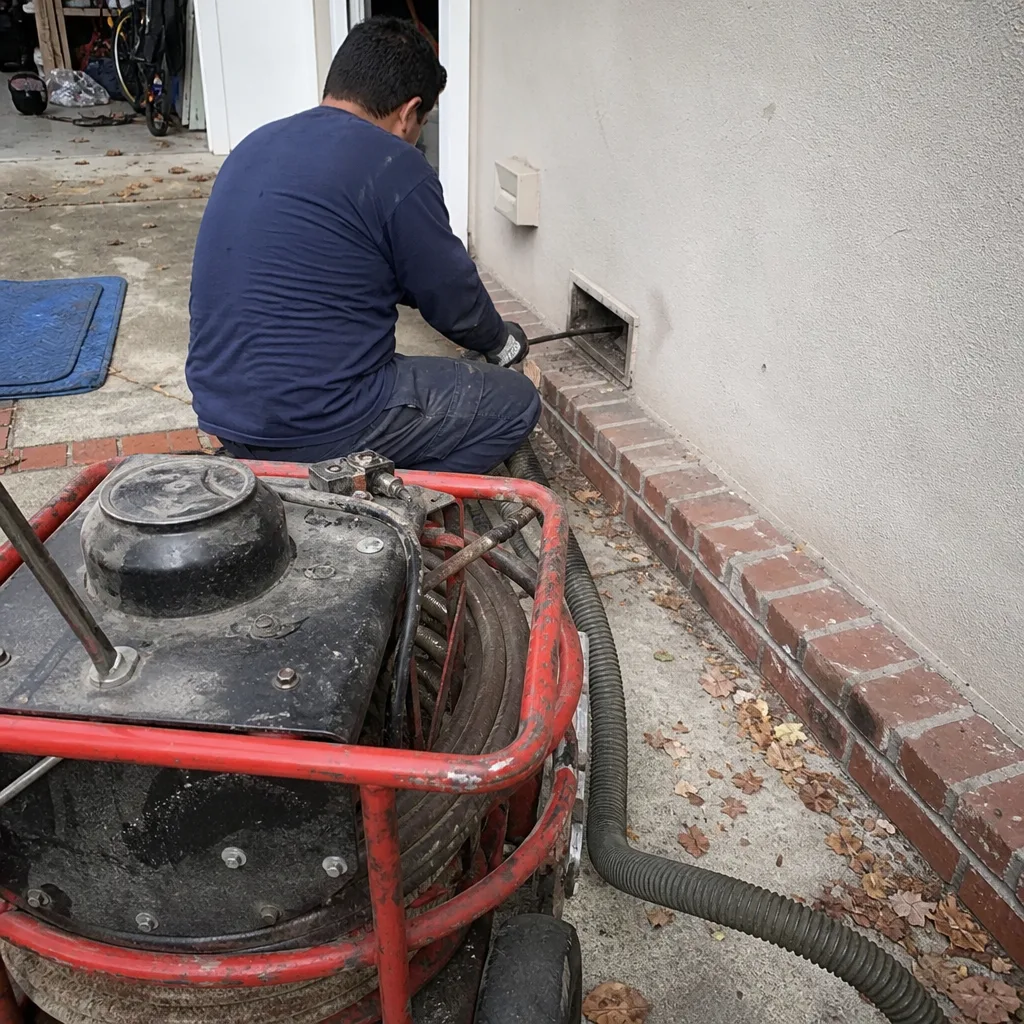 Before
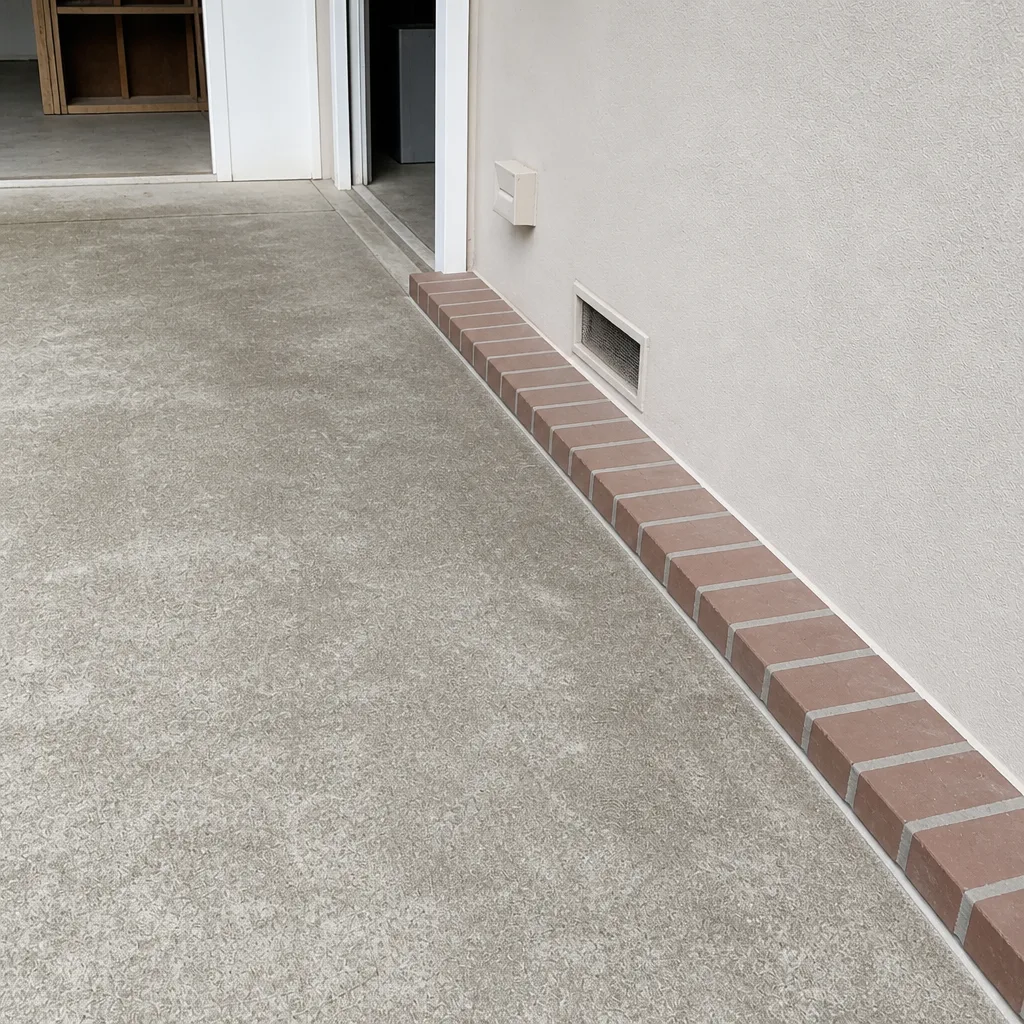 After
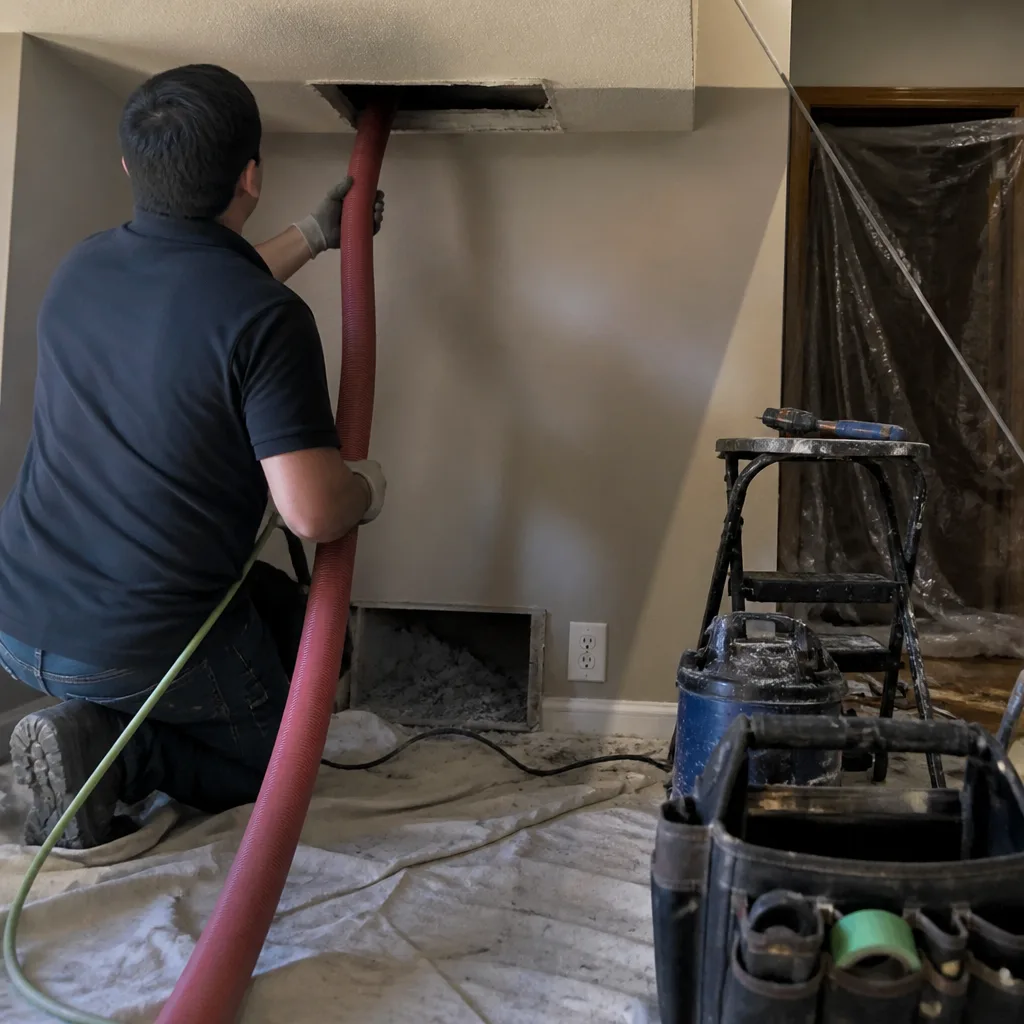 Before
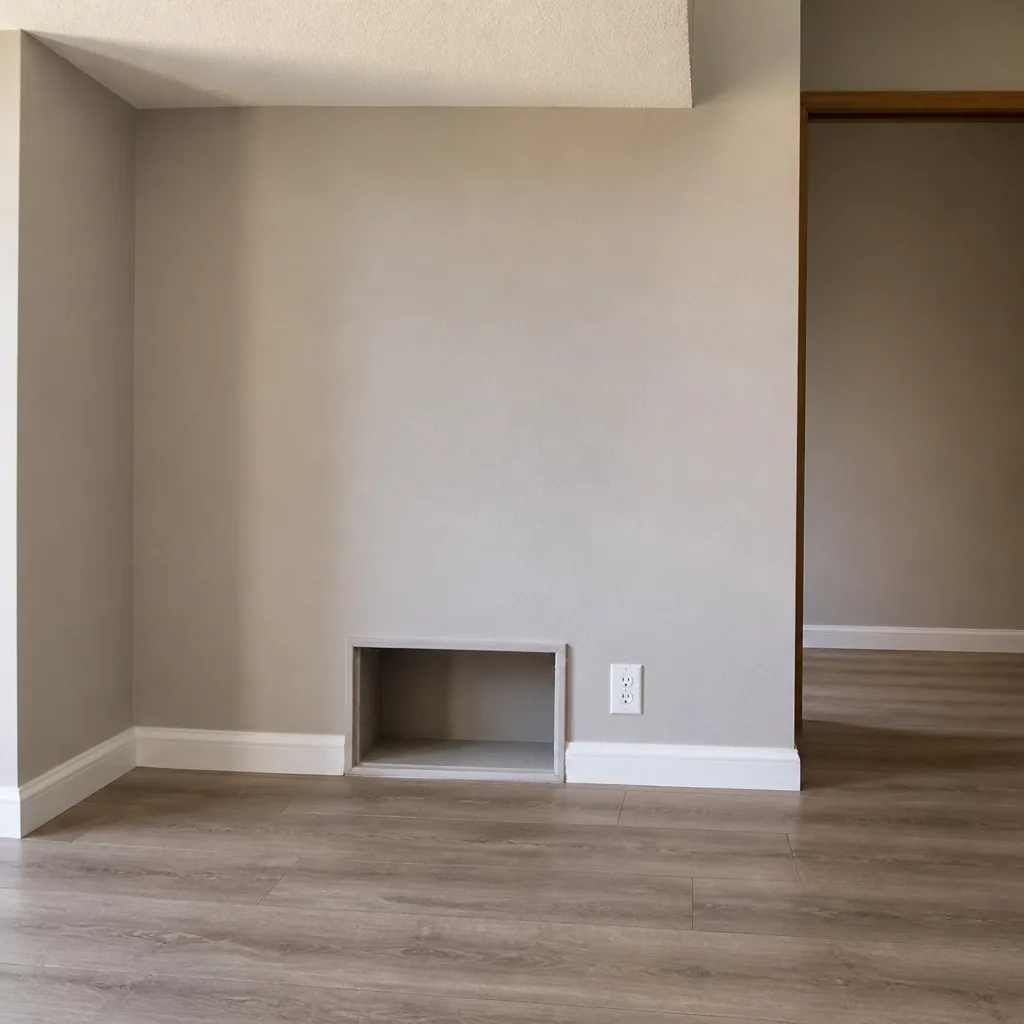 After
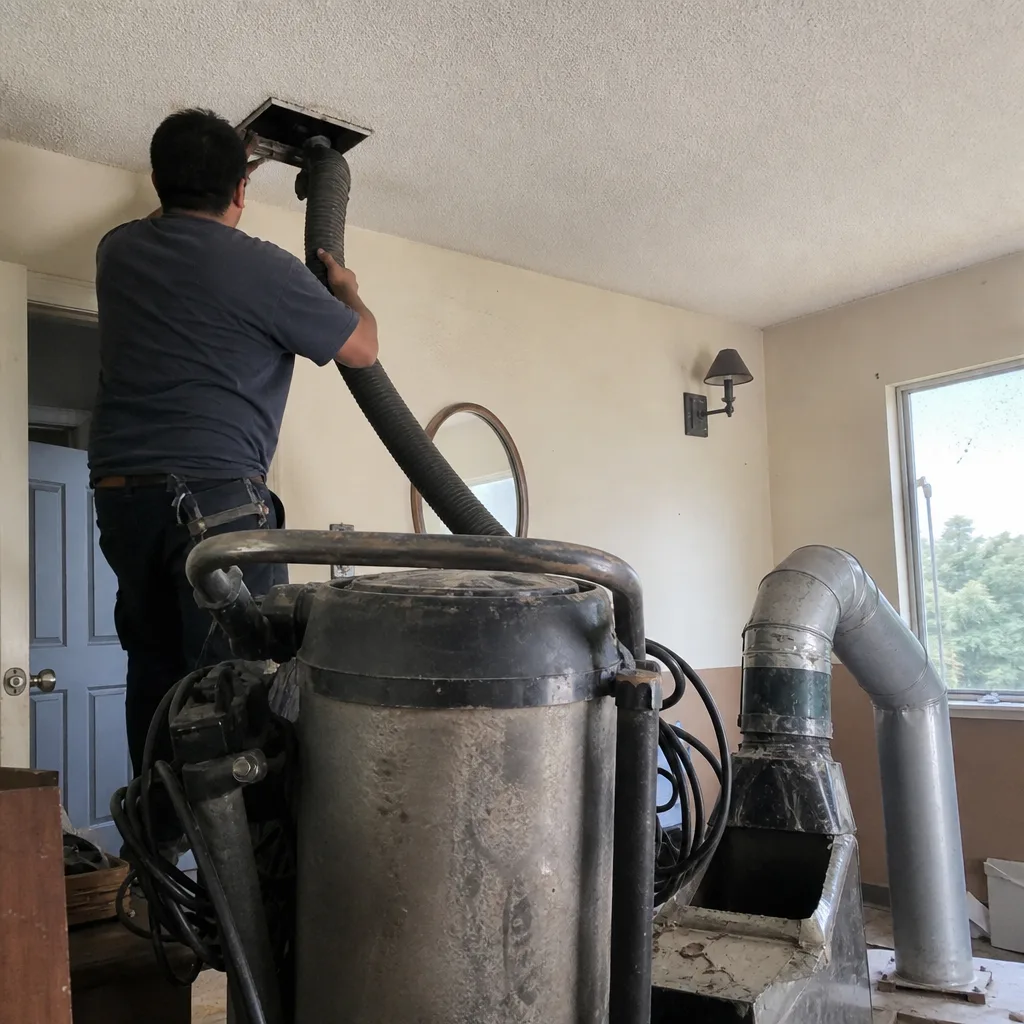 Before
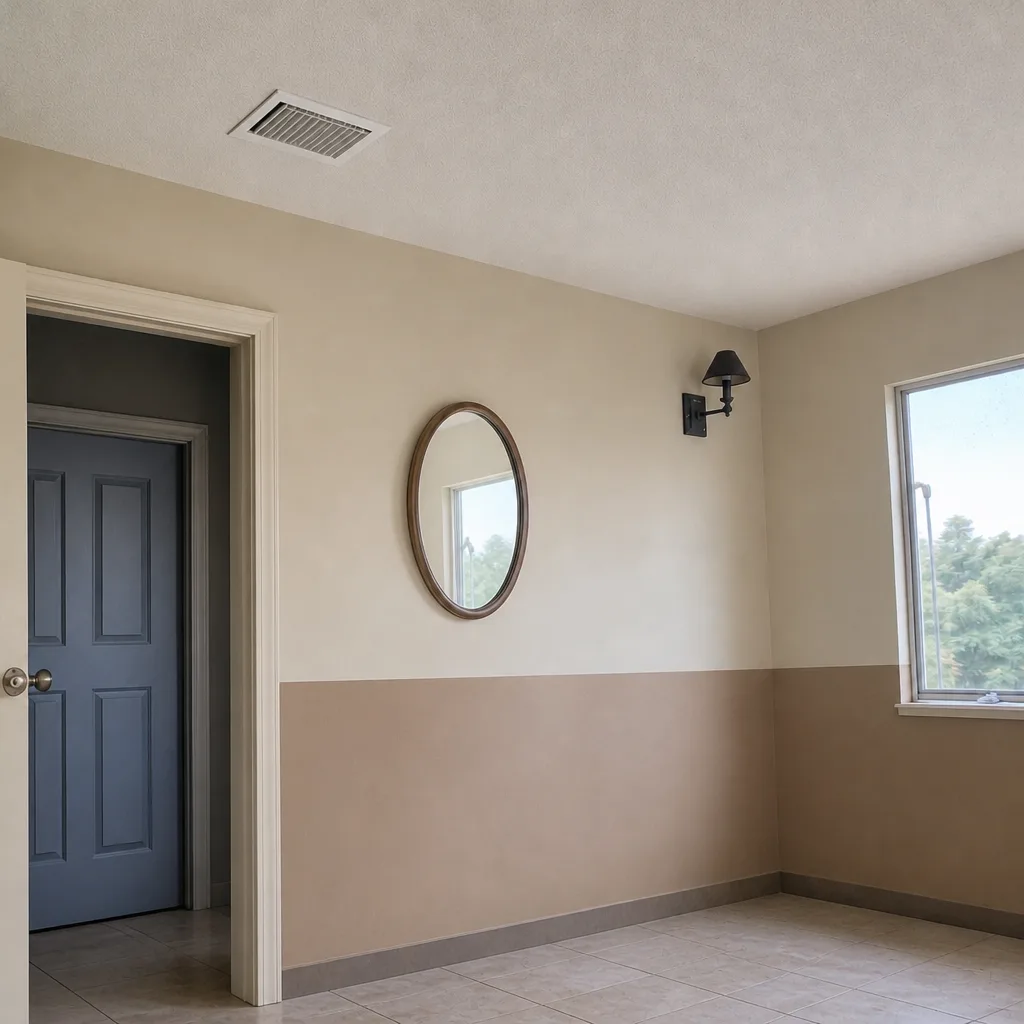 After
When to Call a Professional
Book a professional inspection if you notice persistent odors, visible dust at registers, reduced or uneven airflow, or recent renovation dust that entered the system. Homes in wildfire-smoke-impacted Fullerton neighborhoods during fire season benefit from an assessment even without obvious symptoms. If your air handler shows signs of coil contamination or the blower wheel looks fouled, that’s a full-system cleaning call, not a filter change. And any home with disconnected or sagging flex runs should treat the visit as both a cleaning and a sealing job, since a cleaning that leaves gaps will recontaminate quickly.
Fullerton Air Duct Cleaning Pros offers free estimates in Fullerton – call (844) 493-3461. We answer 24/7. Fast dispatch from 7am to 7pm, Sunday through Friday. One flat price per system, agreed before work starts, with before-and-after photos of your own ducts.
Frequently Asked Questions
Most full-system duct cleaning in Fullerton runs $350 to $900 depending on system size and whether coil and plenum cleaning is included; duct repair and sealing is typically quoted separately. Call (844) 493-3461 for an exact free estimate – the written quote sets the final price.
Cheap quotes generally reflect consumer-grade equipment, partial scope, or both. A provider running a shop-vac and a single trunk-line pass can quote low because they’re not paying for the negative-air systems, rotary-brush equipment, or containment scrubbing a real full-system cleaning requires. Call (844) 493-3461 for a fair-bottom comparison – estimates are free.
You should receive photo documentation of the interior of your system before and after, plus airflow comparison at your registers. Our policy is to show you what we found and what we removed. Call (844) 493-3461 to schedule an inspection.
Every three to five years is a reasonable baseline for most Fullerton homes, with a full-system inspection in between. Homes with pets, recent renovation, or heavy wildfire-smoke exposure benefit from more frequent attention. Call (844) 493-3461 to schedule an assessment.
Yes, especially in older slab-foundation homes common in Fullerton, where unsealed joints pull soil dust, moisture, and debris back into the system within a season. Cleaning without sealing is a partial fix. Call (844) 493-3461 to add duct repair and sealing to your quote.
Yes – HVAC cleaning covering the evaporator coil, plenum, and blower compartment is one of our core services, and it matters because buildup in those components redistributes particulate with every cycle. Call (844) 493-3461 to include it in your estimate.
The Bottom Line
Duct cleaning in Fullerton is a diagnostic process, not a one-time event. The equipment class on the truck – negative-air vacuum paired with rotary-brush agitation, run alongside containment scrubbing – determines whether contaminants get captured or simply redistributed. A full-system scope that includes boots, plenums, coil compartment, and return air cavities is the standard; anything less leaves the dirtiest sections untouched. Post-service airflow comparison and photo documentation prove what was removed. And sealing the system afterward prevents recontamination. Slab-foundation homes in older Fullerton neighborhoods carry a specific contamination profile that deserves a dedicated inspection and duct-sealing step. That’s the whole guide in one page.
To get started, look at our air duct cleaning page or read more about Fullerton Air Duct Cleaning Pros. Call (844) 493-3461. We answer 24/7. Fast dispatch from 7am to 7pm, Sunday through Friday.
Written by the team at Fullerton Air Duct Cleaning Pros.