
Last updated November 25, 2026
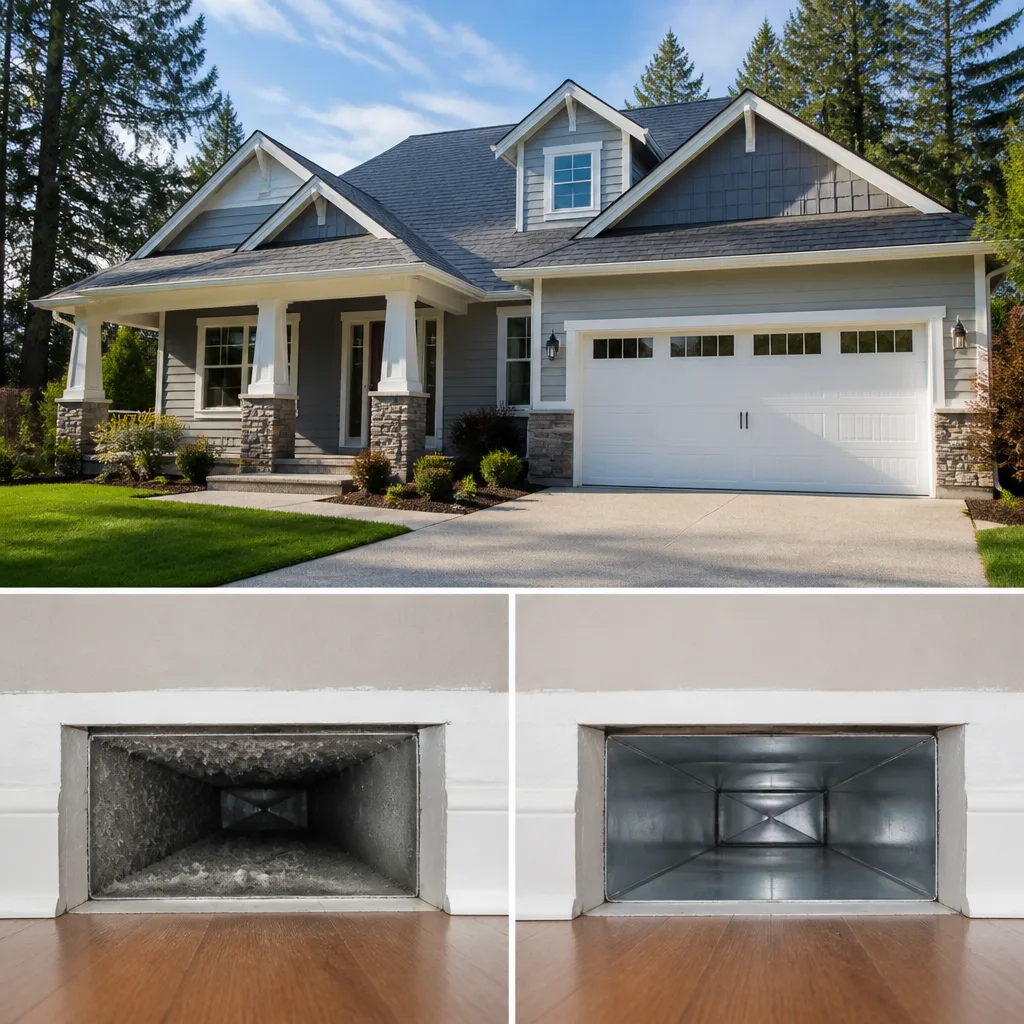 Whole-home duct cleaning
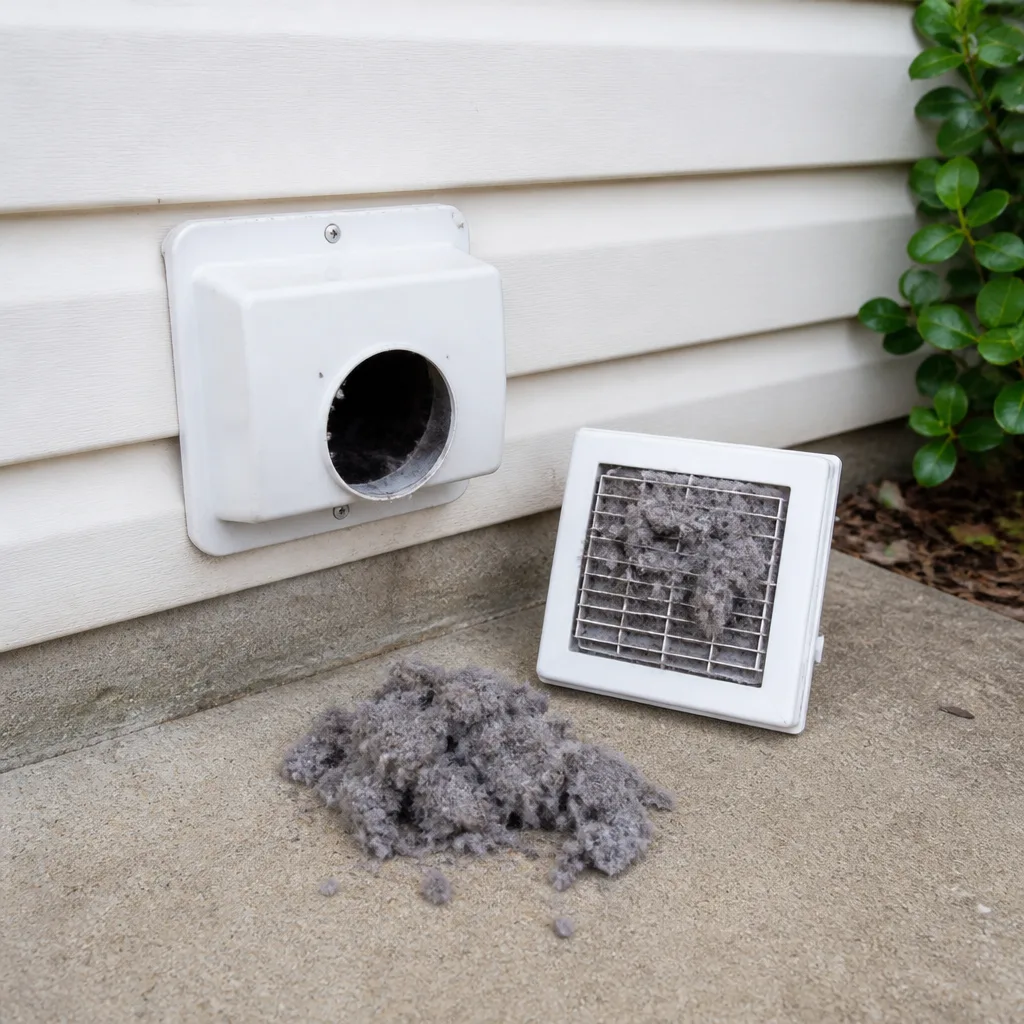 Dryer vent cleaning
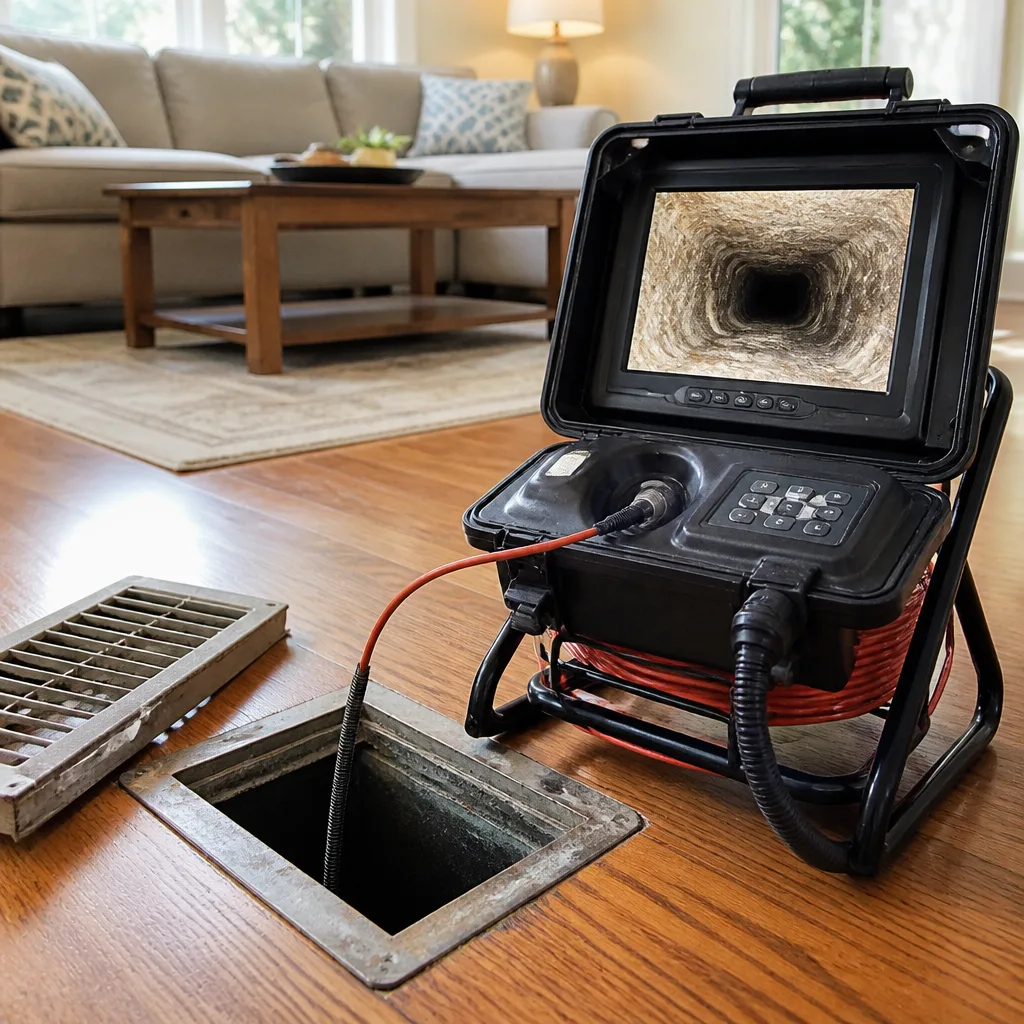 Camera inspection
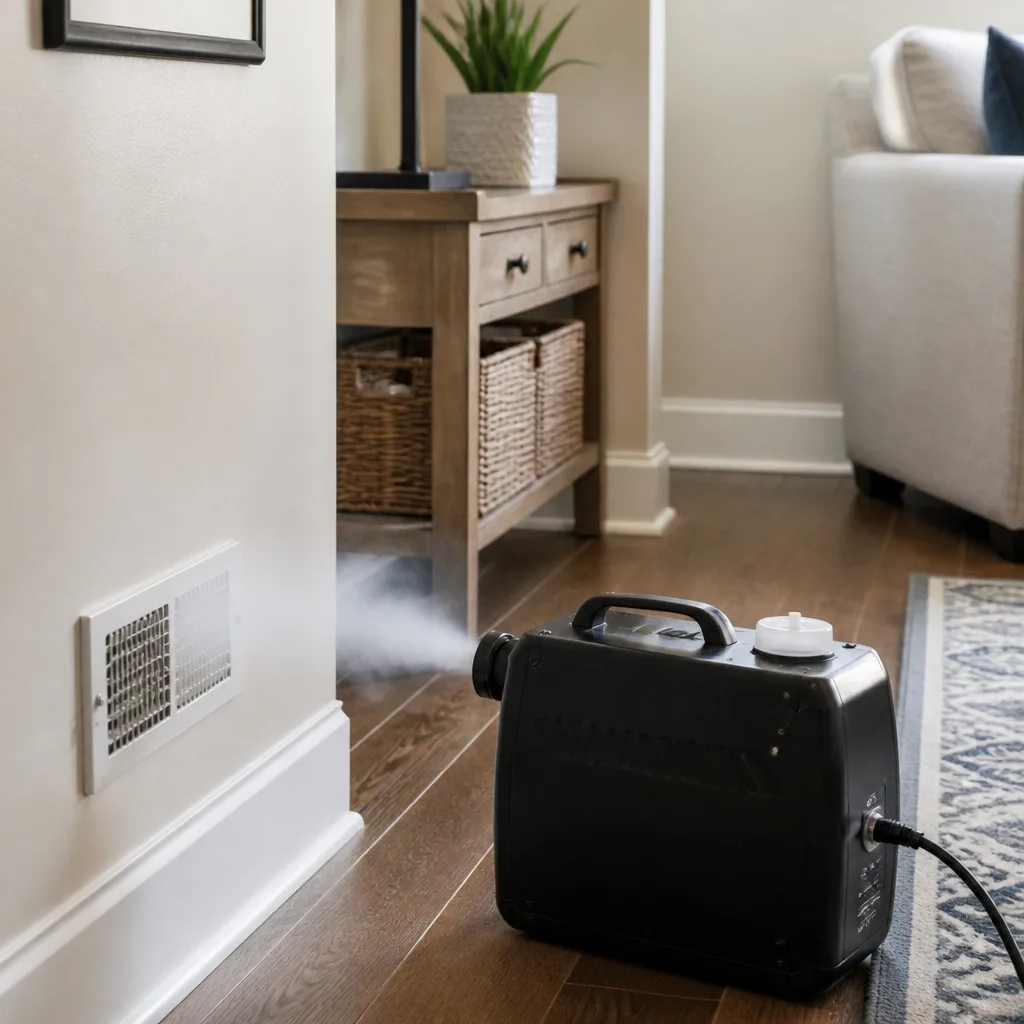 Sanitizing & deodorizing
Whole-system duct and dryer vent check with before-and-after photos - you see exactly what came out of your vents
That "$99 whole-house special" is a bait ad - the real number appears once they are in your hallway, or the "clean" is a shop-vac at the register. We photograph the inside of your ducts before and after instead.
Air Duct Cleaning Warning Signs: A Fullerton Homeowner’s Reference Guide
The dust streak around your bedroom register is the last thing to show up, not the first. By the time visible buildup appears at the grille, your system has already been pulling particulate through the return and pushing it back into your living space for weeks. The signals that show up earlier are quieter: a room that runs a few degrees warm, a utility bill that crept up while the weather held steady, a musty smell that hits only when the furnace or AC first kicks on. This guide covers those system-level signals for Fullerton homeowners, so you can tell the difference between a cleaning problem, a sealing problem and an equipment problem before you pick up the phone.
Quick Answer
The main warning signs that your air ducts need attention are uneven room temperatures, a rising energy bill during stable weather, musty odors that appear at system startup or run continuously, allergy symptoms that track with HVAC runtime, and visible dust or debris around registers after renovation work. These signals point to three different failure modes – contamination, leakage and equipment issues – and each calls for a different response. A visual inspection of your registers is not enough to tell them apart.
Styles & brands we work with
- Whole-home duct cleaning
- Dryer vent cleaning
- Camera inspection
- Sanitizing & deodorizing
Table of Contents
- Airflow Signals: What Uneven Room Temperatures Tell You
- Energy Cost Signals: Reading Your Utility Bill Against the Weather
- Odor Signals: Startup Smell vs. Persistent Mustiness
- Health Signals: When Allergy Symptoms Follow HVAC Runtime
- Post-Renovation Signals: Drywall Dust and Register Exposure
- Moisture and Condensation Signals in Fullerton’s Climate
- How a Professional Duct Inspection Works
- Common Mistakes to Avoid
Airflow Signals: What Uneven Room Temperatures Tell You
When one room in your house runs warmer in summer and cooler in winter than the rest, that’s an airflow problem, not a thermostat problem. Airflow symptoms sit at the top of the warning-sign hierarchy because they show up long before anything visible at the register. The question is whether the uneven temperature is caused by a duct restriction, a leak, or a system that was never sized right for the layout.
Here’s how to separate the three:
Duct Restriction
A restriction is a physical blockage inside the duct run – crushed flex duct, a disconnected joint, debris accumulated at a bend. You’ll notice it as one room or one zone that never quite reaches set temperature, regardless of season. Restriction issues often appear on the longest duct runs from the air handler, since those have the most distance to cover and the most opportunity for a fitting to work loose.
Duct Leakage
Leakage feels different. Instead of one cold room, you get several rooms that run slightly off, plus a system that seems to run longer to hit the thermostat setting. Leaks at joints, seams and the connection between the air handler and the main trunk are common in older Fullerton homes with original rigid ductwork. A sealed system moves the air you paid to condition. A leaking one sends a share of it into the attic or crawl space.
Equipment Sizing
Sizing issues show up as whole-house problems, not room-by-room problems. If the system has never kept up in summer – not just this year, but in any year – the issue is likely the equipment, not the ducts. Fullerton summers push a cooling system hard, and a unit that was undersized for the home’s square footage and window load won’t be fixed by cleaning. It’s worth ruling out leaks and restrictions first, because those are far more common.
A professional inspection measures static pressure at the air handler and confirms which of these three is actually happening. Cleaning a system that has a crushed duct section or a disconnected joint doesn’t solve the underlying problem, which is why we approach duct repair and sealing as a core service rather than an upsell. You can read more about our full air duct cleaning process, which starts with measurement.
Energy Cost Signals: Reading Your Utility Bill Against the Weather
A utility bill that jumps during a heat wave doesn’t tell you much. A bill that climbs while the weather holds steady is a different story. When your energy usage rises in a month where temperatures, runtime habits and occupancy haven’t changed, the likely cause is a system working harder to move the same air – and duct leakage is one of the top reasons that happens.
The pattern to watch for:
- Pick two comparable months in the same season, ideally two months apart with similar average temperatures.
- Note the kWh usage, not just the dollar amount, since rate changes can distort the total.
- Compare runtime hours if your thermostat tracks them. Usage up with runtime flat points to an efficiency problem, not a demand problem.
- Check whether the increase coincides with anything else – a new appliance, a change in filter type, added occupants.
Duct leakage degrades system efficiency in a specific way: the air handler draws in unconditioned attic or garage air through gaps in the return path, then has to condition that hotter air before it reaches the living space. Leaks on the supply side are even more direct – conditioned air escapes before it reaches the room. Either way, the compressor runs longer per cooling degree, and the cost shows up on the bill before it shows up anywhere else.
The same logic applies to heating, though Fullerton’s mild winters mean the effect is less pronounced. Heating season is when you might notice a musty smell at startup (covered in the next section) rather than a clear cost spike. During cooling season in Fullerton, duct leakage is one of the highest-impact efficiency issues we look at in a home, and it’s fixable. Sealing the accessible runs and reconnecting dislocated joints is a two-part job – seal first, then clean, because you don’t want to clean a system that’s going to re-contaminate from leaks the same week.
Odor Signals: Startup Smell vs. Persistent Mustiness
Musty odor is a useful diagnostic, but only if you pay attention to when it appears. A musty smell that lasts 30 to 90 seconds when the system first turns on is telling you something different than a musty smell that hangs in the air the entire time the system is running. The first points upstream to the coil; the second points into the ducts themselves.
The Startup-Only Smell
When the AC or furnace kicks on and there’s a brief musty or “dirty sock” smell that fades once air is moving, the issue is usually at the evaporator coil or the condensate drain pan. Both sit inside the air handler, downstream of the filter and upstream of the supply ducts. Moisture collects there during normal cooling operation, and if drainage is slow or the coil has picked up a film of biological growth, that growth releases odor into the air stream at startup. Cleaning the coil and clearing the drain are the fix. Replacing the filter on a schedule helps, but it won’t solve a coil problem.
The Persistent Mustiness
A musty smell that stays with you the whole time the system runs points to contamination inside the duct system itself, or to moisture in the ducts. Flex duct is especially vulnerable – the inner liner can hold condensation if it’s run through a hot attic or rests against a cold surface. Once microbial growth establishes on the inner liner, mechanical cleaning removes the buildup and a professional-grade sanitizing product addresses what’s left. We use Guardsman-grade sanitizers for this because they’re applied after mechanical cleaning, not as a substitute for it.
Other Odors
A chemical or burning smell, a smell of exhaust, or any odor you can’t identify is worth taking seriously. Those don’t fall into the “musty duct” category and should be checked by the appropriate trade – electrical for a burning smell, HVAC for exhaust or refrigerant issues. Duct cleaning is not a fix for those, and we’d say so on the phone.
The one exception worth calling out: a persistent odor after renovation work is often drywall dust that has settled into the return. That’s covered in the renovation section below. If you want to understand how we separate cleaning from sanitizing, the full Fullerton Air Duct Cleaning Pros service overview walks through the process from the filter to the vent.
Health Signals: When Allergy Symptoms Follow HVAC Runtime
If you live in Fullerton and your allergy symptoms have gotten worse, the outdoor air quality in Southern California is the default suspect. But there’s a pattern that separates a duct problem from a seasonal problem: symptoms that correlate with HVAC runtime rather than with outdoor conditions.
Watch for these patterns:
- Symptoms that intensify in the mid-afternoon when the AC runs most, and ease in the early morning when it doesn’t.
- Waking up congested more often in a room with a supply register nearby.
- A houseguest or family member without a history of seasonal allergies reporting symptoms only when they’re at your home.
- Symptom clustering in the rooms served by the longest or oldest duct runs.
Outdoor-driven allergies typically spike during the seasons when local plants pollinate. Indoor-driven allergies – specifically ones tied to duct contamination – stay steady through the year, or track with system runtime rather than with the calendar. That’s the pattern that matters. If you can’t tell the difference, a simple test is to note symptom levels on a day when outdoor conditions are mild but the AC runs a lot. If symptoms spike, duct contamination or a moisture issue is a stronger suspect than pollen.
This is also the point where filter quality matters. A filter that isn’t rated to capture the particle sizes you care about won’t help, and a filter that’s too restrictive will choke airflow and cause the very temperature problems we covered in the airflow section. We carry and service Honeywell and Aprilaire products for exactly this reason – upgrading the filtration side of the system without skipping the cleaning side is the only way the installation does what it’s supposed to. If you’re noticing the symptom pattern above, the first step is an inspection, not a filter swap on its own.
Post-Renovation Signals: Drywall Dust and Register Exposure
Fullerton has a steady stream of kitchen, bathroom and whole-house remodels, and every one of them is a drywall dust event for the HVAC system. Drywall dust is fine and highly mobile – it passes through most standard filters and settles throughout the duct system. The signal that matters isn’t just “there’s dust,” but whether you can identify which registers were exposed during construction.
Here’s how to trace the exposure:
- Map the rooms that were worked on. Drywall sanding, demo and painting all release fine particulate, and any register in those rooms was likely left open unless it was taped over.
- Check the return registers in the affected area. Returns are the most likely entry point for airborne dust – if the return in the remodeled room was uncovered, the system pulled dust in during every runtime cycle.
- Look at the filter and the air handler. A filter that clogged faster than its normal replacement interval after the remodel is a strong indicator that the system pulled in construction dust.
- Note the supply register faces. Any supply register that shows fine white or gray dust settling on the louver blades after the remodel is in the affected run.
- Compare against non-renovated rooms. If bedrooms untouched by the work show no dust but the affected rooms do, the exposure path is confirmed.
What to do about it depends on scope. A light exposure can sometimes be handled with a deep filter change and a general cleaning. A full gut remodel where the system ran during drywall sanding almost always needs a full-system cleaning, because the dust has propagated through the trunk and into multiple branches by the time it’s visible at the register. We use Abatement Technologies containment and air scrubbing equipment during this kind of job specifically so the particulate we dislodge doesn’t redistribute into rooms that were just finished. Covering the registers the day construction starts is a much easier fix than cleaning up after the fact – worth knowing for the next project.
Moisture and Condensation Signals in Fullerton’s Climate
Moisture inside ducts is the signal most Fullerton homeowners miss, and it’s the one that drives the most serious contamination. We don’t have the humidity or freeze issues that make duct moisture an obvious problem elsewhere, but we do have warm attics, long AC runtime and older homes where the duct system was installed with the air handler in a space that never gets inspected.
The signs moisture has entered the duct system:
- Condensation visible on the exterior of duct runs in the attic, garage or crawl space.
- Water stains or rust at connection points.
- A sulfurous or damp-earth smell in one specific room when the system runs.
- Flex duct that has collapsed or sagged, trapping cooled air against the liner.
- Filtration media that stays damp after a filter change.
Moisture inside flex duct is a harder problem than dust, because cleaning alone doesn’t address the source – if the duct is sweating, it will re-contaminate. The fix is usually a combination of resealing the affected runs, correcting the insulation where it’s inadequate, and cleaning the system after the moisture source is under control. We’ve seen enough Fullerton homes where the duct was undersized or improperly installed to say this: if the moisture issue traces back to installation, no amount of cleaning fixes it. Sealing and repair is the first step, followed by cleaning once the system runs dry.
If you have a duct system with visible condensation, don’t run the system with the filter removed for long periods hoping it’ll dry out. That pulls unconditioned air into the return and makes the problem worse. Call for an inspection instead, and get the moisture assessment done before deciding on a cleaning scope. If you’re also dealing with a clogged dryer vent, note that those are a separate safety issue and covered under our dryer vent cleaning service page.
How a Professional Duct Inspection Works
A real duct inspection is measurement-based, not a visual walk-through with a flashlight. Most homeowner-level “free inspections” that turn into a same-hour cleaning quote are looking at the register face and nothing else. A proper assessment covers the whole system and produces a scope document that tells you what’s there and what isn’t.
Here’s what a real inspection involves:
- Airflow measurement at the air handler. Static pressure and system flow are measured to confirm whether the system is moving the expected volume of air. Low flow points to restriction or leakage.
- Supply and return register mapping. Every register is checked and mapped to its branch, so the inspection covers rooms that weren’t obvious problems.
- Access opening at the main trunk. Access panels allow inspection of the trunk line from the inside, where the actual contamination picture is.
- Photographic documentation. A real inspection produces photographs of what’s inside the ducts, not just the register face. We show you what we found, because that’s the difference between an inspection and a sales pitch.
- Contamination classification. Dust and debris, microbial growth, moisture intrusion and construction debris are different findings and get different scopes.
- Sealing and repair assessment. Joints, seams and disconnections are checked. Cleaning a leaking system just means the next load of dust comes back faster.
- Written estimate per system. One flat price per system, agreed before any work starts, covering the scope identified in the inspection.
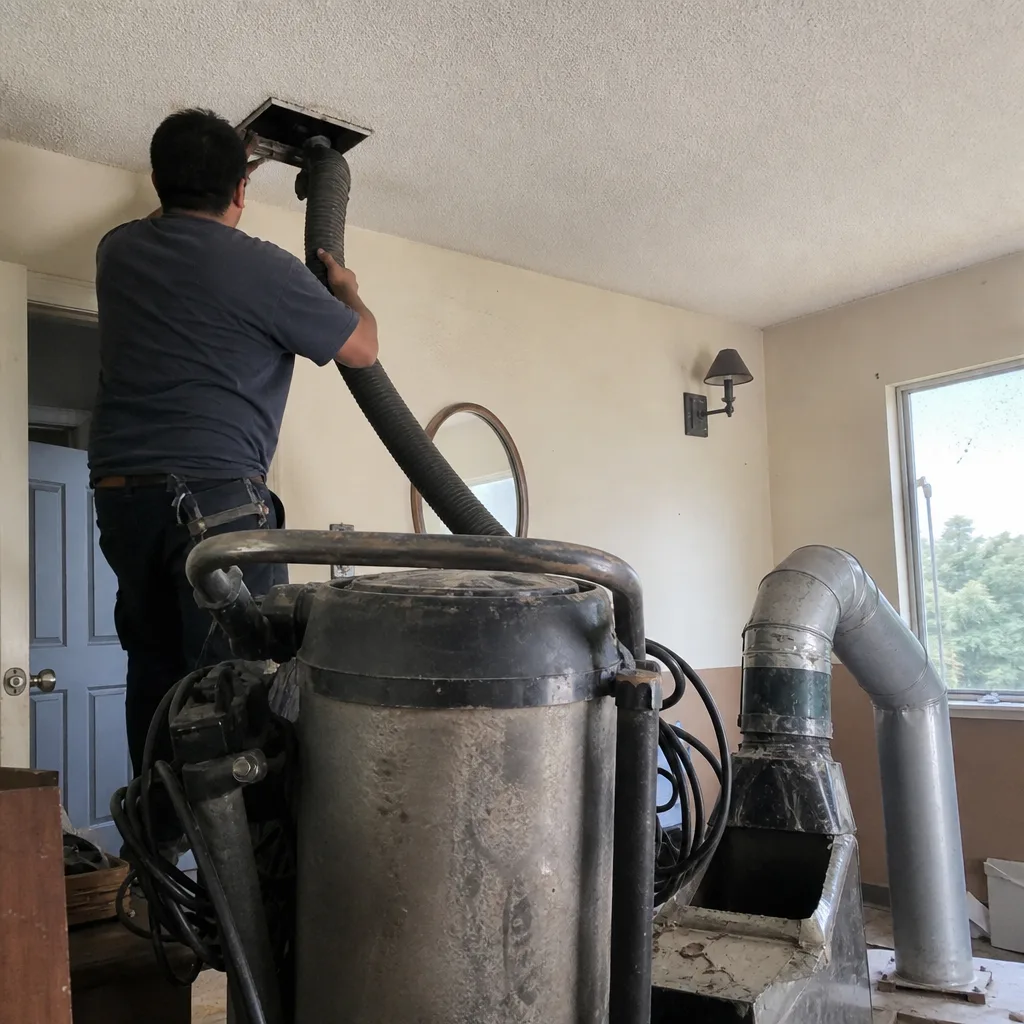
Professional-grade equipment matters here too. We use Rotobrush rotary-brush systems for mechanical agitation of duct wall contaminants and Nikro negative-air vacuums for source-removal cleaning that captures what the brush dislodges. Those are the same commercial platforms HVAC contractors rely on, not consumer-grade vacuums relabeled as industrial. That’s the equipment difference that makes an inspection’s recommendations worth following – the tools have to match the scope. If you’re bundling cleaning with a full system tune-up, our HVAC cleaning page covers the coil, blower and air handler side.
Which Signal Points to Which Problem
The whole point of paying attention to signals is to avoid misdiagnosing the problem. Here’s a quick reference for the most common patterns:
- One room off-temperature, rest of house fine: duct restriction, or a branch that’s disconnected or crushed.
- Whole-house temperature drift + rising energy use: duct leakage, especially at the air handler connection and trunk joints.
- Musty smell at startup, fades when running: evaporator coil or drain pan growth.
- Musty smell throughout runtime: duct contamination, or moisture in flex duct.
- Allergy symptoms tracking HVAC runtime: duct contamination or filtration inadequacy.
- Registers dust-dirty after remodel: construction dust infiltration, scope depends on which registers were open.
- Condensation on duct exterior: moisture intrusion – fix the source before cleaning.
In our experience, most Fullerton homes with multiple warning signs have more than one problem. A dirty system that also leaks will get dirty again within months. That’s why we approach every project as clean it, seal it, then assess the filtration side – the order matters. Cleaning without sealing is a temporary fix.
See the difference
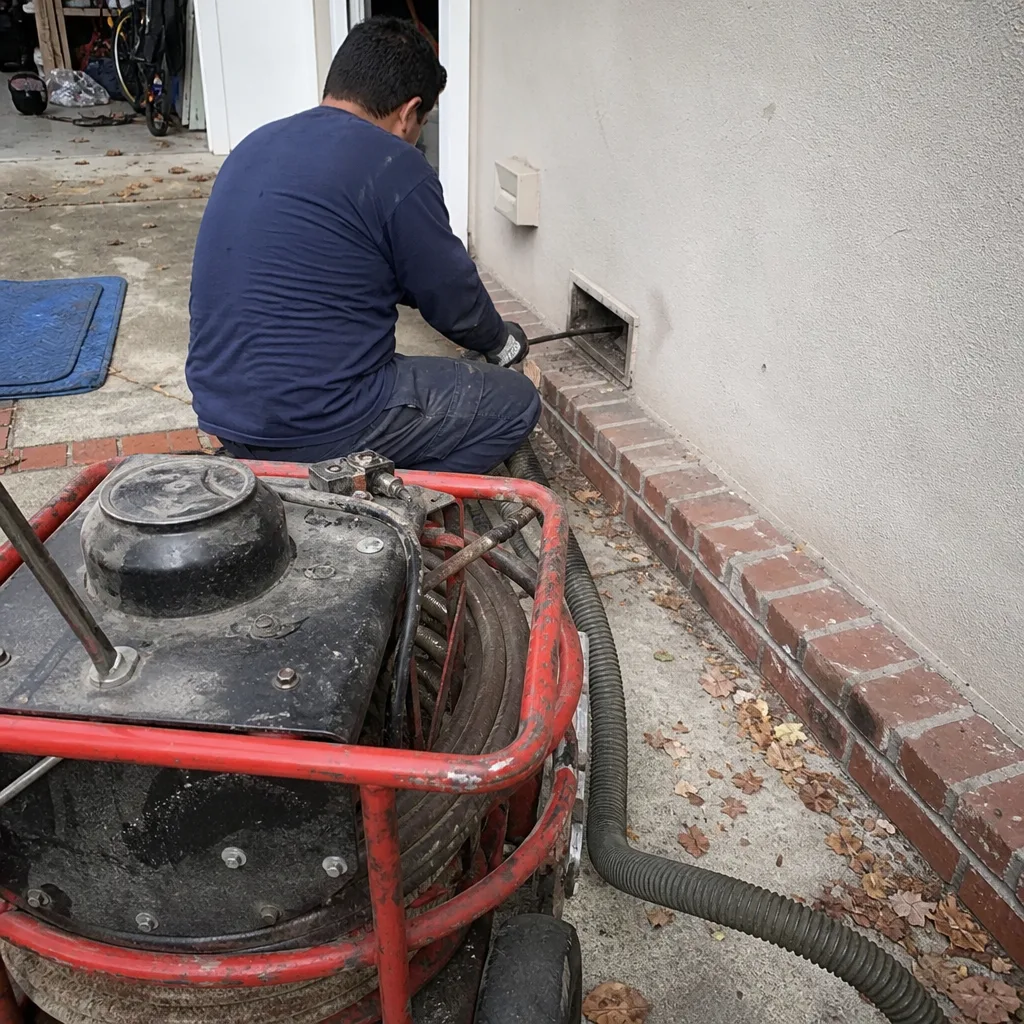 Before
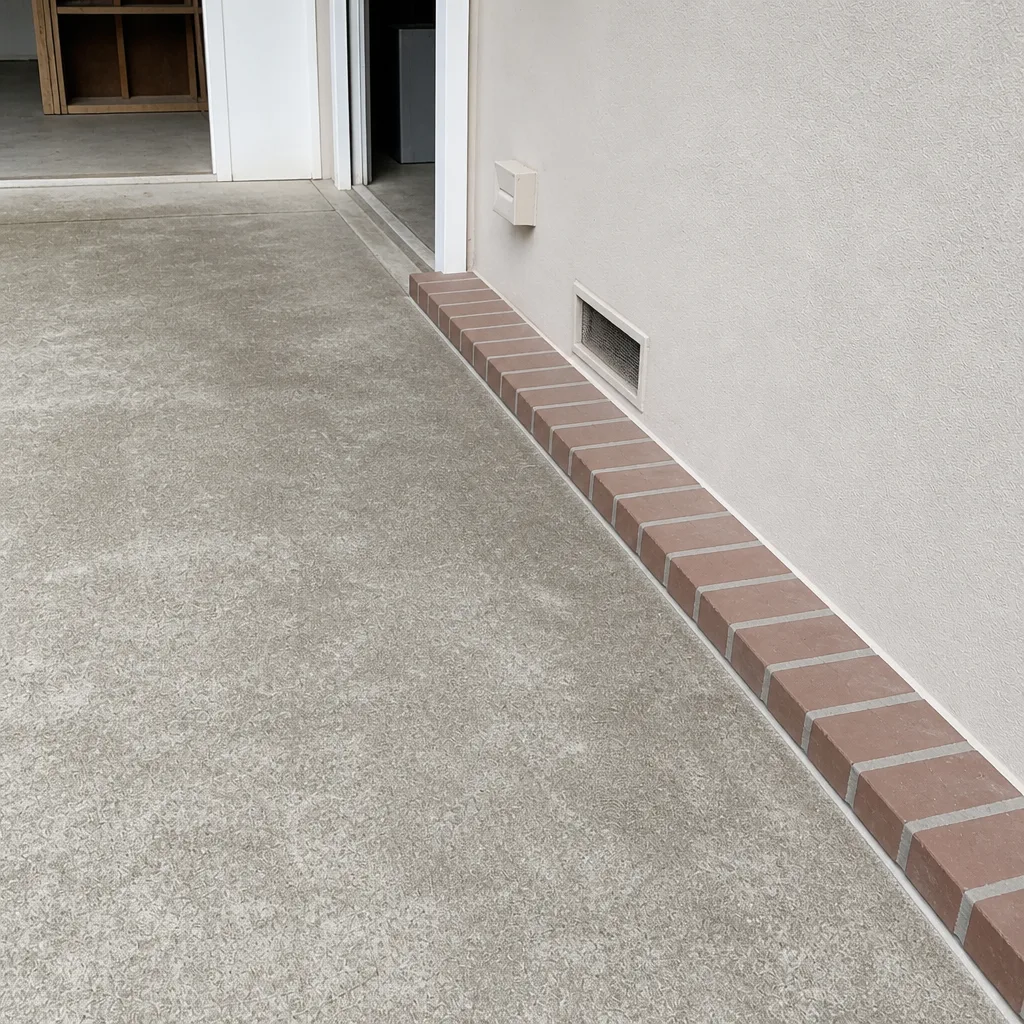 After
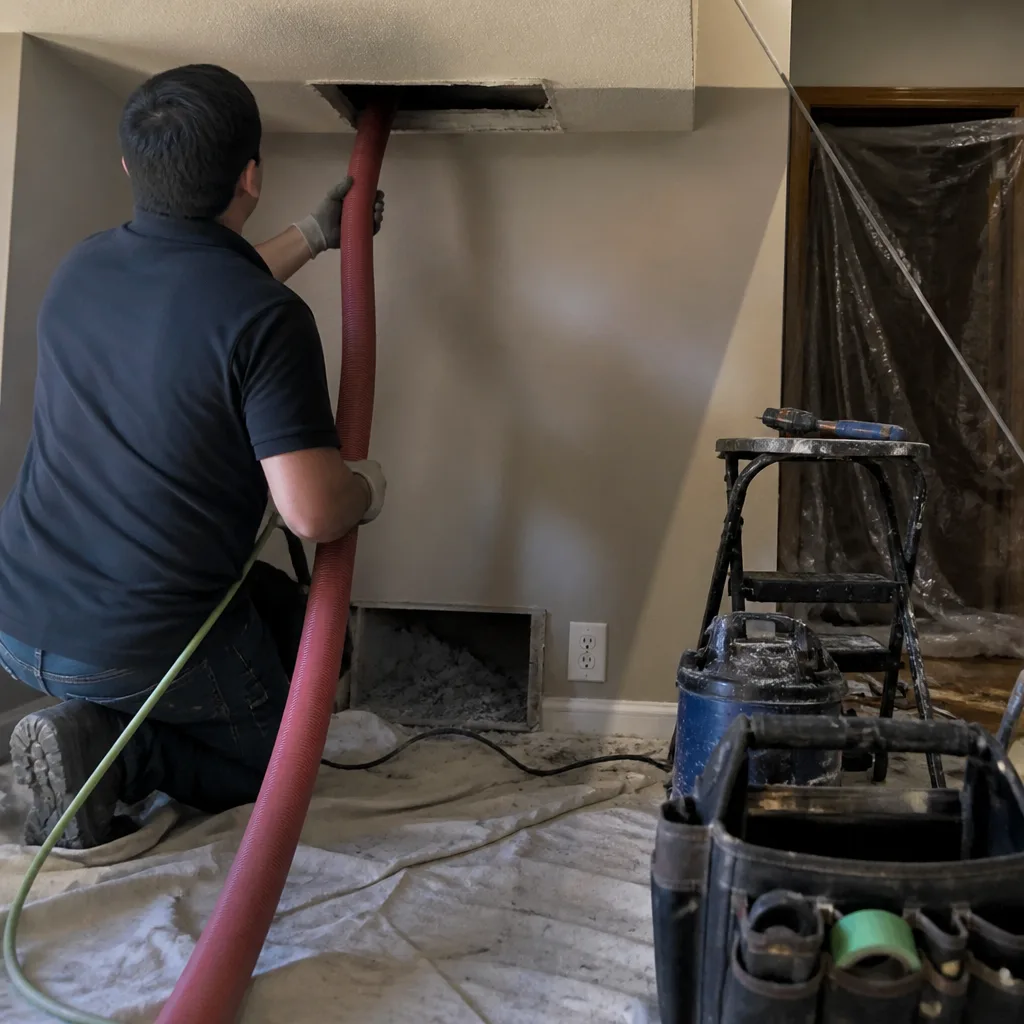 Before
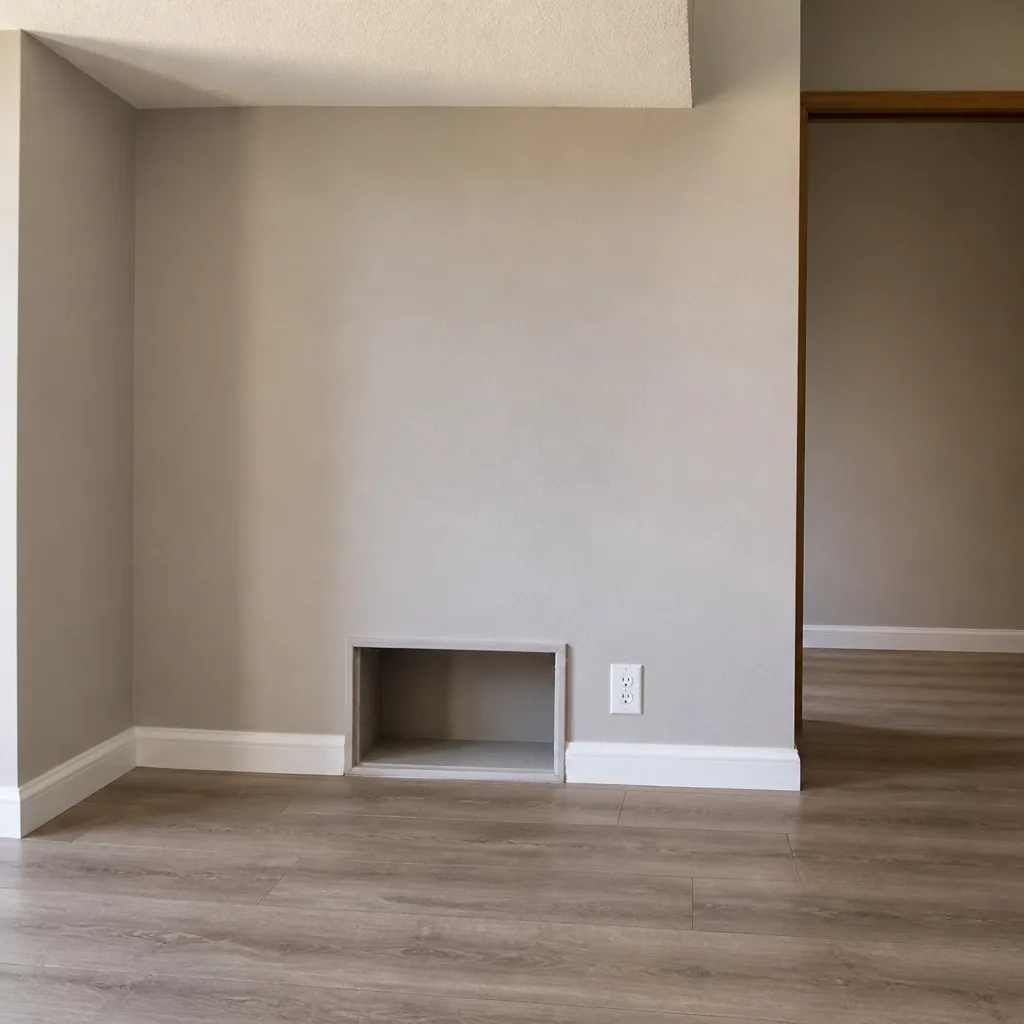 After
 Before
 After
Common Mistakes to Avoid
- Judging duct condition by the register face. The register grille collects nuisance dust from the room, not the duct contamination that matters. The inside of the trunk is where the real picture lives, and it takes a proper access opening to see it.
- Cleaning before sealing. A system with disconnected joints or open seams will re-contaminate faster than you’d expect. Seal first, then clean, or plan both as one job.
- Ignoring a moisture signal while cleaning. Cleaning a duct with active condensation just removes the current growth – the moisture source repopulates it in weeks. Resolve the moisture first.
- Upgrading filters before fixing airflow. A high-MERV filter installed on a system with static pressure problems makes the airflow shortage worse, not better. Measure first.
- Hiring a company that skips the air handler. Cleaning the branch ducts and leaving the coil and blower untouched is a partial job, and the coil is where much of the contamination originates.
- Assuming the lowest quote covers the same scope. Whole-system pricing varies because scope varies. Ask what’s included – trunk line, branches, air handler, coil, sealing assessment – and expect a written estimate before work begins.
- Waiting for visible dust to act. By the time dust is obviously visible at registers, the system has been redistributing it for weeks. The earlier signals – airflow, energy use, odor pattern, symptoms – tell you sooner.
When to Call a Professional
Call a professional when you have two or more of the signals in this guide present at the same time, when you’ve had a full remodel and the system ran during drywall work, when you smell mustiness that persists during operation, or when a room never reaches temperature regardless of season. Visible condensation on duct runs is a call-now sign. So is any moisture staining you discover in the attic or crawl space near ductwork. The earlier you act, the less likely you are to be cleaning a system that re-contaminates – and the easier it is to identify which signal is the root cause versus which is downstream. Fullerton Air Duct Cleaning Pros offers free estimates in Fullerton – call (844) 493-3461. We answer 24/7. Fast dispatch from 7am to 7pm, Sunday through Friday.
Frequently Asked Questions
The earliest signs are usually airflow-based and energy-based, not visual. Uneven room temperatures, a utility bill that climbed during stable weather, and musty odor patterns are all earlier indicators than visible dust at the register. Visible buildup at a grille means the system has been redistributing particulate for weeks. Call (844) 493-3461 for a free inspection quote – the written estimate sets the final price.
Whole-system air duct cleaning in Fullerton typically runs from about $350 to $750 for a standard single-story home, and from about $550 to $1,100 for a two-story home with a full attic run. Cleaning plus duct repair and sealing is typically $800 to $1,800 depending on the number of disconnections and the extent of sealing needed. These are estimated ranges for whole-system service – never a per-vent price – and the written estimate sets the final number. Call (844) 493-3461 for an exact quote on your home.
Low quotes usually reflect a partial scope – the branch ducts cleaned but not the trunk or air handler, or a lightweight vacuum that loosens but doesn’t capture. The gap between the advertised number and the final invoice is where the bait-and-switch reputation comes from. We price one flat rate per system, agreed in writing before any work begins, with no per-vent pricing. Call (844) 493-3461 for a free estimate.
You should see before-and-after photographs of your own ducts, taken from inside the system through the access openings. A professional inspection produces evidence, not a verbal summary. Ask for photos of the trunk line and the air handler, not just the register faces. Call (844) 493-3461 to schedule a free estimate and see the inspection process first.
Most homes need cleaning every 3 to 5 years under normal use, sooner if a renovation happened, if a pet sheds heavily, if there’s been any moisture intrusion or if a household member has respiratory sensitivity. Homes near active construction projects may need a shorter interval. The inspection tells you what’s actually there – a fixed schedule matters less than an evidence-based scope. Call (844) 493-3461 for a free assessment.
No. A musty smell that appears only at system startup and fades when running usually points to the evaporator coil or condensate drain, not the ducts. A musty smell that persists the whole time the system runs is more likely duct contamination or moisture in flex duct. The two get different scopes, which is why an inspection comes before a cleaning quote. Call (844) 493-3461 to talk through what you’re noticing.
The Bottom Line
The signals that matter most are the ones you feel before you see: uneven temperatures, energy costs that climb when the weather holds, odor patterns at startup versus continuous runtime, and allergy symptoms that track HVAC cycles rather than outdoor conditions. Visible dust at the register is what most warning-sign lists lead with – it’s actually the last signal to appear. Every problem in this guide falls into one of three categories: contamination, leakage, or equipment, and each one has a different fix. Cleaning without sealing re-contaminates. Sealing without cleaning traps the buildup. Getting the order right is what makes the result last. Our technicians have up to 11 years of experience diagnosing these patterns across Fullerton homes, and every job starts with measurement, not a sales pitch.
Call (844) 493-3461 for a free estimate. We answer 24/7. Fast dispatch from 7am to 7pm, Sunday through Friday.
Written by the team at Fullerton Air Duct Cleaning Pros.