
Last updated November 25, 2026
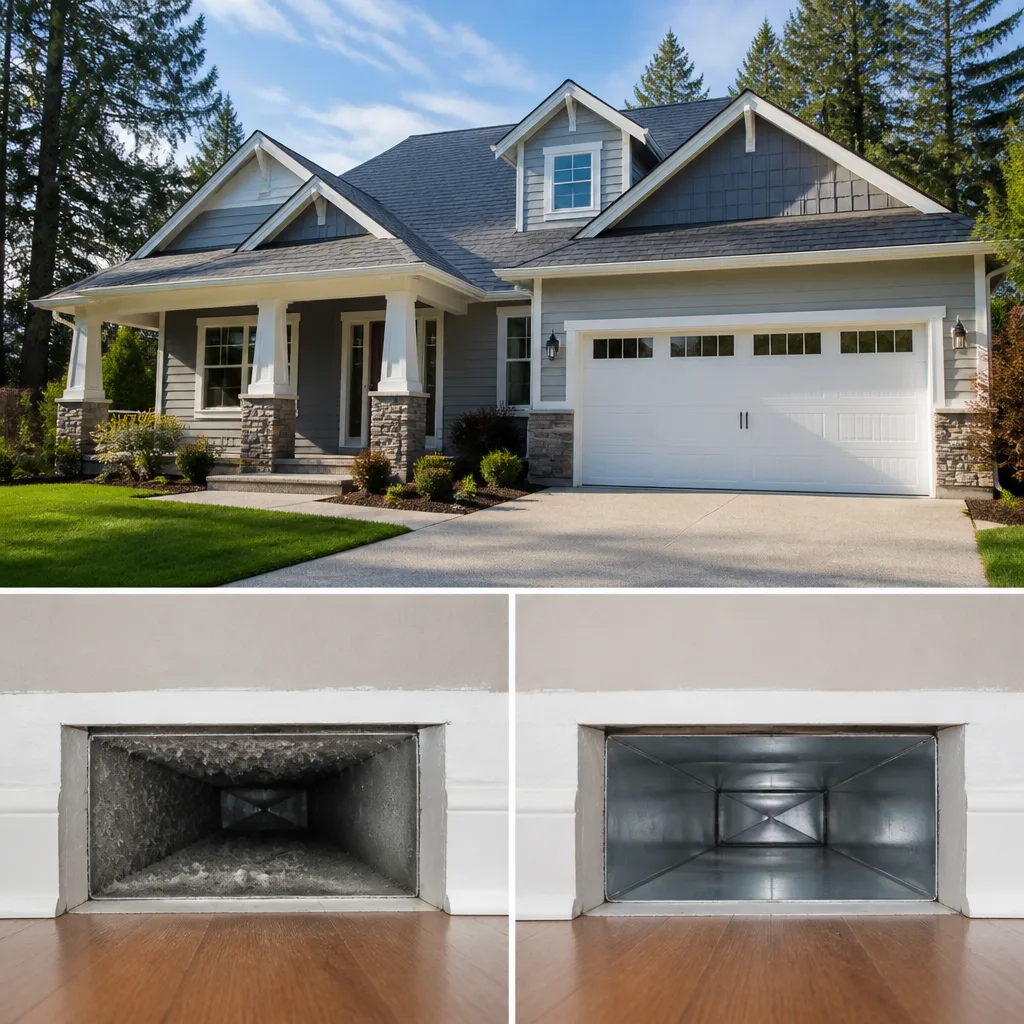 Whole-home duct cleaning
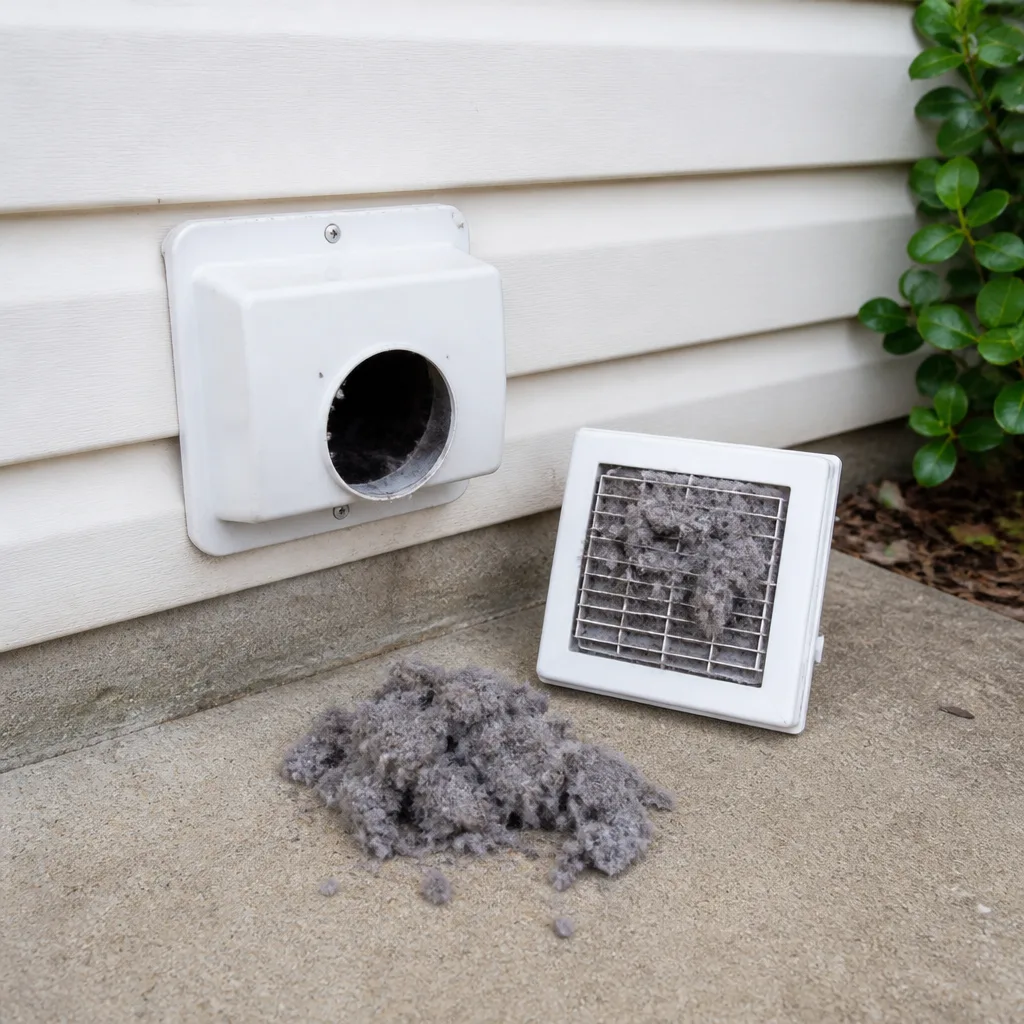 Dryer vent cleaning
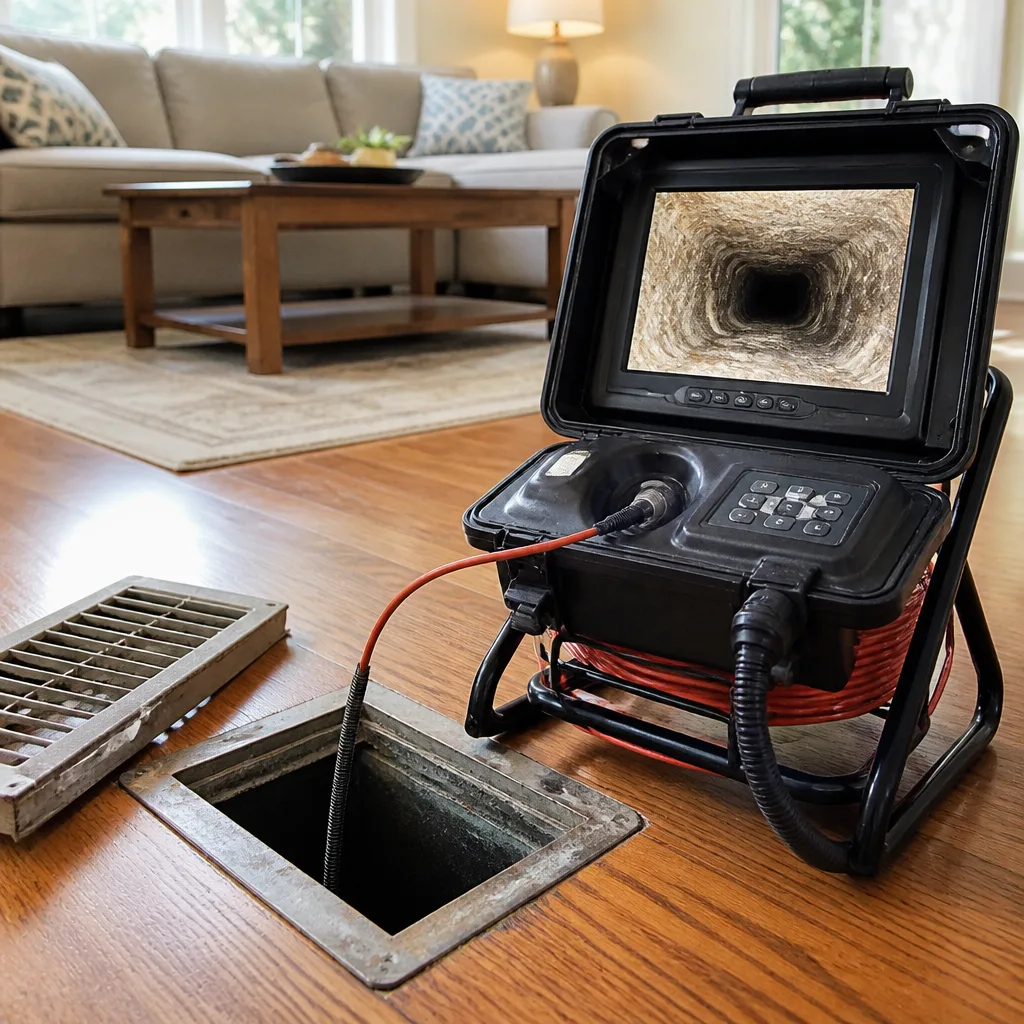 Camera inspection
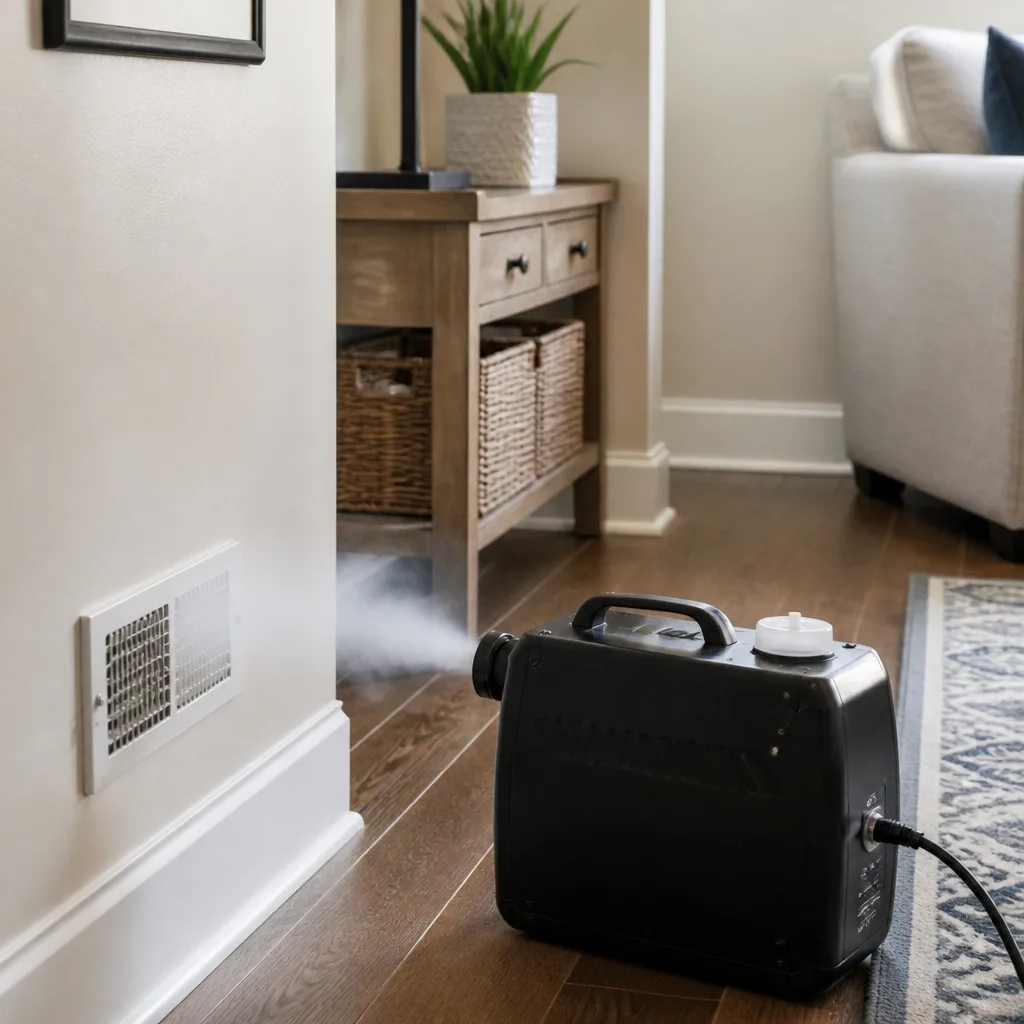 Sanitizing & deodorizing
Whole-system duct and dryer vent check with before-and-after photos - you see exactly what came out of your vents
That "$99 whole-house special" is a bait ad - the real number appears once they are in your hallway, or the "clean" is a shop-vac at the register. We photograph the inside of your ducts before and after instead.
Air Duct Cleaning Emergency Preparedness Guide for Fullerton Homes
Most homeowners treat their duct system as background infrastructure – invisible, passive, and irrelevant until something visibly breaks. That assumption is backwards. After a nearby wildfire, turning your HVAC back on before inspecting your duct system can pull exterior smoke particulate – including carcinogenic char particles – through your entire home in under 20 minutes. The ducts don’t filter that air; they distribute it. Fullerton sits close enough to active wildfire corridors, and sits directly on enough seismic risk, that the duct system becomes a genuine contamination vector in two separate emergency scenarios. This guide walks you through both: a post-wildfire assessment protocol, a post-earthquake inspection checklist, water intrusion timelines, disaster documentation for insurance, and the preparation steps you can take before either event happens.
Quick Answer
Air duct cleaning after wildfire smoke in Fullerton is not a routine cleaning – it’s a contamination-removal procedure that should happen before you restart your HVAC, not after. Check your filter first: a blackened or heavy-smelling filter indicates smoke has already infiltrated the return-side system, and the ducts need professional source-removal cleaning with negative-air containment before normal operation. After an earthquake, the priority shifts to physical inspection – flex duct joints and plenum connections can separate without any visible interior damage.
Styles & brands we work with
- Whole-home duct cleaning
- Dryer vent cleaning
- Camera inspection
- Sanitizing & deodorizing
Table of Contents
- Post-Wildfire Smoke Protocol: What to Do Before Restarting Your HVAC
- Post-Earthquake Duct Inspection Priorities for Fullerton Homes
- Documenting Duct Contamination for Insurance After a Declared Disaster
- Water Intrusion: What Happens to Ducts After a Water Main Break
- Pre-Disaster Preparation: What Fullerton Homeowners Can Do Now
- Why Equipment Choice Determines Whether Cleaning Actually Works
- Frequently Asked Questions
Post-Wildfire Smoke Protocol: What to Do Before Restarting Your HVAC
Smoke from a wildfire event doesn’t stay outside. It enters through every gap in the building envelope – attic vents, can lights, window seals, the fresh-air intake – and the finest fraction of it, the particulate under 2.5 microns, settles inside duct walls and on the blower wheel. Char particles from structural and vegetation combustion carry polycyclic aromatic hydrocarbons, and those compounds are the reason public health agencies treat wildfire smoke as more than an odor problem. Once they’re inside your ducts, running the system pushes them into every room, repeatedly, for as long as the residue remains.
Here’s the protocol we walk Fullerton homeowners through after a smoke event:
- Don’t run the HVAC system until you’ve checked the filter and, ideally, the return plenum interior. Running the system aerosolizes settled particulate.
- Pull the filter and inspect it. A filter that’s uniformly darkened post-event, or one that smells of smoke rather than dust, is your triage indicator that smoke has reached the return-side system. A filter that looks normal suggests most smoke stayed in the living space.
- Seal windows and doors and run a portable HEPA unit in the room you’re occupying while you wait for assessment. This is containment, not a solution.
- Have the system assessed. A proper assessment uses a camera to view duct interiors and a moisture meter on the plenum. Visible char deposits on galvanized duct walls won’t self-clear.
- Clean with negative-air containment, then replace filters. Source-removal cleaning with a system like Nikro negative-air equipment captures dislodged particulate rather than pushing it back into rooms. Budget for new filters – the old ones are finished.
- Sanitize, then verify. An antimicrobial application after mechanical cleaning addresses microbial growth that often follows smoke residue in humid conditions.
The reason the sequence matters: if you clean first and restart before the duct work is verified, you undo the cleaning. Assessment before operation is the whole game.
Post-Earthquake Duct Inspection Priorities for Fullerton Homes
Fullerton’s older housing stock – mid-century ranch homes and bungalows in neighborhoods like Sunny Hills and the Valencia Park area – was built with flexible duct runs and sheet-metal trunk lines that were never designed for lateral movement. A moderate quake can separate a flex duct joint at the collar, crack a plenum seam behind the air handler, or shift a trunk line entirely off its hanger. None of these failures announce themselves. The system runs; the air just goes somewhere it shouldn’t. And when a duct joint is open inside an attic or crawlspace, the system pulls attic air – insulation dust, fiberglass, pest debris – into the living space.
What to inspect after the shaking stops, in priority order:
- Plenum connections at the air handler. The plenum is the box section directly above or beside the unit, and it takes the most stress. Look for visible gaps, displaced tape, or a plenum that has shifted off its base.
- Flex duct collars and joints. Where flex duct meets a rigid boot or trunk, the connection relies on a collar and mastic seal. Separation here is common and invisible from the register side.
- Trunk line hangers and strapping. If a trunk has sagged or slipped a strap, the joints downstream of it are under stress.
- Register boots in the ceiling or floor. A gap between the boot and the drywall means conditioned air is escaping into the wall cavity or attic – and attic air is coming back in.
- Any duct run crossing a structural joint. Where floor systems meet, flex duct often passes through a penetration that can shear.
This is where a straight cleaning misses the point. If the ducts are broken, cleaning them accomplishes nothing until the leaks are sealed. This is exactly why we treat Fullerton Air Duct Cleaning Pros as a repair-and-seal operation as much as a cleaning operation – because an open duct is a delivery system for whatever’s around it.
A flashlight inspection from the register grille is a reasonable start. A camera inspection from the plenum is what actually confirms duct integrity. If you smell musty attic air coming out of a register after a quake, stop running the system and get it inspected.
Documenting Duct Contamination for Insurance After a Declared Disaster
Insurance adjusters handle roof damage and smoke-stained drywall with practiced ease. Duct contamination is harder to price and easier to dispute, because it’s invisible. That’s why documentation has to happen before anything gets cleaned. A wiped-down duct doesn’t prove anything – a photographed, written assessment does.
A contractor’s written assessment of duct contamination should contain, at minimum:
- Date and cause reference. The assessment should tie directly to the event – the wildfire incident name or the earthquake date – so the claim reviewer can connect the loss to the inspection.
- Before photographs of duct interiors. Not just the registers, but the duct walls, the blower compartment, and the plenum. Camera images with identifiable landmarks in the home.
- Description of the contaminant. What kind of particulate or residue, and where it was found – return side, supply side, or both.
- Filter condition documented. The dirty filter stays in the assessment file, not the trash can.
- Scope of recommended remediation. Source removal, containment method, sanitizing, and any duct repair or sealing required.
- Separate line items for repair versus cleaning. Adjusters need to see repair costs separated from contamination costs.
Do not let a cleaning company wash away the evidence before the assessment is written. If your insurer has already sent an adjuster out, ask for a copy of their documentation and keep it alongside yours. We can work with your insurer on a documented claim; we can’t recreate documentation that was never made.
Water Intrusion: What Happens to Ducts After a Water Main Break or Heavy Rain
Water intrusion into a duct system is a different problem from smoke and earthquake damage, and it moves faster. Uninsulated sheet-metal ducts in a crawlspace or attic rarely stay wet for long after a full water main break or a sustained rain event – but short wet cycles are enough. The mold growth timeline after a duct system gets wet is measured in days, not weeks: at typical indoor humidity, visible mold can appear on a wet porous duct surface within 24 to 72 hours, and fiberglass-lined duct interiors are the ideal substrate.
Insulated flex duct is worse. The inner liner traps moisture against the insulation, and once that liner is wetted it’s nearly impossible to dry in place. A wet flex run either gets replaced or it becomes a continuous source of spores blown into the living space. Fullerton’s crawlspace homes – the older housing stock in the southern parts of the city – are where we see this most often, because the ducts run through a space that holds humidity after any significant water event.
What to do when water reaches the ducts:
- Shut off the HVAC system so it doesn’t distribute spores while ducts are wet.
- Find the water source and stop it – this is the plumbing call, and it comes before any duct work.
- Assess before running anything. A moisture meter on the plenum and camera inspection of the ducts will tell you whether the wet ducts need drying or replacement.
- Expect replacement for wet flex duct. Cleaning a water-damaged flex liner is not an effective remediation.
- Sanitize after mechanical remediation. A Guardsman-grade antimicrobial application follows cleaning, not the other way around.
Pre-Disaster Preparation: What Fullerton Homeowners Can Do Now
The most useful thing you can do about duct contamination from an emergency event is done before the event. Now – before fire season, before the next quake – is the window.
Upgrade your filtration now. A MERV 13 filter captures a much higher percentage of the fine smoke particulate that reaches your system than a basic MERV 6 or 8. The tradeoff is real: a higher-MERV filter increases static pressure, so confirm with an HVAC technician that your blower can handle the upgrade before you install it. Honeywell and Aprilaire both make media filter cabinets that are designed for higher-MERV filtration and are the platform we recommend for households that want real smoke protection rather than a filter that just says “HEPA” on the box.
Seal duct leaks. Every unsealed joint, boot, and plenum gap is an infiltration pathway. In a smoke event, that pathway is how particulate gets in. In an ordinary afternoon, it’s also the pathway for attic dust and a source of energy loss. Sealing the system reduces both problems simultaneously. This is the “seal it” part of the clean-it, seal-it, test-it arc, and it’s the step most homeowners skip.
Know where your filter is and what size it takes. After an emergency event, when the hardware store is sold out of filter sizes for the next week, you’ll want to have one on hand.
Get a baseline duct inspection done. A camera inspection and a written record of your system’s current condition is the cheapest insurance-related documentation you can own. When an event happens, you have a “before” to compare against, which makes the insurance assessment substantially cleaner.
Why Equipment Choice Determines Whether Cleaning Actually Works
A duct system contaminated by any of these events is a source-removal job, not a dusting job. The difference sits entirely in the equipment. A consumer-grade vacuum attached to a register doesn’t remove adhered char or mold from a duct wall; it just stirs it.
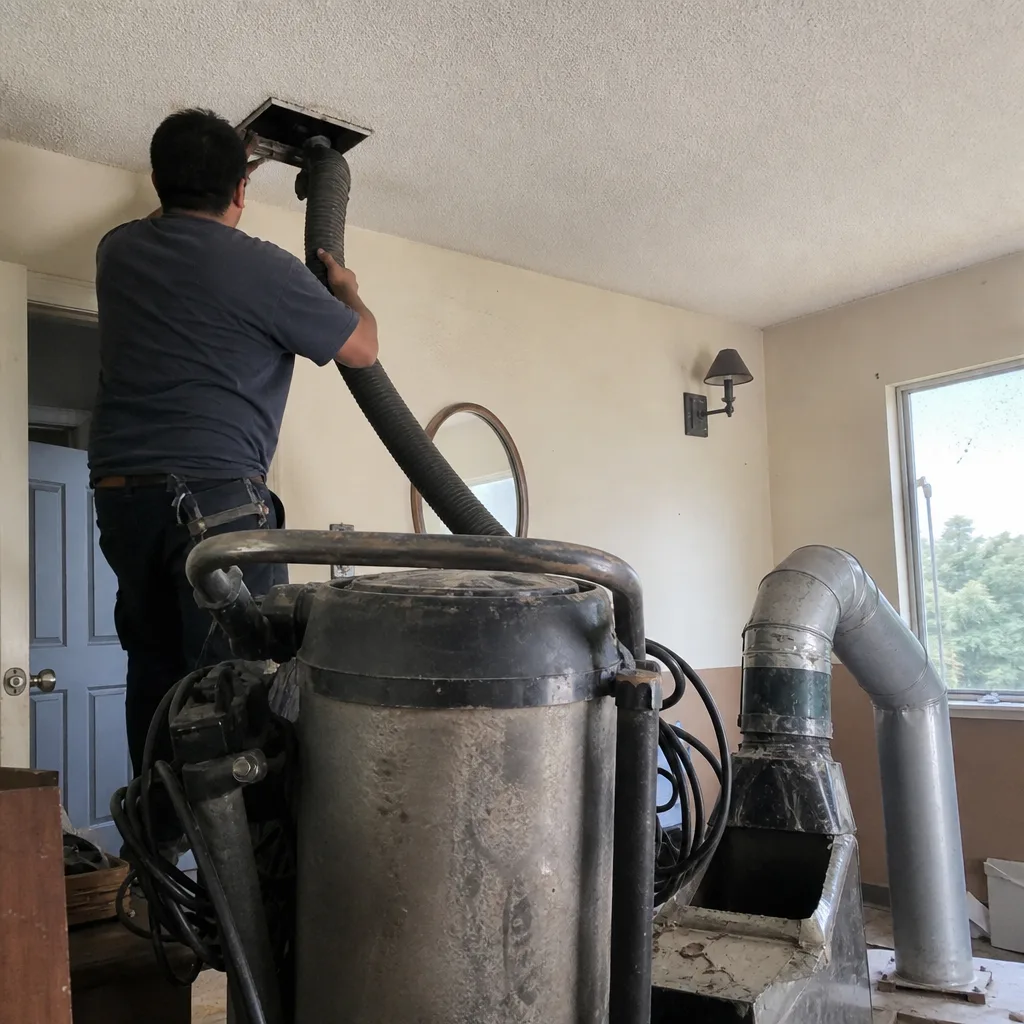
Professional source-removal cleaning works as a system. Rotary-brush agitation – the kind of mechanical platform Rotobrush provides – physically scours the duct wall, breaking deposits loose. Negative-air vacuum pressure from a platform like Nikro captures that loosened material at the source rather than allowing it to escape into the room. And containment equipment – Abatement Technologies air scrubbing and containment barriers – keeps captured particulate from redistributing into living spaces during the service. All three functions have to operate together. Without agitation, nothing comes off. Without negative pressure, what comes off goes everywhere. Without containment, the homeowner gets a dirty house instead of a clean duct.
This is why the air duct cleaning we perform for Fullerton homes isn’t priced by the vent. Per-vent numbers don’t correspond to any real variable in the workflow – a small home with heavily contaminated return ducts is a bigger job than a large home with light dust. You get one flat price per system, agreed before work starts. After cleaning, we show you what came out and what went in – before-and-after camera images of your own ducts.
If your system also needs the blower wheel and evaporator coil cleaned – which is common after a smoke event, since smoke pulls through the air handler – that’s HVAC cleaning, and a separate scope. Dryer vents are their own concern, addressed in our dryer vent cleaning service. Each is a different job with a different tool.
Common Mistakes to Avoid
- Restarting the HVAC after smoke before inspection. The instinct to “get back to normal” is the mistake that spreads contamination throughout the home. The system can wait a day; the residue will wait with it.
- Treating post-earthquake duct inspection as unnecessary because the house “looks fine.” Flex duct joints don’t announce themselves. An open collar behind a register is invisible from the register.
- Cleaning before documenting for insurance. Once the ducts are cleaned, the evidence is gone. Get the written assessment and photographs first.
- Running the system while ducts are wet after a water event. A wet duct system plus an operating blower equals distribution. Stop the system before you assess.
- Skipping duct sealing after contamination remediation. Cleaning without sealing leaves the same infiltration pathways the contaminant used to get in. You’ll be doing the job again after the next fire season.
- Installing a high-MERV filter without checking blower capacity. The filter upgrade is worthwhile, but the static pressure increase can damage a blower that wasn’t designed for it. Confirm it with a technician first.
- Hiring the lowest bid that shows up after a declared disaster. Disaster events attract high-volume, low-equipment operators. Ask what platform they use for negative air pressure and how they capture dislodged particulate. The answer tells you whether source removal is actually happening.
See the difference
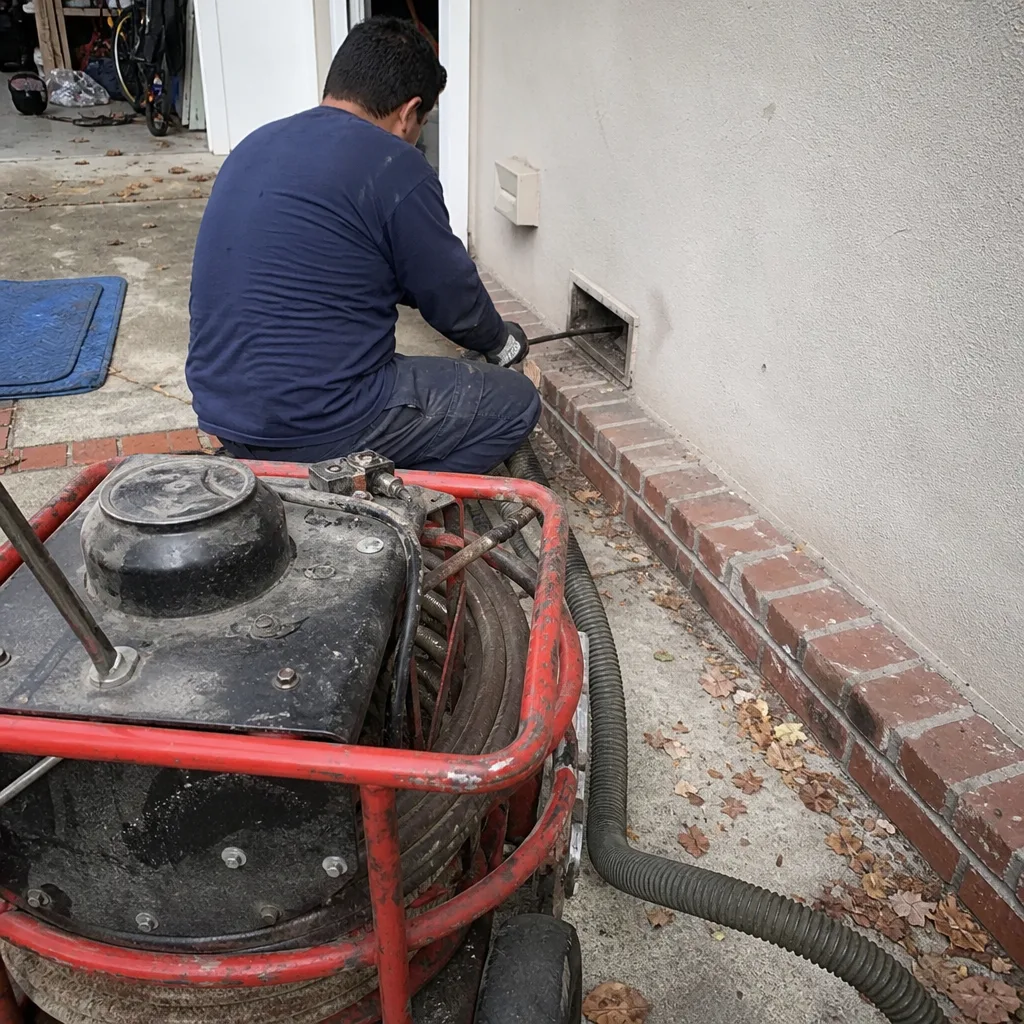 Before
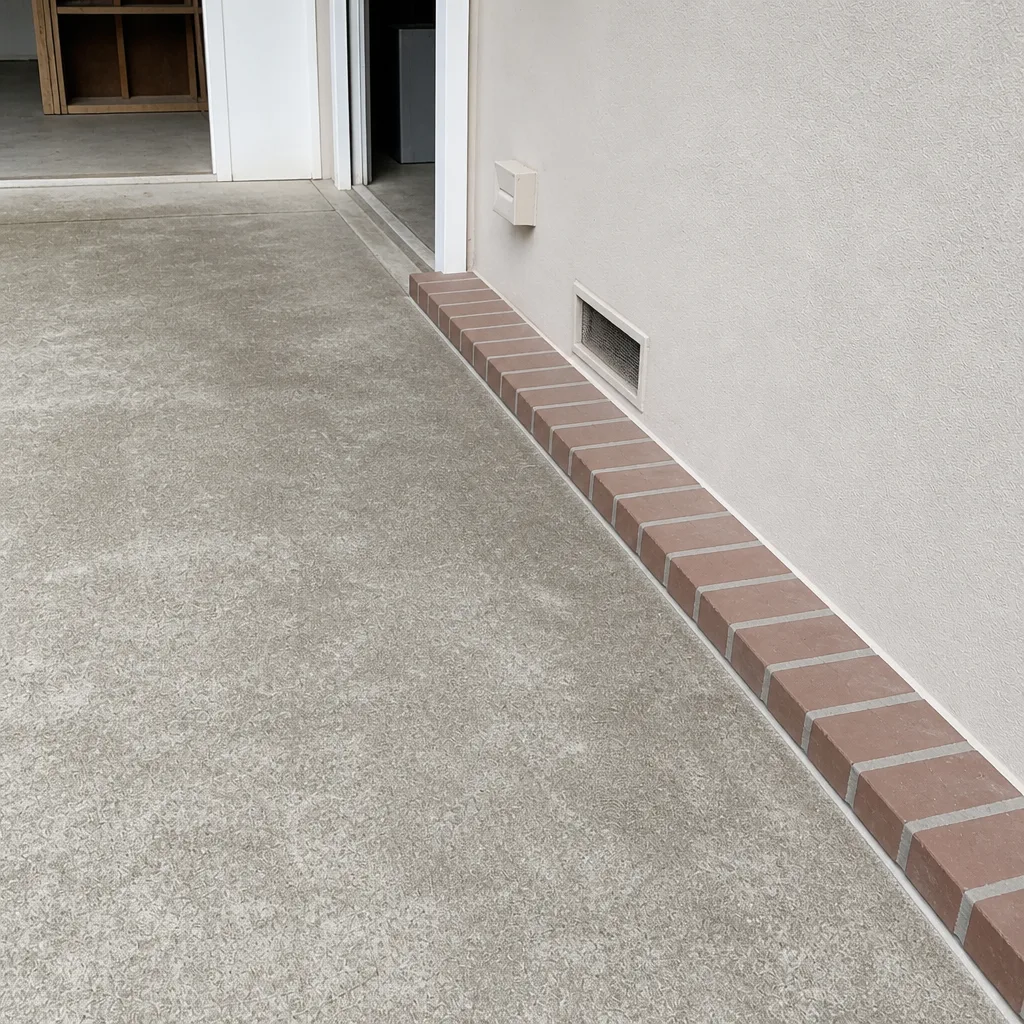 After
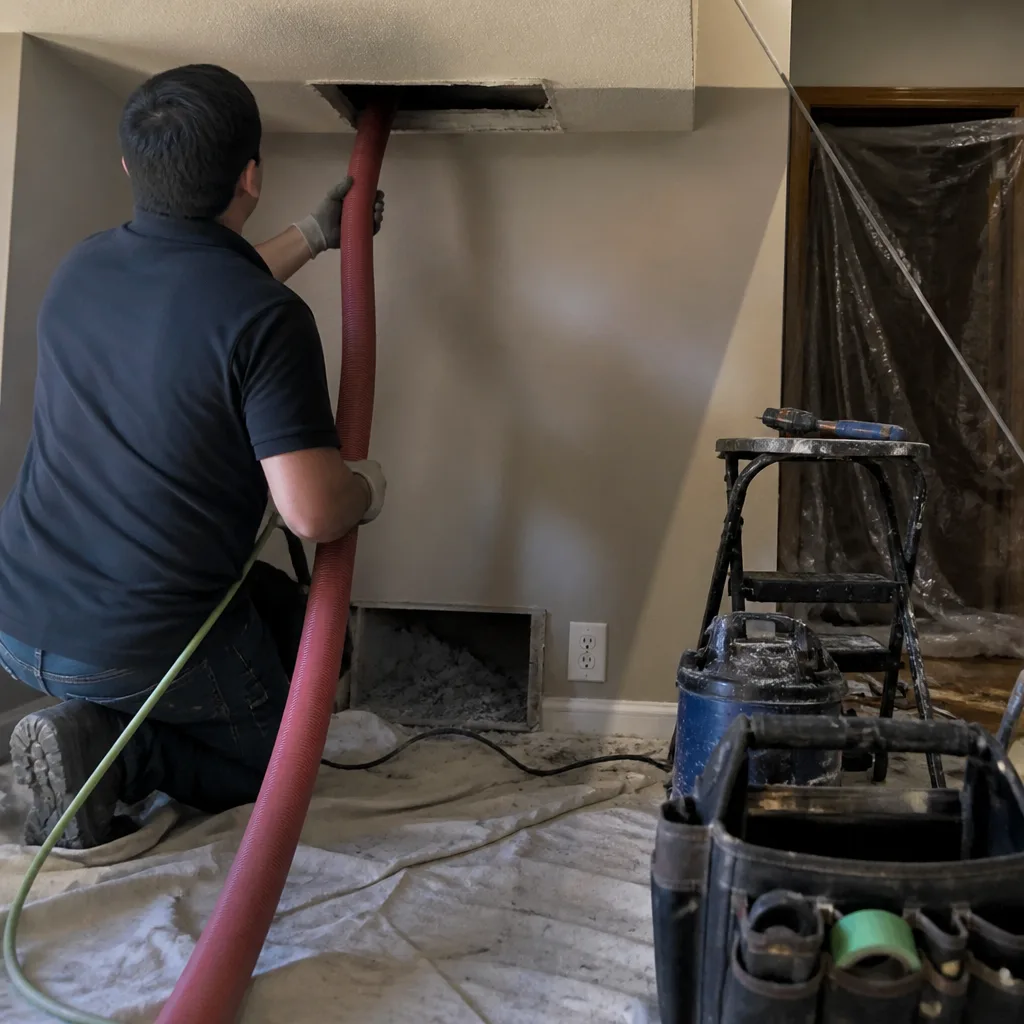 Before
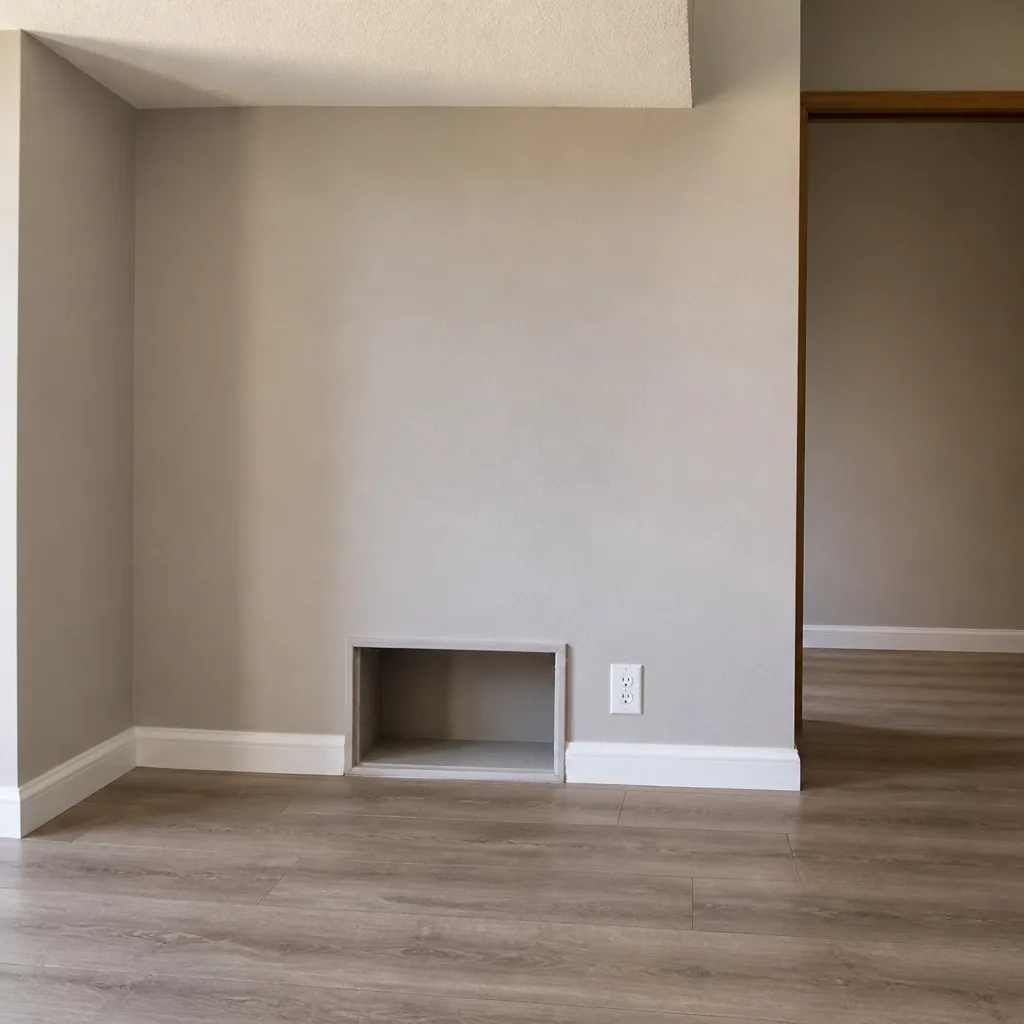 After
 Before
 After
When to Call a Professional
Call us when the assessment is beyond what a flashlight can answer. If your filter went dark after a smoke event, if a register is pushing attic-smelling air after an earthquake, if your water heater or a broken main wet your crawlspace ducts, or if you’ve been handed an insurance claim and need a written contamination assessment – those are professional-inspection conditions. A camera inspection will confirm or rule out contamination in about an hour, and the written record becomes the foundation of the entire remediation.
Fullerton Air Duct Cleaning Pros offers free estimates in Fullerton – call (844) 493-3461. We answer 24/7. Fast dispatch from 7am to 7pm, Sunday through Friday, and we’re closed on Saturday. Our technicians have up to 11 years of experience, and we show you what we found and what we removed, before and after.
Frequently Asked Questions
Post-smoke duct cleaning in Fullerton typically runs somewhere in the $400 to $900 range for a full residential system, and that range is wide for a reason: the scope after a smoke event includes source-removal cleaning, sanitizing, and usually filter replacement. A small home with heavily contaminated returns can cost more than a larger home with light infiltration. We set one flat price per system after the assessment, in writing, before any work starts. Call (844) 493-3461 for an exact quote – estimates are free.
Sometimes yes, if the filter was replaced promptly and showed only moderate loading – but only after the return side has been inspected. A filter that’s fully blackened after a smoke event is evidence that particulate reached the duct walls, and a new filter won’t remove what’s already adhered there. Have the system inspected before you decide; the camera answer is quick.
Cheap quotes usually mean the equipment stack isn’t there – no negative-air capture, no containment, no rotary-brush agitation. Those services look the same on an invoice and do very different things inside a duct. Ask any contractor what platform they use for negative pressure and how they keep dislodged particulate out of your living space. If the answer is vague, the equipment probably is too.
We show you. Before-and-after camera images of your own duct interiors, taken from the same locations, plus the filter we removed. If a company won’t show you images of your own ducts, ask why. Verifiable results are the entire point of doing the job correctly.
You can run it, but you may be drawing crawlspace or attic air through separated joints into your living space. If you smell musty or dusty air from a register after a quake, or if you can see visible gaps at the plenum, stop the system and get it inspected. If it runs and smells normal, a camera inspection within a week or two is still the right move – hidden joint separation is common in Fullerton’s older flex-duct installations.
For a healthy system with good filtration, every three to five years is a reasonable schedule. Emergency events reset that clock – a wildfire smoke event, an earthquake, or a water intrusion means an assessment regardless of when the last cleaning happened. The trigger is contamination, not a calendar date.
The Bottom Line
Fullerton’s wildfire proximity and seismic risk make duct contamination a real emergency scenario, not a hypothetical. The protocol is the same in every case: assess before you run the system, document before you clean, and clean with equipment that actually captures what it loosens. If the ducts are broken, seal them. If they’re wet, dry or replace them. If the insurance claim is open, keep the photographs. The preparation work you do now – filtration upgrades, duct sealing, a baseline camera inspection – makes every one of those steps faster and cheaper when the event happens. Your Fullerton Air Duct Cleaning Pros team handles all five service categories – duct cleaning, dryer vent, HVAC cleaning, duct repair and sealing, and air quality and sanitizing – under one provider, so an emergency response stays coordinated.
Call (844) 493-3461 for a free estimate. We answer 24/7. Fast dispatch from 7am to 7pm, Sunday through Friday. One flat price per system, agreed before work starts, with before-and-after photos of your own ducts when we’re done.
Written by the team at Fullerton Air Duct Cleaning Pros.