
Last updated November 25, 2026
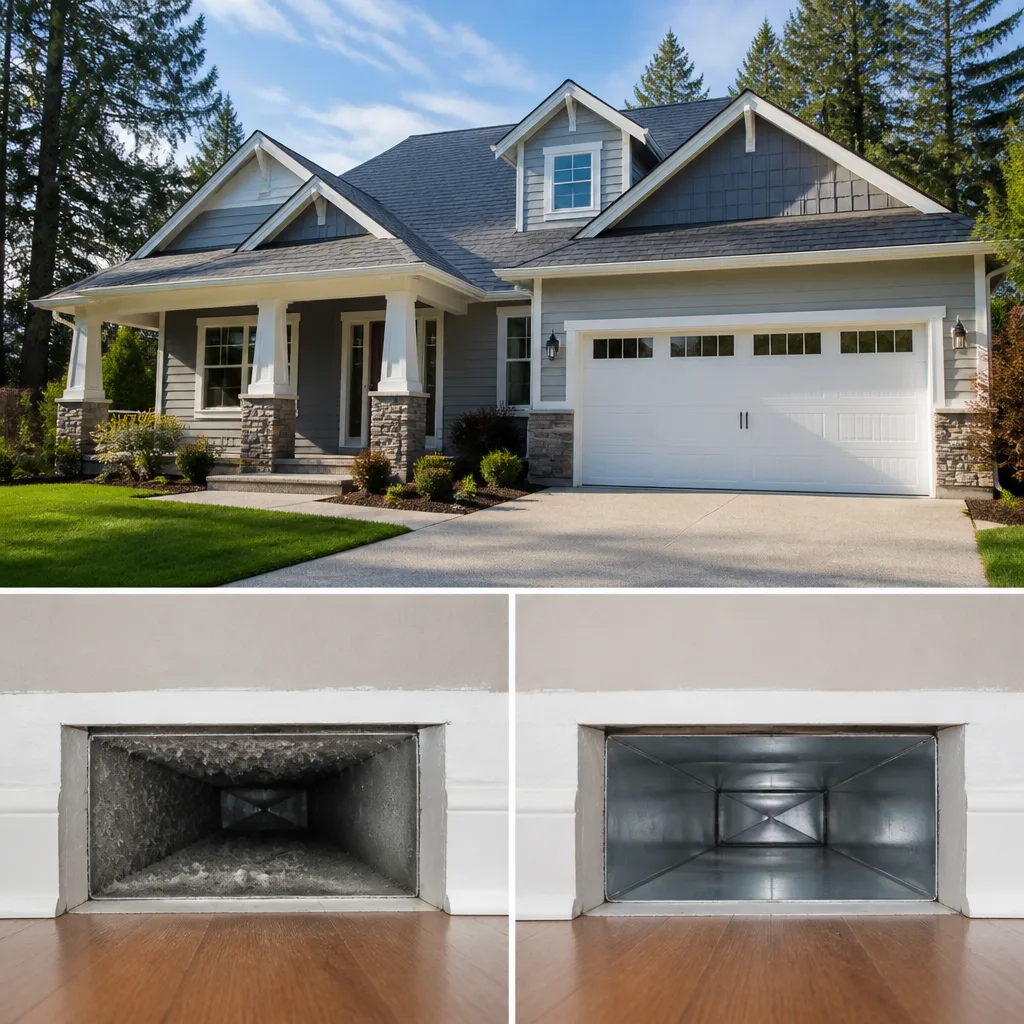 Whole-home duct cleaning
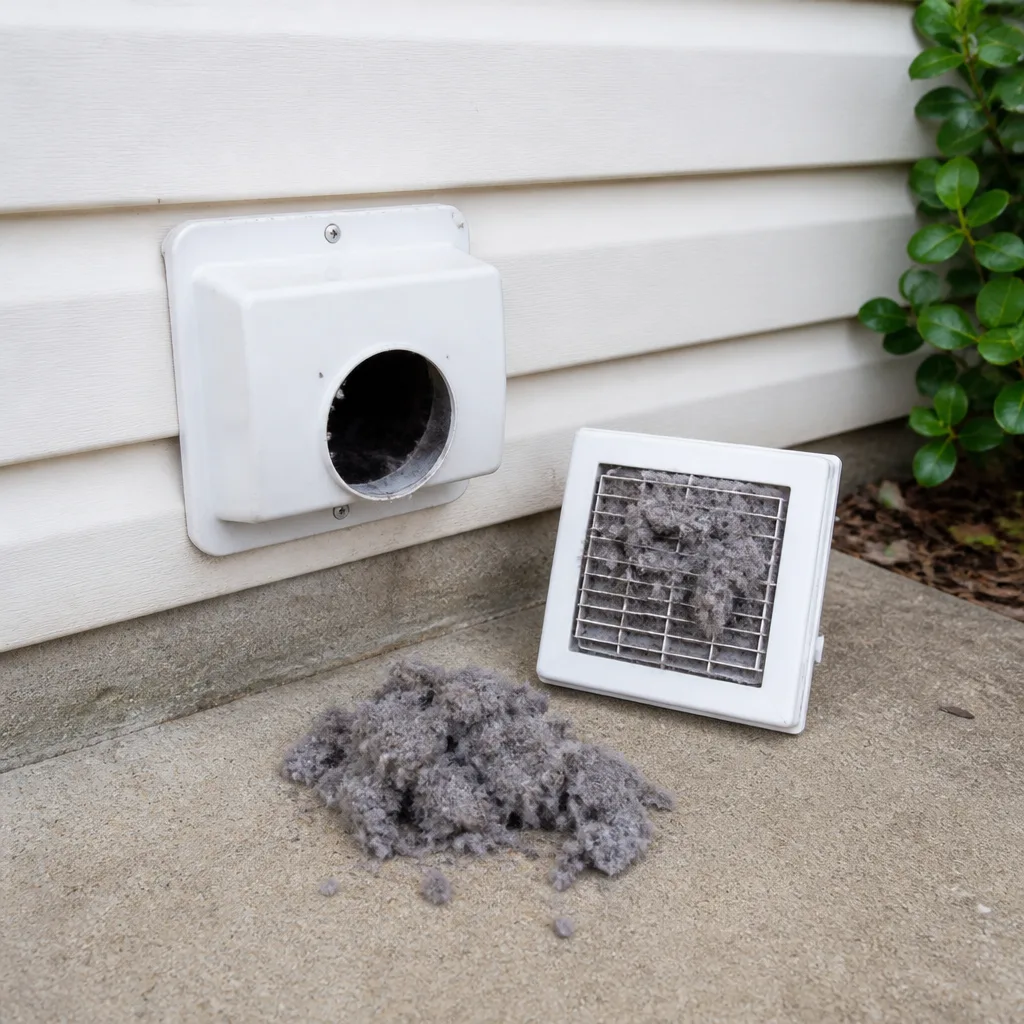 Dryer vent cleaning
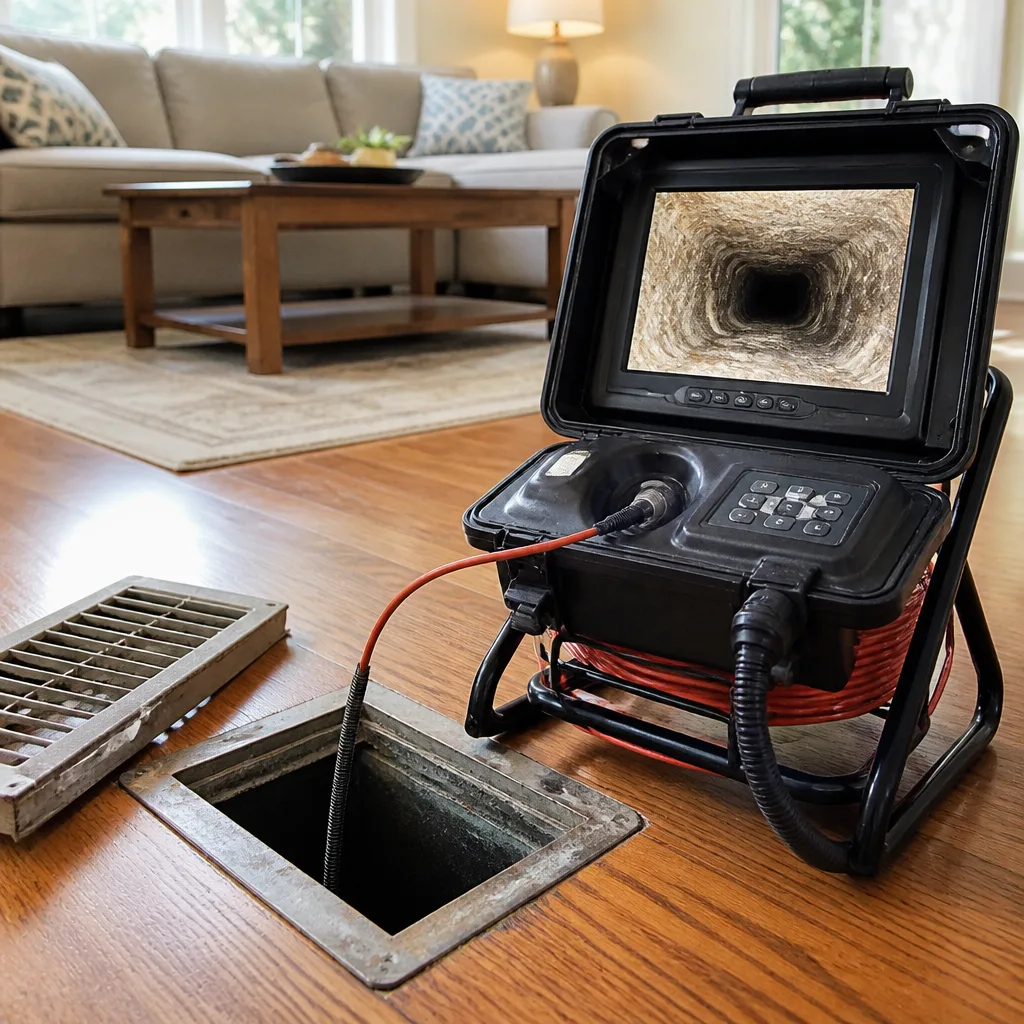 Camera inspection
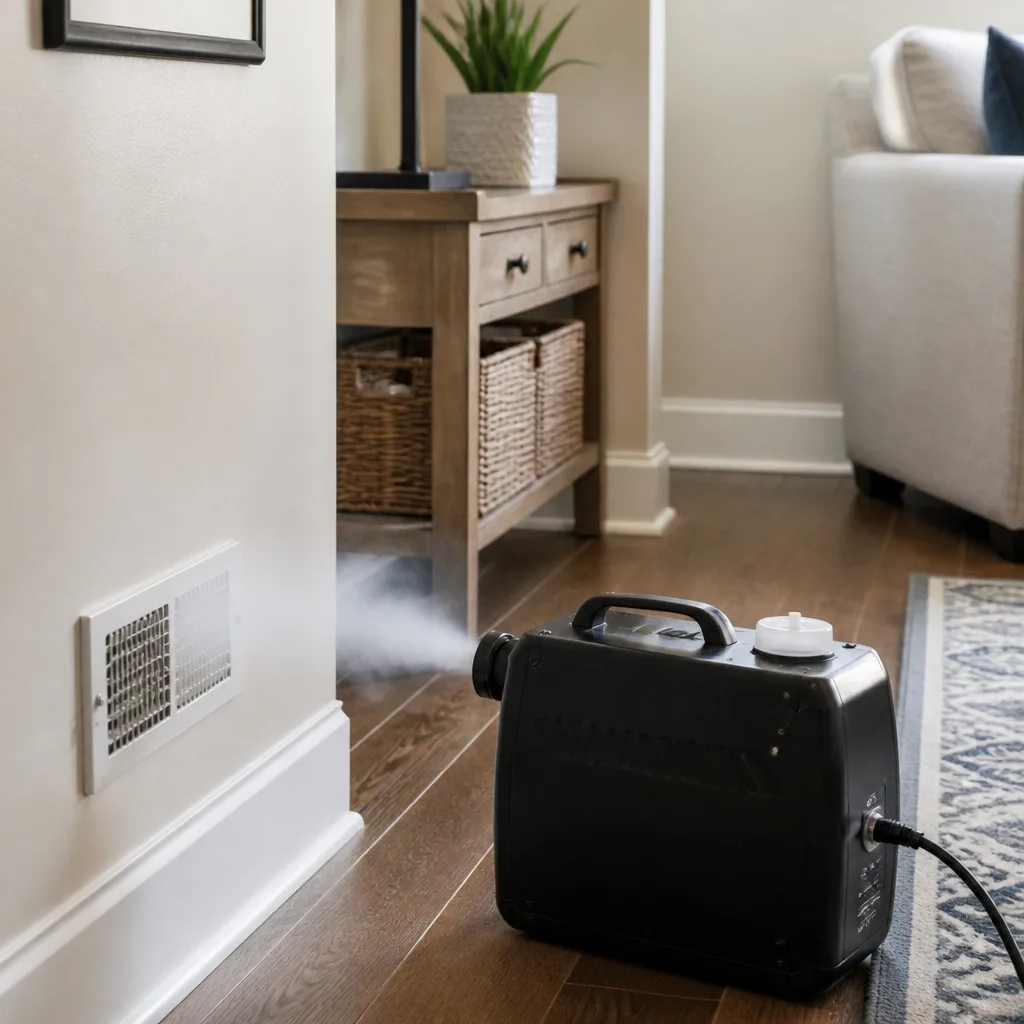 Sanitizing & deodorizing
Whole-system duct and dryer vent check with before-and-after photos - you see exactly what came out of your vents
That "$99 whole-house special" is a bait ad - the real number appears once they are in your hallway, or the "clean" is a shop-vac at the register. We photograph the inside of your ducts before and after instead.
Air Duct Cleaning Maintenance Checklist for Fullerton Homeowners
If you’re waiting for your ducts to look dirty before you act, you’ve likely been breathing particulate for months already. The registers in most Fullerton homes still look like clean white grilles right up to the point where airflow drops, odors turn musty, or a filter clogs every three weeks. Duct problems announce themselves through performance, not appearance, which is why a visual inspection tells you almost nothing on its own. What follows is a maintenance checklist built on observable, measurable thresholds: a room-by-room airflow test you can run with a tissue, a filter-loading log that flags duct integrity problems early, seasonal checkpoints tied to Fullerton’s Santa Ana wind events and rainy season, and a clear line between what you can handle yourself and what belongs to a professional with rotary-brush and negative-air equipment.
Quick Answer
A practical air duct maintenance checklist for Fullerton homeowners involves four recurring tasks: comparing airflow at every register with a tissue test each season, logging filter replacement dates and watching for accelerating clog rates, inspecting accessible duct runs for moisture after the rainy season and debris after Santa Ana wind events, and scheduling professional source-removal cleaning when visible debris depth, persistent odor, or measurably uneven airflow crosses specific thresholds. Most Fullerton homes need a professional duct assessment every two to three years, sooner after major renovations or a wind event that pulls dust through the system.
Styles & brands we work with
- Whole-home duct cleaning
- Dryer vent cleaning
- Camera inspection
- Sanitizing & deodorizing
Table of Contents
- Why Duct Maintenance Is a Performance Question, Not a Visual One
- The Room-by-Room Tissue Test: Mapping Airflow Imbalance
- Filter Loading Rate: Your Best Early-Warning Indicator
- Seasonal Checkpoints for Fullerton’s Climate
- Building a Dated Photo Baseline at Accessible Registers
- The DIY-to-Professional Boundary: Where Tasks Cross Over
- What Professional-Grade Cleaning Actually Involves
- A Twelve-Month Maintenance Calendar for Fullerton Homes
Why Duct Maintenance Is a Performance Question, Not a Visual One
Duct contamination builds up on the interior walls of the ductwork, not on the face of your registers. A supply grille can look spotless while the run behind it carries a settled layer of dust, lint, and construction debris that re-enters the airstream every time the blower cycles. That’s the core reason visual inspection fails as a maintenance trigger: what you can see from the floor of a room is the last place contamination shows up and the first place it gets cleaned.
The indicators that actually matter are behavioral. How fast does a filter load? Does one bedroom feel stuffy while the living room feels fine? Does a musty smell appear when the system first kicks on and then fade? Does anyone in the house wake with congestion that clears once they leave? Each of these is a measurable signal, and each points to a different part of the system.
In our experience across Fullerton homes, the houses with the worst internal duct conditions are rarely the ones with visible grime at the registers. They’re the ones where a child’s room runs warm, the return filter clogs in a month, and nobody has looked inside the ductwork since the house changed hands. Performance data catches those homes. Eyesight alone doesn’t.
One more point on why this matters here specifically: Fullerton sits in a basin where airborne dust from the surrounding hills and year-round pollen loads the return air continuously. Your system is a whole-house air mover, and everything it pulls in either gets caught at the filter or settles somewhere in the ductwork. The checklist below is how you track which of those two things is happening.
The Room-by-Room Tissue Test: Mapping Airflow Imbalance
The tissue test is the simplest airflow diagnostic a homeowner can run, and it takes about fifteen minutes. Hold a single-ply tissue against each supply register while the system fan is running. The tissue should be pulled firmly against the grille across its full face. A weak hold, fluttering, or no movement at all means that register isn’t getting its share of air.
Here’s how to run it as a repeatable baseline:
- Turn the thermostat fan setting to “on” so the blower runs continuously and conditions stay constant.
- Walk every room and hold the tissue flat against each supply register for ten seconds. Note which registers hold it firmly, which hold it weakly, and which show no pull.
- Repeat the test at each return grille. Returns should pull strongly; a weak return starves the whole system and raises static pressure.
- Draw a simple floor plan of your home and mark each register with one of three ratings: strong, weak, or none. Date the map.
- Re-run the test after any filter change and after any professional service, and compare against your dated map.
A single weak register often means a damper is partially closed, a flex run has kinked or disconnected, or the boot behind the grille has separated from the duct. A whole zone running weak points to a duct design or leakage problem. A general drop in pull at every register usually traces back to a loaded filter, a failing blower, or a return that’s blocked or undersized.
Fullerton homes built in the mid-century tracts around downtown and the older neighborhoods near Hillcrest often have original rigid duct runs with dampers that haven’t been touched in years. Finding and adjusting those dampers is a legitimate homeowner task; finding a disconnected flex run inside an attic is not. The tissue test tells you which situation you’re in.
Filter Loading Rate: Your Best Early-Warning Indicator
Filter replacement frequency is the leading indicator of duct integrity, and almost nobody tracks it. A filter is a pressure gauge in disguise: it loads quickly when the airstream carries heavy particulate, and it loads slowly when the duct interior is clean and sealed. Log the date every time you replace one, and you’ll have a diagnostic trend line within a few months.
Write the date on the filter edge with a marker before you install it, and keep the log in a notes app or taped inside the air handler closet. Here’s what the pattern tells you:
- Stable interval – replacing every two to three months on a standard filter means the system is behaving normally for Fullerton’s dust and pollen load.
- Accelerating interval – if you move from three months to two to six weeks over a year, something has changed inside the ductwork or at the return. Loose debris, settled construction dust, or a breached duct pulling attic or crawlspace air are the usual causes.
- Sudden spike after renovation – drywall dust and sawdust overwhelm a filter fast and pass through it into the ducts. A spike lasting more than a few weeks after work finishes means the system needs professional cleaning, not more filter changes.
- Filter staying clean too long – a filter that barely discolors after months may mean air is bypassing it. That’s a duct sealing problem, not a good sign.
Filter grade matters to the log too. A higher-MERV filter loads faster and restricts more airflow; if you move to a tighter filter and the tissue test weakens everywhere, the system’s return duct may be undersized for that grade. Many Fullerton homeowners find a mid-range pleated filter sized correctly does more for them than a very high-MERV filter that chokes the blower. Upgrading to a proper cabinet filter or a media system from Aprilaire or Honeywell is a real option, and it changes the whole loading pattern. That conversation belongs with an HVAC professional who can measure static pressure, not a seasonal guess.
Seasonal Checkpoints for Fullerton’s Climate
Fullerton’s weather sets specific maintenance triggers, and they’re different from what you’d read in a national guide. Two events matter most: the Santa Ana wind events that push dry, dust-laden air through the region, and the rainy season that can put moisture into the crawlspace or attic where duct runs travel.
After a Santa Ana Wind Event
Santa Ana winds carry fine mineral dust and debris from the inland hills and settle it onto every screen, sill, and return grille in the region. The trigger isn’t the wind itself; it’s what happens next. When the system runs, that dust is pulled into the return and deposited along the duct interior.
- After a multi-day wind event, check the return grille faces and vacuum them before you run the system heavily.
- Look at the air filter: if it’s noticeably discolored right after a wind event, replace it.
- Re-run the tissue test and compare to your baseline. A new weak register after a wind event usually means debris has collected in a flex run or a boot, not that the system has failed.
- If odors appear when the system starts after a wind event, that’s a signal to schedule a professional inspection.
After the Rainy Season
Moisture is the one duct condition that doesn’t wait. Fullerton homes with ducts running through the crawlspace deserve a check after the wet months. Look for rust at the boot, water staining on the vapor barrier, damp insulation on flex duct, or a musty smell the first time the heat runs. A musty smell in a full duct system means microbial growth has a foothold, and that’s a professional cleaning and sanitizing job, not a homeowner one.
For homes near Craig Regional Park and the tree-lined streets along the Coyote Creek channel, additional organic debris from vegetation can end up in the return air path. This is why a Fullerton-specific calendar makes more sense than a national one: your triggers track the winds and the wet months, not the seasons on a generic chart.
Building a Dated Photo Baseline at Accessible Registers
You can’t compare “before” and “after” unless you have a “before.” The single most useful maintenance habit a homeowner can build is photographing the accessible parts of the duct system on a set schedule. Professional air duct cleaning results are verifiable only if there’s a documented baseline to compare against, and any company that’s confident in its work will photograph its own before-and-after conditions for you. Your photos give you a cross-check.
Here’s what to photograph and how:
- Return grille faces – a straight-on shot with good light, dated.
- Register faces – at least one per room, same angle each time.
- Inside the return plenum – with the grille removed and a flashlight held at an angle, so the dust layer shows its depth. Don’t reach into the duct; just photograph.
- Air handler closet – the filter slot, the blower opening, and the evaporator coil area if visible.
- Crawlspace or attic duct runs – from a safe vantage point only, with the light on the duct surface.
Save all photos to one dated folder and name them consistently (e.g., “2026-03 return-grille-hall”). Bring that folder to any estimate appointment. A professional with rotary-brush and negative-air systems will happily show you their own before-and-after photos, and comparing theirs to yours tells you whether the claimed cleaning scope matches the actual evidence. That’s a level of accountability the low-bid duct cleaning segment isn’t built to handle.
The DIY-to-Professional Boundary: Where Tasks Cross Over
Knowing where your maintenance stops is the difference between a clean system and a damaged one. A few tasks belong to you. A few belong to a professional with the right equipment and the right liability insurance. The line isn’t vague; it’s defined by specific observable thresholds.
Tasks You Can Handle Yourself
- Replacing air filters on schedule and logging the dates.
- Vacuuming return and supply grille faces.
- Opening and closing dampers to balance airflow (once you’ve located them).
- Photographing accessible ductwork and grilles.
- Checking and re-sealing a grille that has come slightly loose.
- Removing the visible dust blanket from a return plenum cover, without reaching inside the duct.
Tasks That Cross into Professional Territory
Three specific thresholds move a task out of your scope and into a professional’s:
- Visible debris depth over roughly the thickness of a coin inside any accessible duct – that’s a source-removal job. Consumer vacuums and shop vacs can’t pull material off duct walls; they only make the surface look better while leaving the settled layer in place. Rotobrush rotary-brush systems agitate the duct wall mechanically, which is what actually lifts the material for extraction.
- Any persistent odor when the system first runs – musty, sour, or chemical. Odor means contamination has a foothold, potentially microbial. Guardsman-grade sanitizing applied after mechanical cleaning is a professional step, not a homeowner spray.
- Any moisture, rust, or water staining found at a duct boot, plenum, or crawlspace run – moisture plus organic material is a biological concern, and the duct has to be assessed for repair or replacement before cleaning makes sense.
There’s a fourth boundary most checklists skip: duct leakage. If you suspect a disconnected flex run or a separated boot, sealing it is a professional task. Duct sealing and repair is often the actual fix for a system that keeps re-contaminating itself, and cleaning without sealing just restarts the clock. Fullerton homes with original ductwork are prime candidates for this, and it’s the root-cause work that separates a maintenance visit from a cleaning and walk-away.
What Professional-Grade Cleaning Actually Involves
If you’re going to hire a professional, it helps to know what the equipment should be doing. Duct cleaning performed with a consumer-grade vacuum attached to a register is not the same service as source-removal cleaning, and the difference is measurable in what comes out of the duct versus what gets stirred up into the room.
A professional-grade cleaning in a Fullerton home typically involves:
- Rotobrush rotary-brush agitation – a rotating brush on a flexible shaft travels the duct run and mechanically loosens the debris layer from the duct wall. This is the piece consumer vacuums don’t replicate.
- Nikro negative-air extraction – a high-capacity negative-air vacuum holds the duct under constant suction, so loosened material is captured at the source and pulled out instead of blowing back into the room. The approach aligns with NADCA’s source-removal standard.
- Abatement Technologies containment and scrubbing – containment barriers and air scrubbing equipment used during service keep dislodged particulates out of living spaces. Without this, dust can migrate into rooms while the work is happening, and that defeats the point.
- Guardsman-grade sanitizing after mechanical cleaning – applied once the duct interior is clean, not before, because sanitizer on top of debris does nothing.
- Filter and air quality assessment at the end – the conversation about what filtration the system actually needs, whether that’s a media cabinet from Aprilaire or Honeywell or a UV component, and whether the returns are sized for it.
This is the “clean it, seal it, test it” arc, and it matters that one company handles all of it. Splitting cleaning, repair, and filtration across three vendors is how systems stay partially fixed. You can read more about the service at HVAC cleaning, and if the ducts themselves need repair after cleaning, that work belongs to the same visit.
Our technicians have up to 11 years of experience and use the same equipment platforms commercial HVAC contractors trust. We show you what we found and what we removed, with photos taken at accessible points during the work. Estimates are free so you can see the scope before you commit. For dryer ducts specifically, which follow a different maintenance schedule, our dryer vent cleaning service covers the lint loads that accumulate faster than duct dust in a Fullerton home.
A Twelve-Month Maintenance Calendar for Fullerton Homes
Here’s how the checklist folds into a year. This is a recurring rhythm, not a fixed promise about when work happens; adjust for your system’s actual readings.
- Every filter change – write the date on the filter, log it, and re-run the tissue test.
- Monthly – quick visual of grille faces and return plenum; note anything that changed.
- After any Santa Ana wind event – vacuum grilles, check and probably replace the filter, run the tissue test, compare to baseline.
- After the rainy season – crawlspace and attic duct moisture check; look for rust, staining, musty odor.
- Before the cooling season – full tissue test across all registers, dampers adjusted, filters replaced, photo baseline refreshed.
- After any renovation or major drywall work – schedule professional cleaning once the dust has settled and the system has run for a few weeks.
- Every two to three years – professional duct assessment; sooner if your filter log has accelerated, odors have appeared, or your tissue test shows a persistent imbalance.
One note on the tissue test and humid periods: Fullerton’s most humid weeks can soften the pull slightly at every register, because the system is working against higher moisture loads. A consistent drop at all registers during humidity is not a duct problem. A single register failing while others are fine is.
Common Mistakes to Avoid
- Judging duct condition by register appearance. Grille faces stay clean long after the duct interior has loaded up. The tissue test and filter log tell you what the grille won’t.
- Assuming a new high-MERV filter will clean the ducts. Filtration catches what passes through it. It doesn’t remove a settled debris layer already in the ductwork, and a filter that’s too restrictive starves the system’s airflow.
- Cleaning without sealing. A disconnected flex run or a separated boot in a Fullerton attic keeps re-contaminating the system within months. Repair and sealing belong in the same scope as the cleaning.
- Skipping the moisture check after the rainy season. Water staining or musty odor in a crawlspace duct run is the one condition that gets worse on its own. Mild winters here don’t mean dry duct spaces.
- Comparing only on price. The low quote usually reflects a different service: a vacuum at the register instead of rotary-brush agitation with negative-air extraction and containment. Ask what equipment is used before comparing bids.
- Never photographing anything. Without a dated baseline, you have no way to verify what a cleaning actually removed. Five minutes of phone photos gives you a real check.
- Forgetting the dryer duct. It follows its own schedule, separate from the HVAC ducts, and lint loads build faster than dust in a full house. It’s not part of a standard duct cleaning.
See the difference
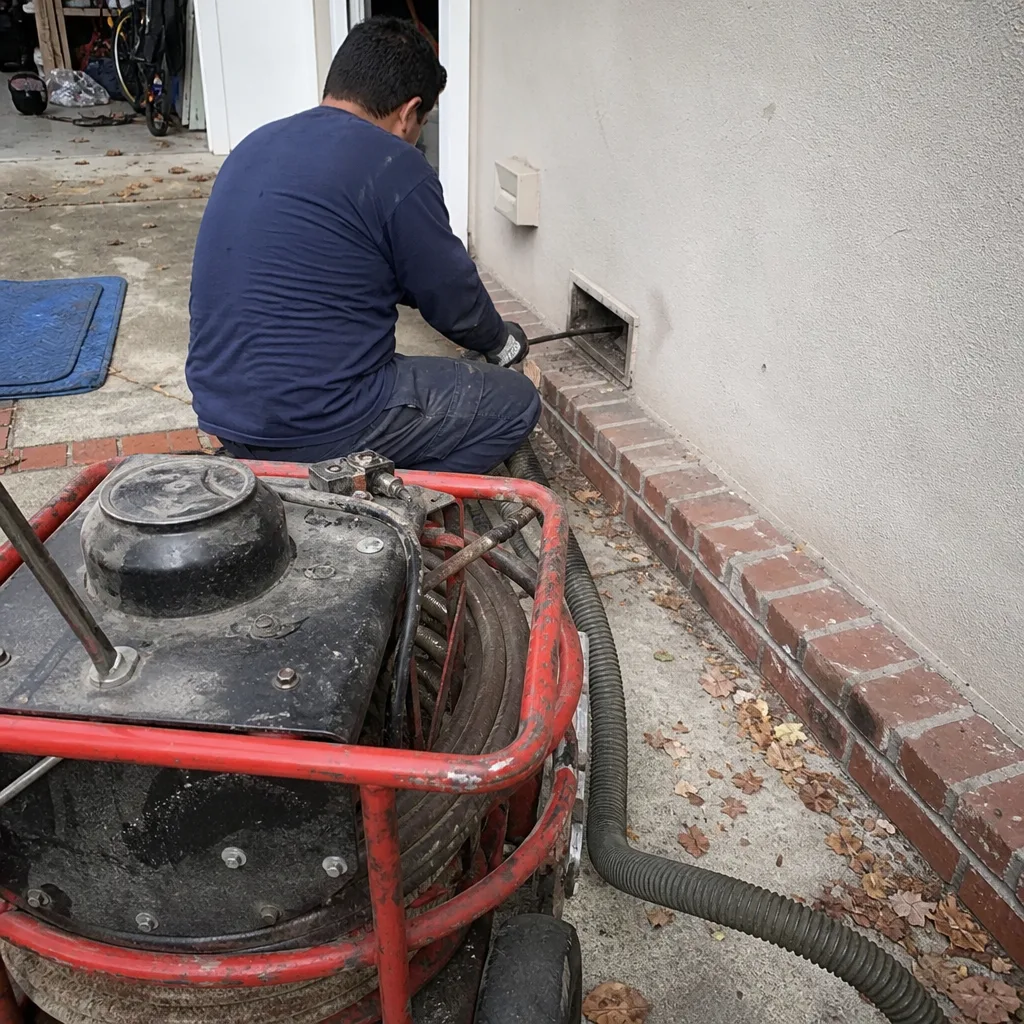 Before
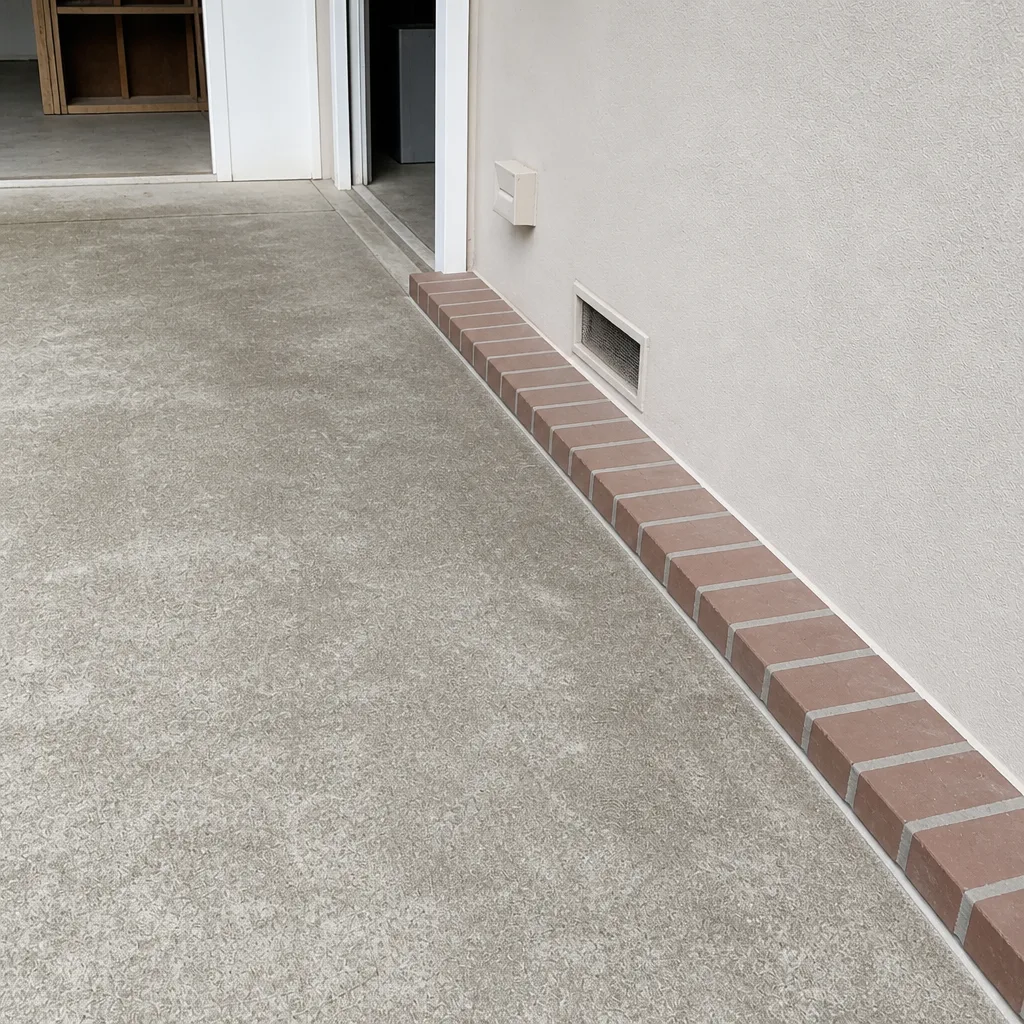 After
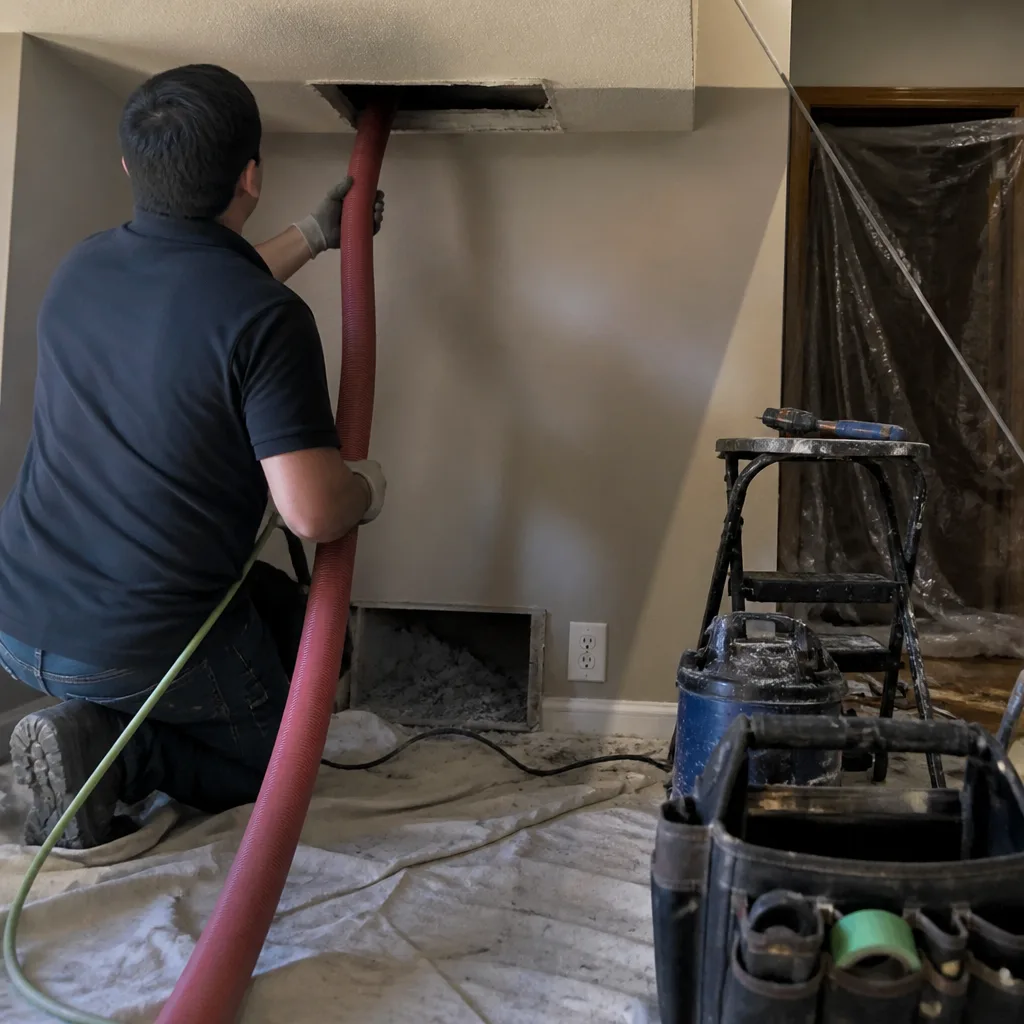 Before
 After
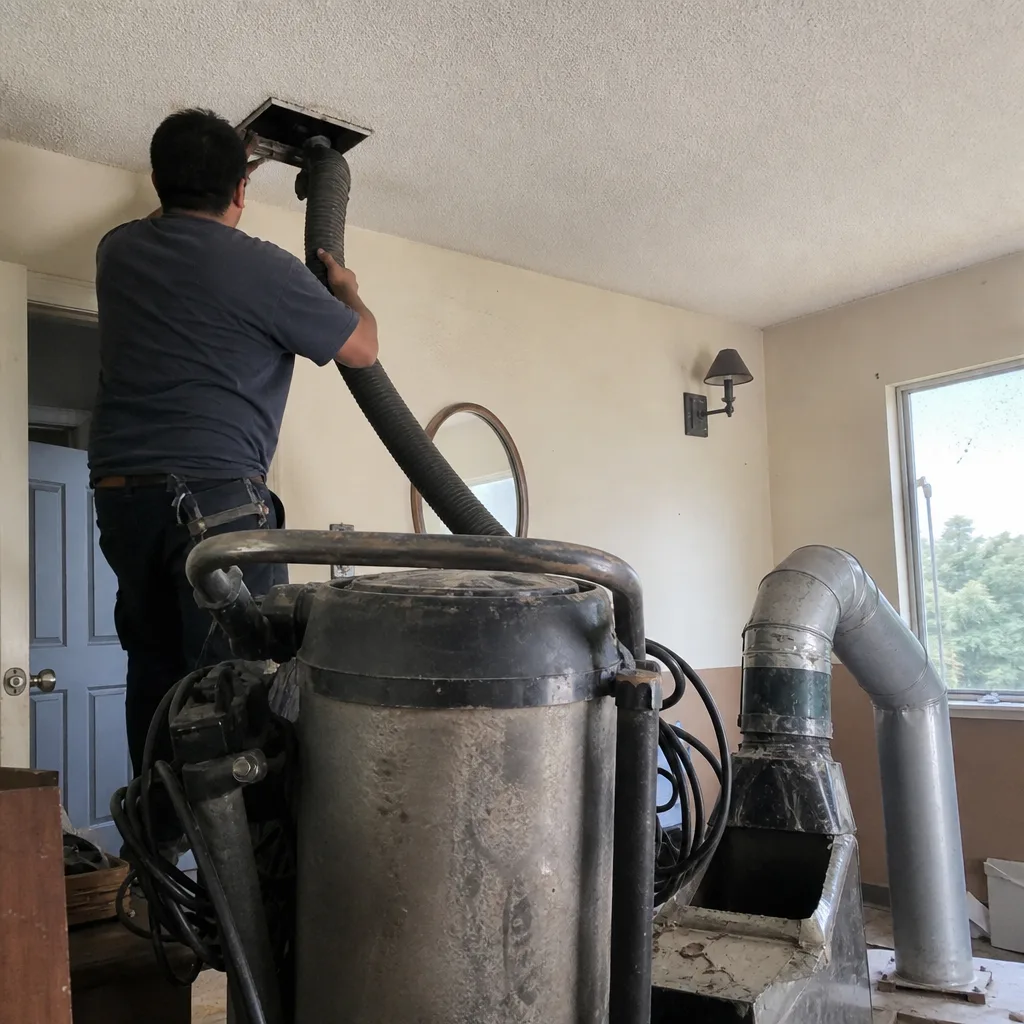 Before
 After
When to Call a Professional
Bring in a professional when any of these conditions shows up: visible debris depth inside an accessible duct that exceeds roughly a coin’s thickness, a musty or sour smell every time the system starts, a filter log that has sped up sharply over the past year, a tissue test showing persistent weakness at one register or one zone, moisture, rust, or staining on a crawlspace or attic duct run, or a recent renovation that filled the return with drywall dust. Any one of those crosses the professional threshold on its own. Fullerton Air Duct Cleaning Pros offers free estimates in Fullerton, and one company covers duct cleaning, dryer vent cleaning, HVAC cleaning, duct repair and sealing, and air quality sanitizing. Call (844) 493-3461.
Frequently Asked Questions
Most Fullerton homes need a professional assessment every two to three years, sooner if your filter log accelerates, odor appears when the system starts, or your tissue test shows a persistent imbalance. Homes with pets, recent renovations, or crawlspace duct runs sit at the shorter end of that range. Call (844) 493-3461 for an exact quote; estimates are free.
Yes. Contamination builds on the duct interior, not on the grille face, so clean-looking registers are common in homes with loaded ductwork. The tissue test and filter log are the real indicators, and both are free to run. If either shows a problem, call (844) 493-3461; estimates are free.
Cheap quotes usually cover a different service: a vacuum at the register instead of rotary-brush agitation with negative-air extraction and containment equipment. What looks like a discount is often a scope reduction. Ask specifically what equipment the crew uses before comparing bids, and call (844) 493-3461 for a detailed estimate; it’s free.
You compare before-and-after photos taken at the same accessible points. Any honest duct cleaning company will photograph its own work, and your dated baseline folder gives you the cross-check. If the evidence isn’t there, the work wasn’t verifiable. Call (844) 493-3461 for an estimate; it’s free.
Yes, once the dust has settled and the system has run for a few weeks. Drywall and sawdust overload the filter quickly and pass through into the ducts, and that material doesn’t clear on its own. Call (844) 493-3461 for an exact quote; estimates are free.
No, not effectively. A consumer vacuum can’t agitate debris off the duct wall, and it can stir material back into the room instead of capturing it. Mechanical rotary-brush cleaning plus negative-air extraction is what actually removes buildup. Call (844) 493-3461 for an exact quote; estimates are free.
The Bottom Line
Air duct maintenance in a Fullerton home is a performance discipline, not a cleaning ritual. Watch your filter loading rate. Run the tissue test at every register each season and record the result. Photograph accessible ductwork with dates so any cleaning can be verified. Check crawlspace and attic duct runs for moisture after the rainy season and re-check after Santa Ana wind events. And know the thresholds where a task leaves your hands: visible debris depth beyond a coin’s thickness inside a duct, persistent odor, moisture, or a filter log that has accelerated. Do those things and you’ll catch a duct problem months before it becomes an airflow problem. Fullerton Air Duct Cleaning Pros handles all five service categories under one company, with the equipment to match. Call (844) 493-3461. We answer 24/7. Fast dispatch from 7am to 7pm, Sunday through Friday.
Written by the team at Fullerton Air Duct Cleaning Pros.