
Last updated November 25, 2026
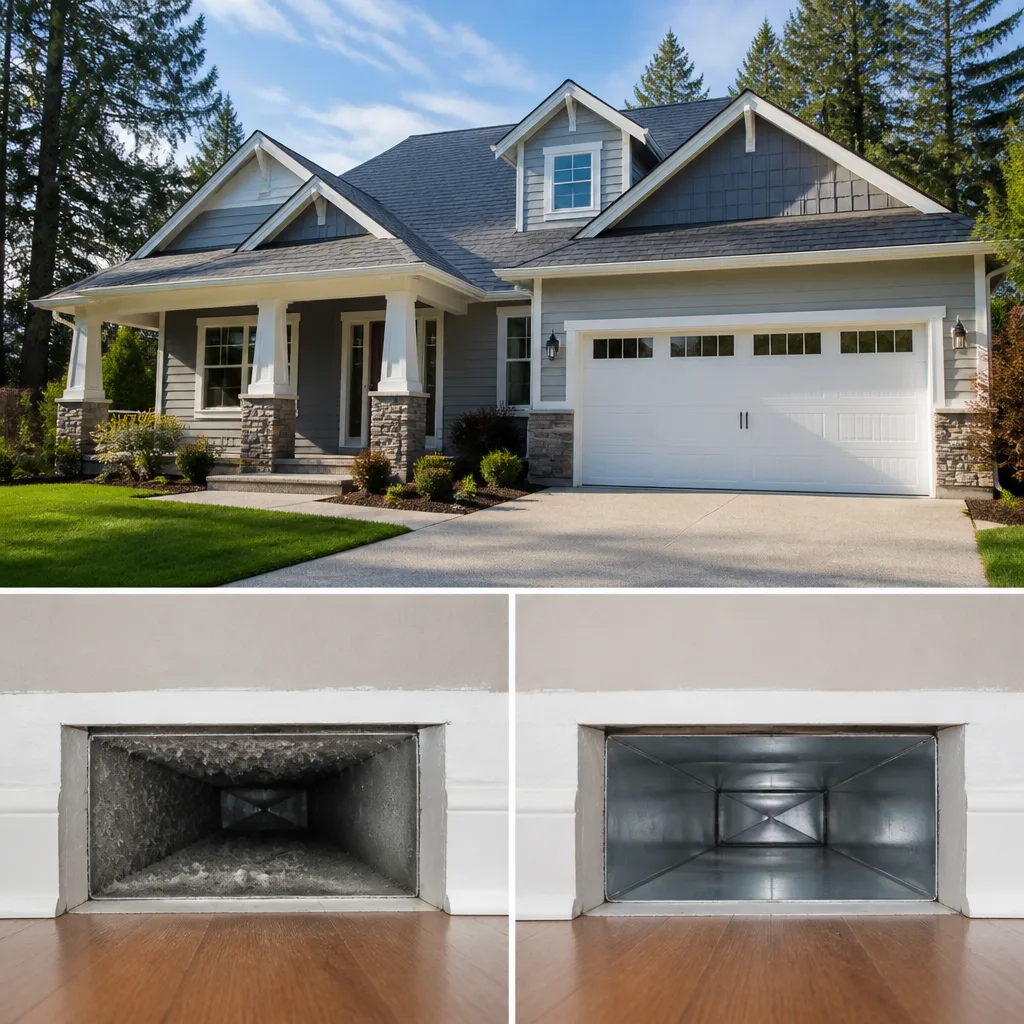 Whole-home duct cleaning
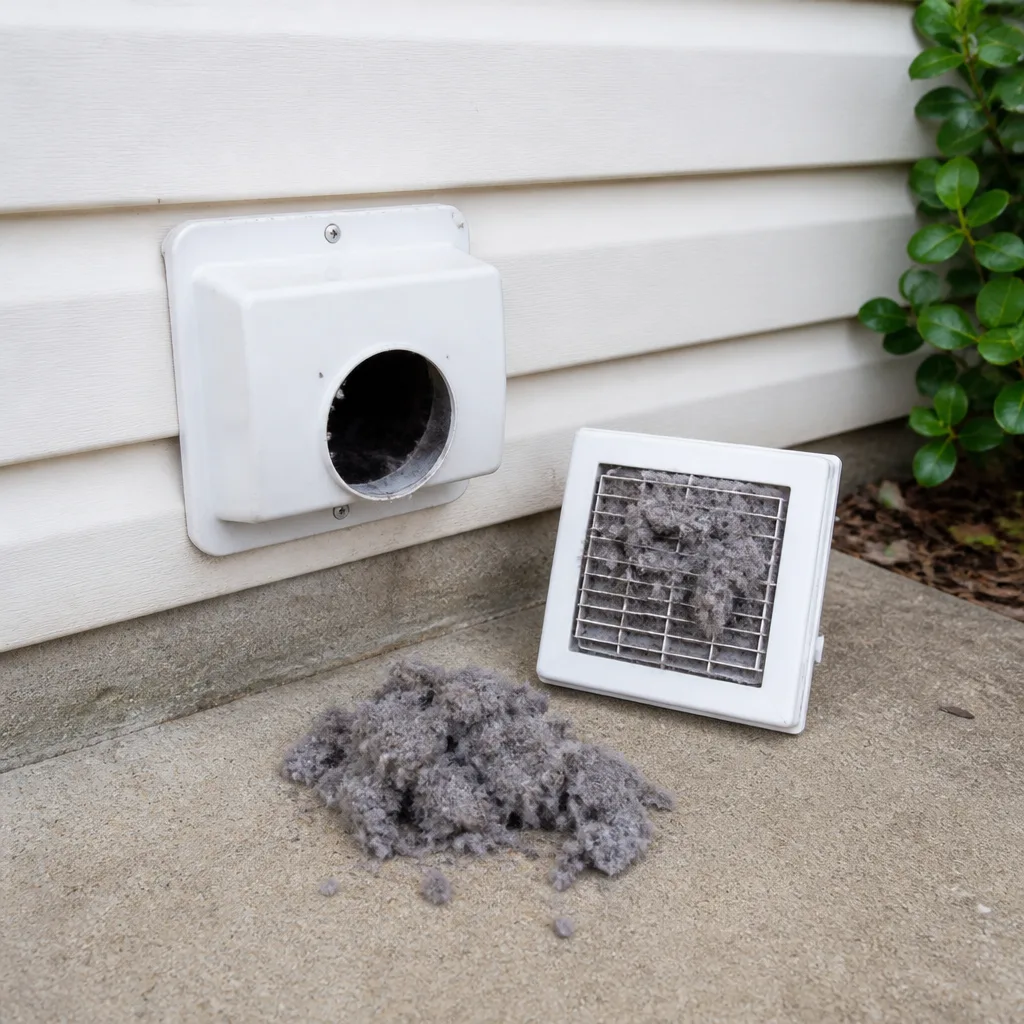 Dryer vent cleaning
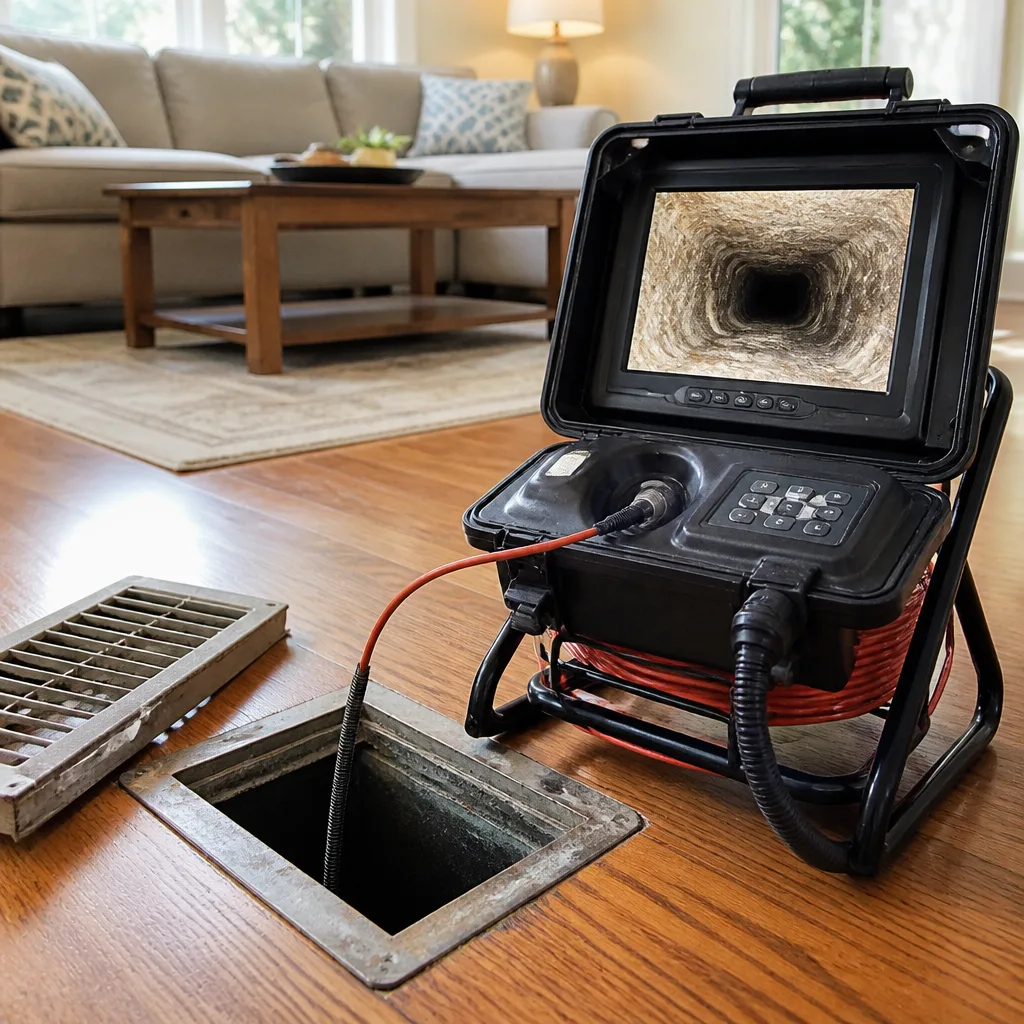 Camera inspection
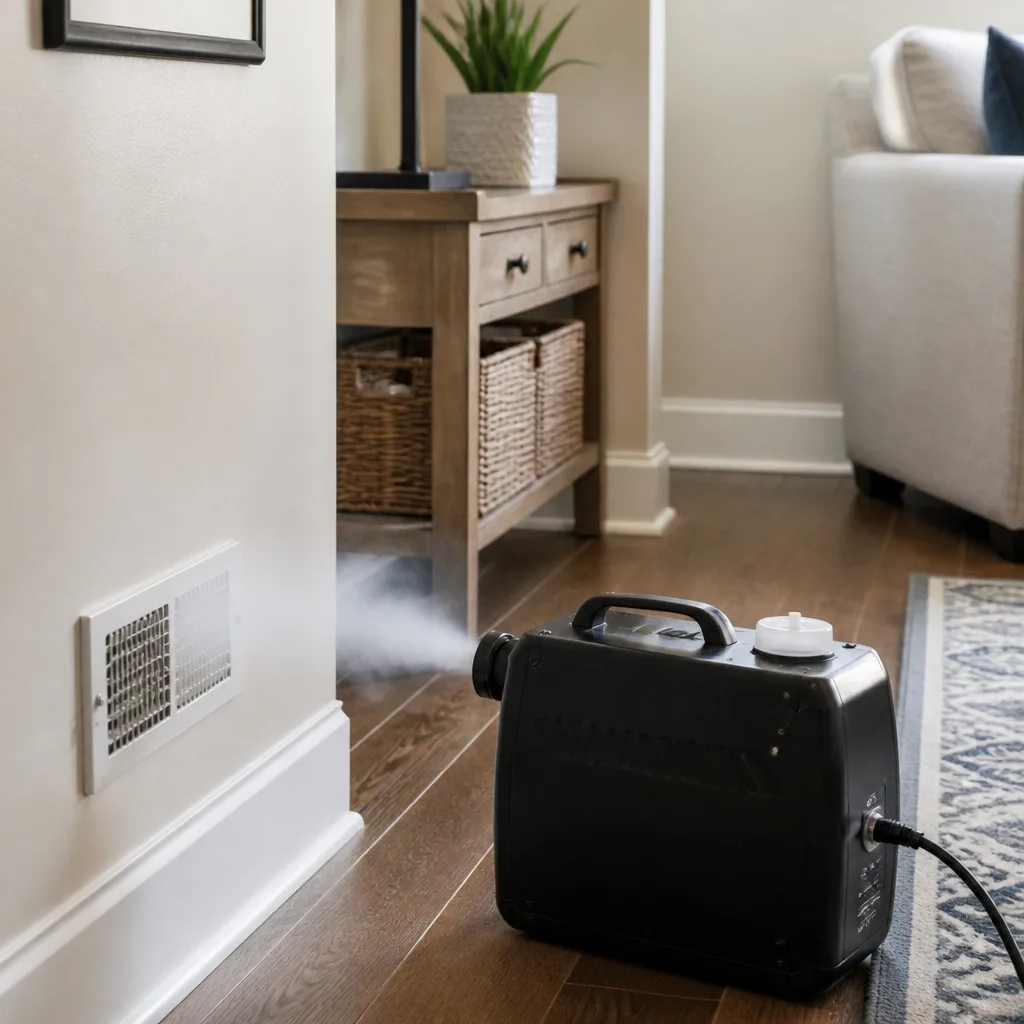 Sanitizing & deodorizing
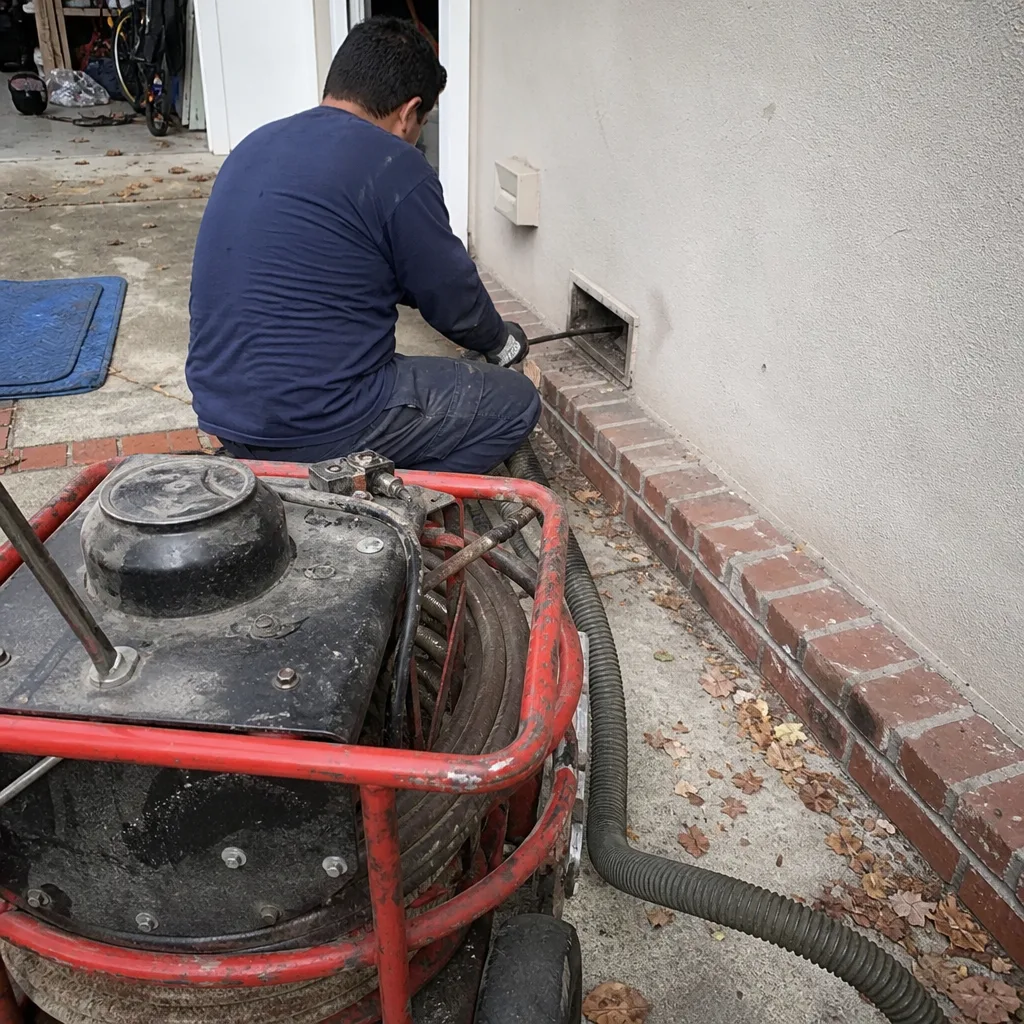
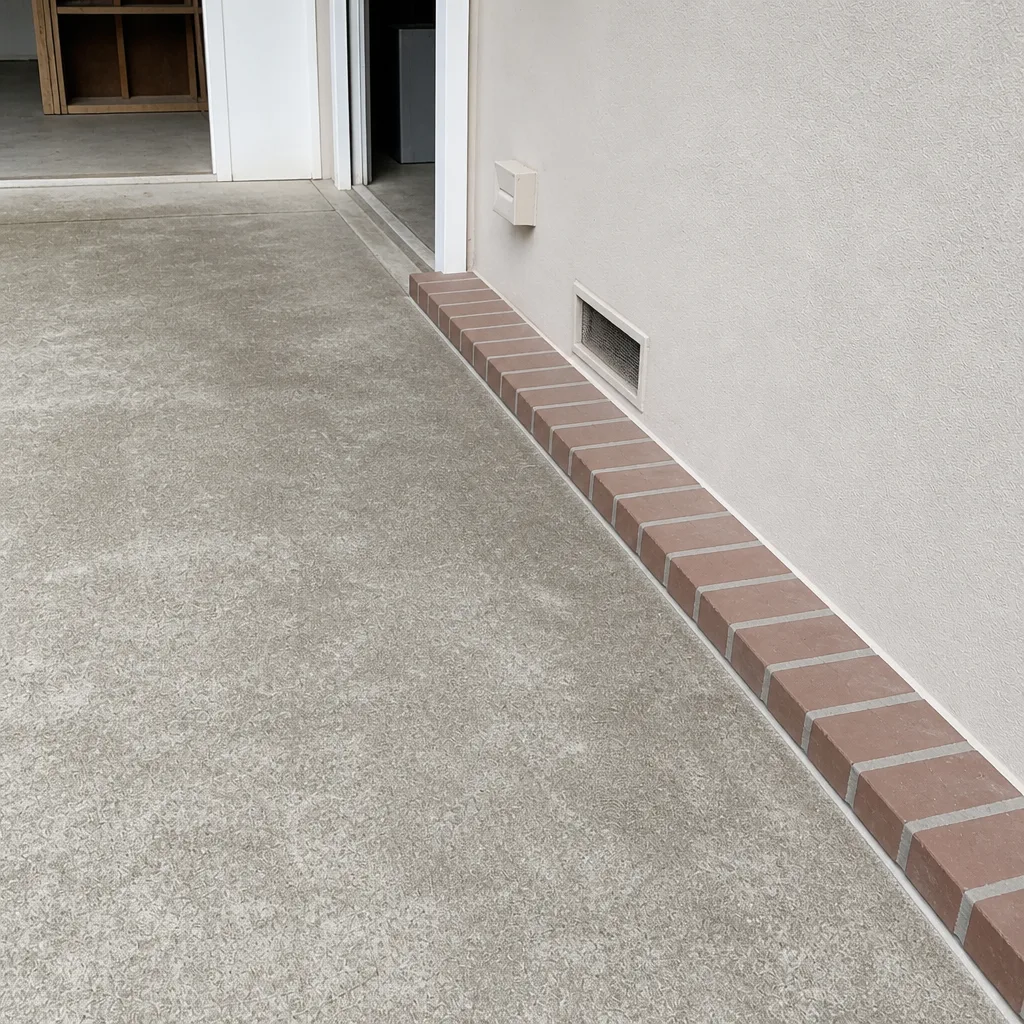
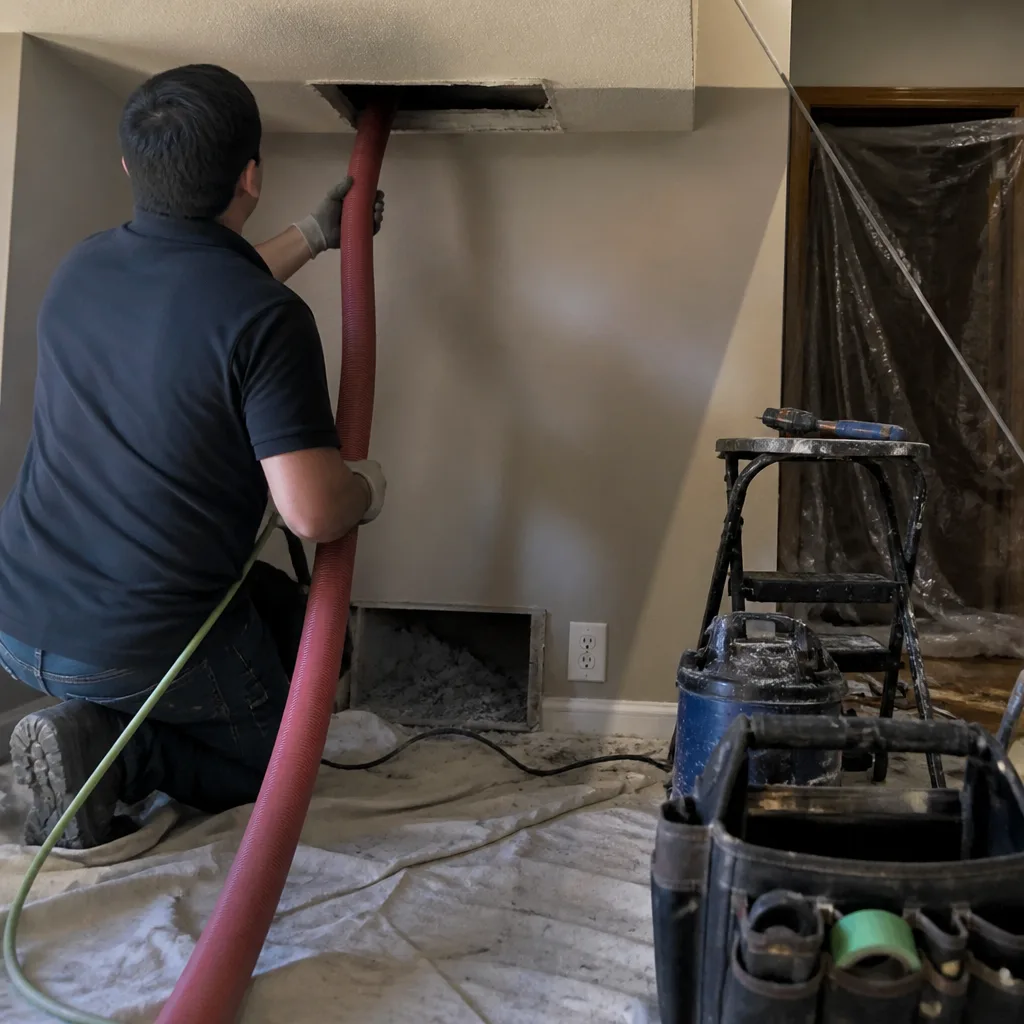
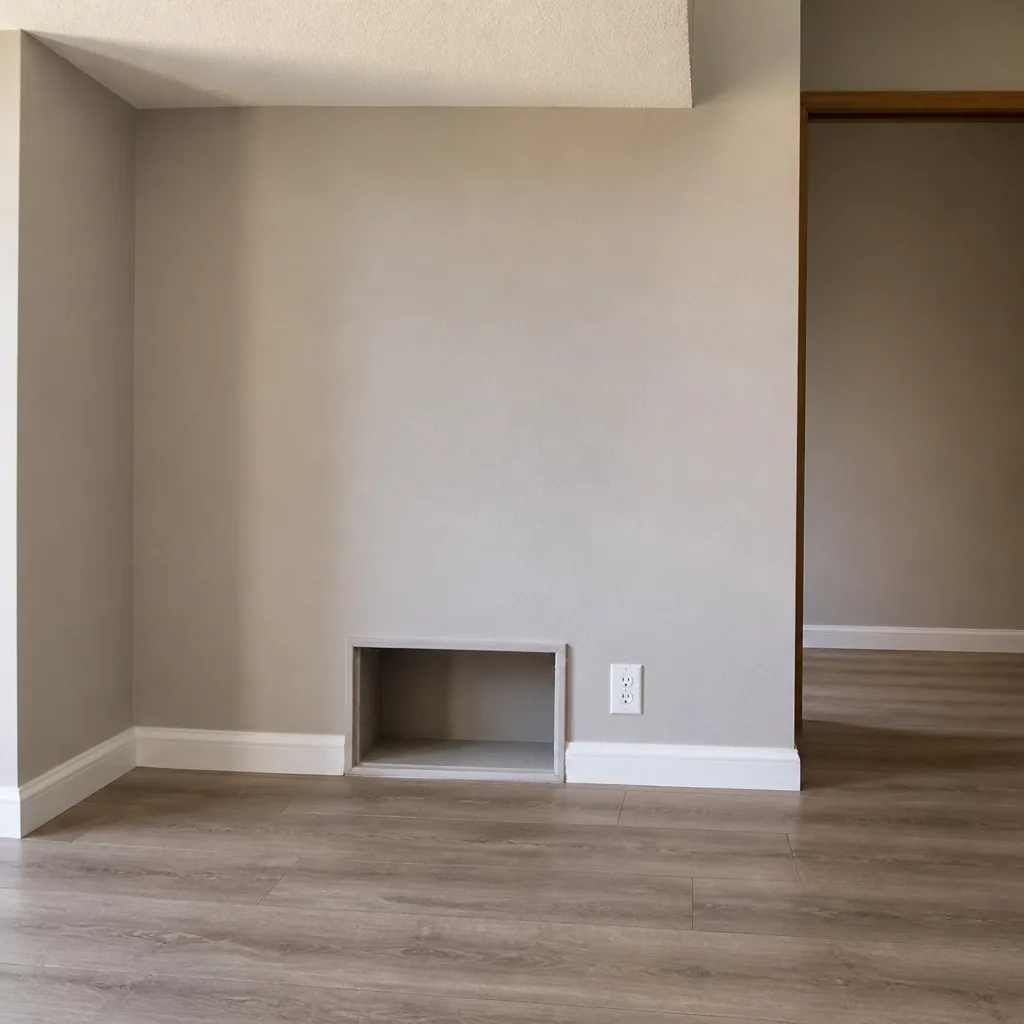
Whole-system duct and dryer vent check with before-and-after photos - you see exactly what came out of your vents
That "$99 whole-house special" is a bait ad - the real number appears once they are in your hallway, or the "clean" is a shop-vac at the register. We photograph the inside of your ducts before and after instead.
Air Duct Cleaning Cost Breakdown: The Fullerton Homeowner’s Reference for 2026
Here’s the part that surprises most people: a $299 whole-house quote and an $850 quote can both be honest prices, or both be rip-offs. The number alone tells you nothing. What separates them is scope, equipment class, and what’s actually being cleaned once the technician walks in. A low quote that skips the plenum, ignores the coil, and runs a shop vac through your registers isn’t a bargain, and a high quote that lists every component with verifiable equipment isn’t overpriced by default. In Fullerton, where housing stock ranges from 1950s ranch homes with original galvanized steel to 2000s tract homes with flex duct, those differences show up fast. This guide deconstructs every line item so you can compare quotes against deliverables, not dollars alone.
Quick Answer
Air duct cleaning in Fullerton typically runs $150 to $1,200+ for a full house, with most single-family homes landing between $350 and $650 for a standard whole-system cleaning. The wide range reflects real differences in scope, equipment class, and duct configuration, not profit margin. Per-component pricing (registers, trunk lines, plenums, coils) is the honest way to compare quotes, and any legitimate estimate will list components, vacuum capability, and what counts as a completed job.
Styles & brands we work with
- Whole-home duct cleaning
- Dryer vent cleaning
- Camera inspection
- Sanitizing & deodorizing
Table of Contents
- Why Duct Cleaning Costs Vary So Much in Fullerton
- Per-Component Pricing: Registers, Trunk Lines, Plenums, Coils
- Truck-Mounted vs. Portable Vacuums: What the Price Difference Reflects
- Add-Ons That Have Real Value vs. Upsells That Don’t
- How Home Age and Duct Material Affect Labor Time
- What a Written Quote Must Specify to Be Meaningful
- The Full-System Process: Clean It, Seal It, Test It
- Common Mistakes to Avoid
- When to Call a Professional
- Frequently Asked Questions
Why Duct Cleaning Costs Vary So Much in Fullerton
Fullerton’s housing stock is unusually varied for a city its size. There are 1920s bungalows near downtown, mid-century tract homes in neighborhoods like Sunny Hills and Coyote Hills, 1970s construction off Associated Road, and newer infill near the Fullerton Transportation Center. Each era used different duct materials and different installation methods, and each material cleans differently. Original galvanized steel ducts in a 1960s Fullerton home hold up well but accumulate years of buildup in the seams and joints; cleaning them properly takes brushes, agitation, and time. A 2005-flex-duct tract home can present its own problems, particularly sagging runs and poorly sealed connections that let debris re-enter after cleaning.
The other major driver is system size. A 1,200-square-foot condo off Chapman Avenue might have 6 registers and a short trunk line. A 2,800-square-foot home in the hills can have 18 registers, two zones, and a long main trunk run that takes considerably more agitation time. When we quote a job, we’re really pricing the number of components, the length and condition of the trunk line, and access difficulty. That’s why two quotes for the “same house” can be hundreds of dollars apart. Professional-grade equipment, not consumer shortcuts, is what turns those hours into actual debris removal rather than just loosening buildup.
Climate matters less in Fullerton than in most of the country, but it’s not irrelevant. Our mild winters mean heating systems run less than in colder climates, but the long cooling season keeps air handlers working through most of the year. A system that runs constantly pushes more air through the ducts, and more air through dirty ducts means faster buildup at the coil and in the return plenum. That’s why Fullerton homes often show more coil contamination than their age would suggest.
Per-Component Pricing: Registers, Trunk Lines, Plenums, Coils
Per-component pricing is the honest benchmark for comparing duct cleaning quotes. A whole-house number that doesn’t break down into components can’t be evaluated, because you can’t tell whether the plenum, the coil, or half your trunk line was included. Here are the typical estimated ranges for each major component in the Fullerton market.
| Component | Typical Estimated Range | What It Covers |
|---|---|---|
| Per register / vent | $15 – $40 | Removal of grille, agitation of branch run, vacuum extraction |
| Per linear foot, trunk line | $8 – $20 | Rotary brush agitation and negative-air extraction along the main trunk |
| Per plenum (supply or return) | $75 – $200 | Cleaning the connection box between air handler and trunk; often the dirtiest section |
| Evaporator coil cleaning | $150 – $400 | Separate line item; coil fins trap dust and biological growth the duct cleaning won’t reach |
| Blower motor / air handler | $75 – $200 | Debris removal from blower compartment; usually bundled with coil work |
| Whole-house standard cleaning | $350 – $650 | All registers, trunk line, one plenum; the most common residential scope |
| Whole-house with coil + both plenums | $650 – $1,200+ | Full system: every component cleaned, sanitizing applied, containment used |
Two things to watch for in this table. First, coil cleaning is almost never bundled into a base “duct cleaning” price, and it’s the component most often skipped, because it takes real time and equipment. Second, per-register pricing is common in ads, but it usually hides fixed costs like plenum work and equipment setup. A quote of “$20 per vent” for 10 vents sounds like $200, but the job often can’t be done properly without cleaning the trunk and plenum too, so the real number is higher. Ask for the component list before you compare anything. This is the same full-system scope we bring to air duct cleaning every day in Fullerton.
Truck-Mounted vs. Portable Vacuums: What the Price Difference Reflects
Equipment class is the single biggest reason two quotes for the same house differ by hundreds of dollars. A crew running a portable, shop-vac-adjacent unit is doing a different job than a crew running a truck-mounted or high-capacity negative-air system, and the price reflects that difference honestly, whether or not the sales rep admits it.
- Portable consumer-grade vacuums: Low airflow, no real containment, and often a HEPA filter that clogs within minutes. These units can loosen debris but can’t extract it at volume, and in many cases they redistribute dust into the living space through the return.
- Professional portable units: Stronger motors and better filtration, but still limited by canister capacity and hose length. Workable for small condos with short runs.
- Truck-mounted and high-capacity systems: Sustained airflow that actually pulls loosened debris out of the system and into a collection tank outside the home. This is the class commercial HVAC contractors rely on, and it’s why commercial jobs are priced differently than residential.
We use Nikro negative-air vacuum systems for source-removal cleaning aligned with NADCA practice, paired with Rotobrush rotary-brush technology for mechanical agitation of the duct walls. The brush loosens what’s stuck; the negative-air unit pulls it out and captures it. Neither piece works as well without the other. We also deploy Abatement Technologies containment and air-scrubbing equipment during service so dislodged particulates are captured at the source rather than pushed into your kitchen. That equipment stack is a real cost, and it’s why a quote from a crew running that class of gear will almost always be higher than one from a crew with a portable shop unit. The higher quote isn’t automatically the better one, but if two prices differ by $400 or more, ask which equipment class each crew is bringing.
Add-Ons That Have Real Value vs. Upsells That Don’t
Every legitimate duct cleaning has a base scope. Everything beyond that base is an add-on, and add-ons split into two categories: those that deliver a verifiable result and those that exist to raise the invoice. Here’s how to tell them apart.
Add-ons that have real value
- Camera inspection. A borescope run through the trunk line lets you (and the technician) see what’s actually inside. This is worth the cost if your quote is unclear on scope, or if you suspect a specific problem like a disconnected flex run or rodent activity in the ducts.
- Antimicrobial sanitizing with EPA-registered products. Applied after mechanical cleaning, this treats microbial growth on duct surfaces. It’s a legitimate step when there’s visible growth or odor, and less useful as a default upsell on a system with no sign of contamination. We apply Guardsman-grade sanitizing products for microbial control after mechanical cleaning, only when the condition warrants it.
- Duct sealing. Sealing gaps at joints and connections after cleaning prevents debris re-entry and reduces energy loss. In older Fullerton homes, this is often the difference between a cleaning that lasts and one that needs repeating in two years.
- Filter upgrades. If your current filter is a $3 fiberglass panel, upgrading to a properly sized pleated filter (Honeywell and Aprilaire media filters are common choices) changes the whole equation for long-term air quality.
Upsells that don’t survive scrutiny
- Per-vent pricing as the primary quote. Legitimate as a component, but never a complete job description on its own.
- “Enzyme fogging” with no mechanical cleaning first. Fogging a dirty duct just coats the dirt.
- “Sealing” a system without cleaning it first. You’re sealing contaminants in.
- UV light systems sold as a substitute for cleaning. A UV system is a supplementary tool for the coil and drain pan; it doesn’t remove debris from duct walls.
How Home Age and Duct Material Affect Labor Time
A 1960s Fullerton home with original galvanized steel ducts costs more to service than a 2005 tract home with flex duct, and it’s not because anyone is padding the invoice. Different duct materials clean differently, and the difference shows up as labor time.
Galvanized steel (roughly 1920s through the 1980s in Fullerton): Steel is the gold standard for duct longevity, but it accumulates buildup in every seam, screw hole, and joint over decades. Cleaning it properly takes rotary-brush agitation at each run, and the brush has to be sized to the duct dimension. Older steel systems sometimes have irregular runs, transitions, or hand-fabricated fittings that take longer to work through. A 1960s home with original steel can easily take 3 to 4 hours to clean thoroughly.
Flex duct (common in 1990s and 2000s construction): The inner liner of flex duct is a thin plastic sleeve supported by a wire helix. It can’t take aggressive brush work without damage, so cleaning relies more on air agitation and light contact. Flex runs go faster, but sagging or kinked runs sometimes need to be re-supported or replaced during the job, which adds time.
Ductboard (fiberglass board, common in some 1970s-1980s construction): The most delicate of the three. Lined ductboard can trap debris in the fiberglass facing, and aggressive brushing can damage the liner. Cleaning is slower and more careful, and in severe cases replacement is the better answer.
When a Fullerton homeowner asks why their quote is higher than a neighbor’s, the answer is almost always here: material, era, and run length. Ask the technician to explain which of these applies to your home; a good one will know within five minutes.
What a Written Quote Must Specify to Be Meaningful
A written quote you can compare against another written quote is worth more than any phone estimate. Here’s what a meaningful quote must contain, in order of importance.
- Vacuum CFM rating (or equipment class). Cubic-feet-per-minute airflow is the actual measure of a vacuum’s extraction capability. If the quote names equipment brands (Rotobrush, Nikro, Abatement) it’s a good sign; if it just says “industrial equipment,” ask which brand and which model.
- Brush type and agitation method. Rotary brush, air whip, or manual contact cleaning each do different things. The quote should say which is being used on your system and why.
- Component list. Every register, trunk run, plenum, coil, and air handler should be listed with its quantity and per-unit price. A quote that says “whole house” without a component list is not a quote, it’s a wish.
- What constitutes a completed job. This is the part most homeowners don’t think to ask about. Is the job complete when the technician finishes the run, or when you’ve seen before-and-after photos of each register and the plenum? We show you what we found and what we removed; a quote that specifies photo documentation and a walkthrough as part of the deliverable is a quote you can hold someone to.
- Any containment or air-scrubbing equipment listed. If the crew is using Abatement Technologies containment units, the quote should say so, because not every crew brings it.
- Sanitizing product and application scope. If sanitizing is included, the quote should name the product line and whether it’s applied to every run or only the plenum and coil.
- Written estimate price. Not a range, not a “starting at” figure. The written estimate sets the final price once work begins, and if scope changes, that change gets written down before more work starts.
The Full-System Process: Clean It, Seal It, Test It
Full-system duct service in Fullerton follows a three-stage arc: cleaning, sealing, and verification. Skipping any stage leaves the job half done.
- Clean it. Registers come off, containment goes up around the work area, and negative-air equipment is connected to the main trunk. Rotary brush agitation runs through each branch and the trunk run; negative air pulls loosened debris out of the system into the collection tank. Plenums and the coil (if included) get separate treatment. This is where HVAC cleaning overlaps with duct cleaning, because the coil and air handler hold contamination the ducts themselves don’t.
- Seal it. Once the system is clean, gaps at joints, collars, and plenum connections get sealed. Unsealed gaps are where dirt re-enters and conditioned air escapes. Duct repair and sealing is one of our five core services, and it’s the stage that makes a cleaning last longer.
- Test it. After cleaning and sealing, we check airflow at the registers, confirm containment was maintained, and show you before-and-after photos of what was removed. Filtration upgrades (Honeywell and Aprilaire media filters, for example) get installed or checked at this stage so post-cleaning air stays clean.
The same three-stage approach applies to dryer vent cleaning, where the verification step matters for a different reason: lint accumulation in the vent run is the source of most dryer-vent fires, so confirming the vent is clear and the exterior flap moves freely is part of the deliverable.
Common Mistakes to Avoid
- Comparing only the bottom-line number. A $299 quote and an $850 quote aren’t comparable until you’ve matched component lists side by side. Fullerton homes in particular vary so much by era and duct material that price alone tells you almost nothing.
- Accepting a per-vent price as the whole quote. Per-vent pricing is honest as a component, but the plenum, trunk, and coil often make up half the real scope. If the quote only mentions vents, ask what’s happening to the rest of the system.
- Skipping coil cleaning to save money. The evaporator coil traps dust the duct cleaning won’t reach, and a dirty coil is a major efficiency drag. In Fullerton, where systems run through most of the year, coil buildup happens faster than you might expect.
- Believing “industrial vacuum” language without asking for a brand. Consumer-grade shop vacs are sometimes marketed as industrial. Ask for the brand and model of the extraction unit, and expect names like Rotobrush or Nikro from a crew using professional equipment.
- Booking a cleaning before asking about containment. Without negative-air containment and air scrubbing, dislodged dust can end up on your furniture. Ask whether Abatement Technologies or equivalent containment is part of the service.
- Skipping duct sealing after cleaning. A cleaning without sealing leaves gaps that let dirt back in. If the quote doesn’t mention sealing, ask whether it’s available and what it costs as a separate line.
- Paying in full before seeing before-and-after photos. A legitimate process includes photo documentation of what was removed. Don’t pay before you’ve reviewed it, and make sure the written quote says photos are part of the deliverable.
When to Call a Professional
Some duct conditions are cosmetic and some are genuine problems. If you’re seeing visible dust plumes from registers when the system kicks on, noticing a musty or stale odor when the fan runs, or dealing with allergy symptoms that seem tied to time indoors, those are solid reasons to have the system inspected. Recent renovation is another: drywall dust and construction debris settle into the return plenum and trunk line in ways that a shop vac can’t pull out. Older Fullerton homes with original galvanized steel often need a cleaning after a couple of decades of service, especially if a previous owner never had it done. And if you’ve just bought a home, a camera inspection is worth the cost before you commit to any cleaning quote. Fullerton Air Duct Cleaning Pros offers free estimates in Fullerton – call (844) 493-3461. We answer 24/7. Fast dispatch from 7am to 7pm, Sunday through Friday.
Frequently Asked Questions
Most Fullerton single-family homes fall between $350 and $650 for a standard whole-system cleaning, and $650 to $1,200+ when the coil and both plenums are included. Condos with fewer registers often come in under $350. The written estimate sets the final price after the technician assesses your system. Call (844) 493-3461 for an exact quote – estimates are free.
Cheap quotes usually reflect a different equipment class, a shorter component list, or both. A crew running a portable vacuum and skipping the plenum is doing a fundamentally different job than a crew running truck-mounted or negative-air extraction with containment. The lower quote often isn’t comparable, not just less expensive. Call (844) 493-3461 and we’ll walk you through what a comparable scope looks like in Fullerton.
Ask for before-and-after photos of each register and the plenum, and a walkthrough at the end of the service. The photo set is the concrete record of what was removed. We show you what we found and what we removed, and the written quote should list photos as part of the completed job. Call (844) 493-3461 to schedule a free estimate.
Usually yes. Homes built before roughly 1985 with original galvanized steel ductwork take longer to clean because every seam and joint needs brush agitation, and some older systems have irregular runs that take extra time. A 2000s tract home with flex duct typically takes less labor. The written estimate will reflect the specific material and layout of your system.
For most Fullerton homes, every 3 to 5 years is a reasonable cadence, and longer if the system is well-filtered and has no pets or recent renovation. Homes with allergies, pets, or heavy construction debris may benefit from more frequent service. Your coil condition is usually the leading indicator; have it inspected if you’re unsure.
Sealing makes the cleaning last longer by closing the gaps where dirt re-enters, and it reduces the energy loss from leaking ducts. It’s not required on every job, but if your system has visible gaps at collars or joints, it’s usually worth doing after the cleaning. Ask about it as a separate line item on the quote.
The Bottom Line
Duct cleaning costs in Fullerton span a wide range because the work itself spans a wide range. A $150 quote and a $1,200 quote both reflect real choices about equipment, scope, and duct material, and the only way to compare them is against a component list, an equipment brand, and a defined completed job. Ask for per-component line items. Ask which vacuum class and brush type will be used. Ask whether containment and coil cleaning are included. Ask for before-and-after photos as part of the deliverable. A written estimate that answers all four is a quote you can trust; one that doesn’t is a number, not a price.
Ready to Get a Free Estimate?
Whether you’re in an older Fullerton home with original steel ducts or a newer build with flex runs, a free estimate gives you real numbers to work from. We use professional-grade equipment on every job, including Rotobrush rotary-brush systems, Nikro negative-air extraction, and Abatement Technologies containment. Our technicians have up to 11 years of experience, and we carry Honeywell and Aprilaire filtration products for longer-term air quality improvement. Call (844) 493-3461. We answer 24/7. Fast dispatch from 7am to 7pm, Sunday through Friday. You can also start at Fullerton Air Duct Cleaning Pros to see our five core service categories and how they fit together.
Written by the team at Fullerton Air Duct Cleaning Pros.
See the difference
 Before
 After
 Before
 After
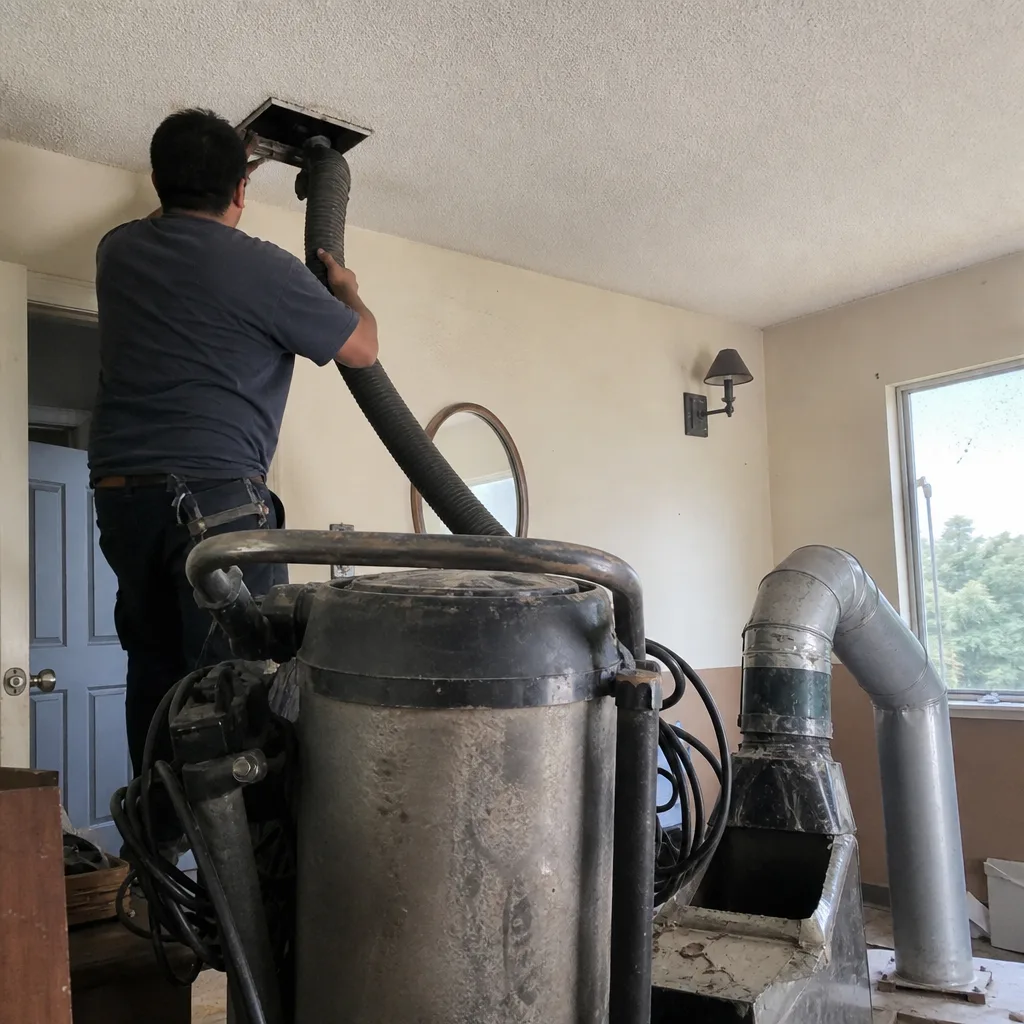 Before
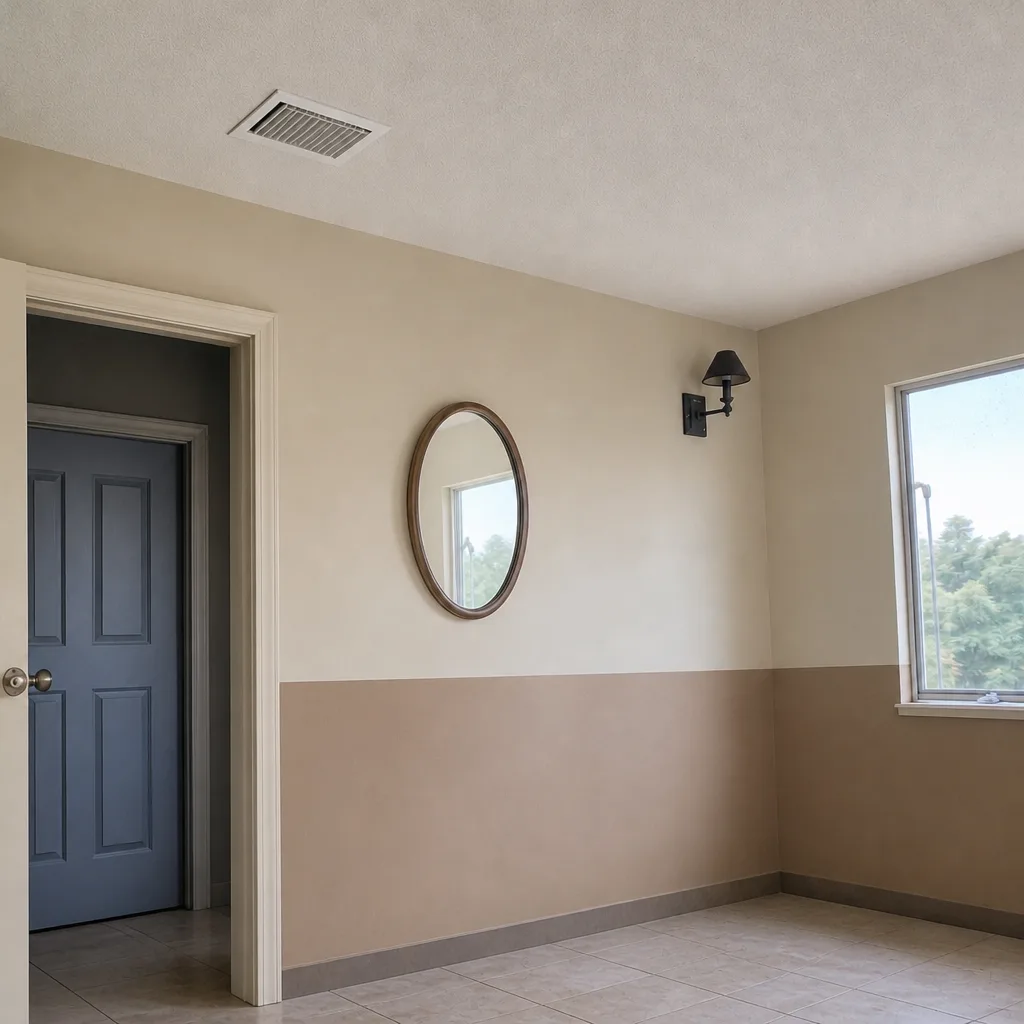 After